
Fingerstick vs CGM: Choosing a Home Glucose Monitor
I’ll be honest. The first time someone showed me a continuous glucose monitor on the back of their arm, I assumed the fingerstick meter was finished.
No more pricking. A number on your phone every few minutes. Why would anyone go back?
But the more I read, the less clean that story became.
A fingerstick blood glucose meter and a continuous glucose monitor don’t actually measure the same thing. They don’t even sample the same part of your body. And once you understand that, the question stops being “which one wins” and becomes “which one fits what you’re trying to do.”
So let me walk through it the way I wish someone had walked through it with me.
First, one thing I have to say up front. Nothing here is medical advice. Diabetes is a your-money-or-your-life topic, and any decision about insulin, medication, or treating a low belongs to you and a licensed clinician. When glucose is moving fast — or when you suspect a low — confirm the value with a fingerstick before you act.

What each device is actually measuring
This is the part most people skip, and it’s the part that explains everything else.
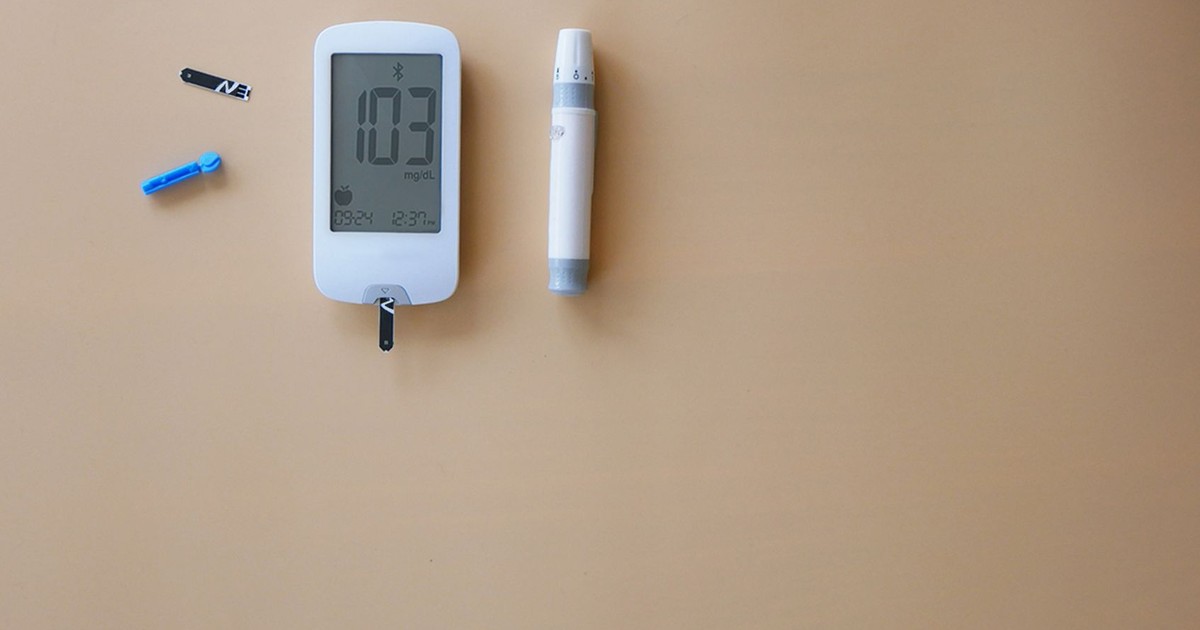
A fingerstick blood glucose meter — sometimes written BGM, or SMBG for self-monitoring — works the way you’d expect. A lancet pricks the side of your fingertip, you put the drop of blood on a test strip, and the handheld meter reads it in seconds. It measures glucose in your capillary blood, at a single moment in time. People on insulin often test several times a day: before meals, at bedtime, whenever symptoms show up.

Photo: Artem Podrez / Pexels
A continuous glucose monitor — a CGM — doesn’t touch blood at all.
It has three parts: a tiny sensor filament sitting just under the skin (usually the back of the upper arm or the abdomen), a transmitter, and software on a phone, pump, or receiver. What it reads is the glucose in your interstitial fluid — the fluid around your cells. That number closely mirrors blood glucose, but it trails behind it. A new estimate arrives every few minutes: roughly every 5 minutes for many prescription CGMs, every 15 minutes for the over-the-counter Stelo.
So here’s the thing I didn’t grasp at first.
Their numbers will not always match. And that’s not a defect — it’s two different compartments of your body being measured two different ways.
CGMs come in two flavors, according to the NIDDK. Real-time CGM pushes data automatically and can sound high and low alerts. Intermittent-scan — the “flash” kind — shows readings when you scan the sensor. Most current sensors are factory-calibrated, meaning no routine fingerstick calibration. Though, as we’ll see, you still reach for a fingerstick in specific moments.
So which one is more accurate?
I wanted a clean answer here. There isn’t one.
For a single number at a single instant, a properly performed fingerstick is slightly more accurate. It samples blood directly, with no lag. That’s why it has been the long-standing reference standard.
CGM accuracy gets reported as MARD — mean absolute relative difference. It’s the average percent gap between the sensor and a lab reference. Lower is better. A modern factory-calibrated sensor typically lands somewhere around 9% to 13% MARD. In one 2024 study of the FreeStyle Libre 2 in healthy adults, the overall MARD came out to 12.9%.
But here’s a number worth sitting with. One comparison of Abbott FreeStyle sensors found per-subject MARD spanning 4% to 25%. The average looks tidy. The individual experience varies more than the average suggests.
So if a fingerstick is more accurate per reading, what’s the CGM even for?
The trend.
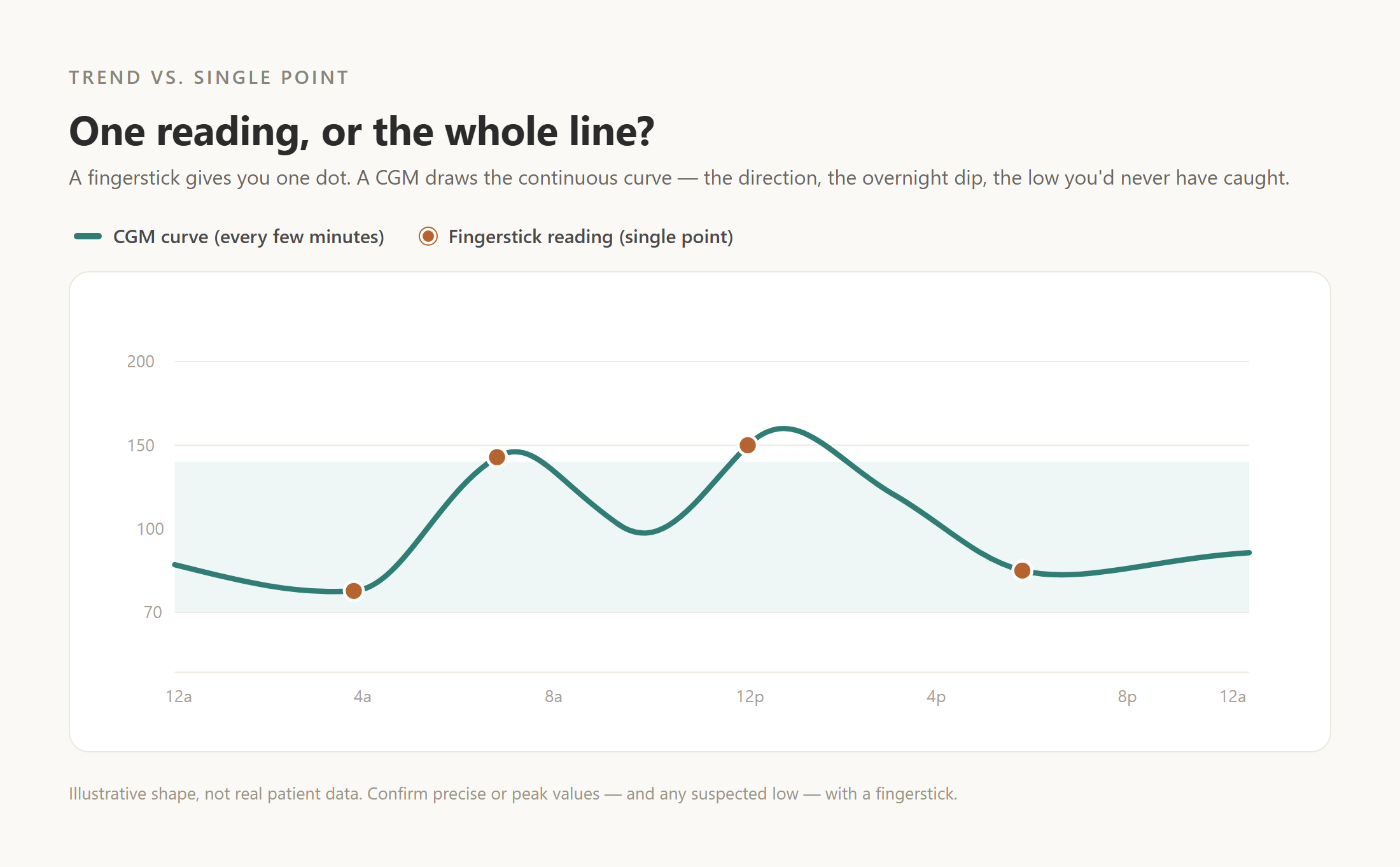
A fingerstick gives you one dot. A CGM gives you the whole line — the direction, the rate of change, the overnight dip you slept through, the asymptomatic low you’d never have caught. That continuous picture is the point. Not any single perfect value.
The sources I read kept framing these two as complementary, not competing. I think that’s the honest summary.
The lag — the one thing that trips everyone up
Because interstitial glucose trails blood glucose, a CGM and a fingerstick can legitimately disagree. This isn’t the device lying to you.
The lag typically runs about 5 to 20 minutes, depending on the device. Some studies report a range of 2 to 24 minutes for blood and interstitial glucose to line up.
And the lag stretches wider exactly when you’d least want it to — during rapid change. After you eat. After you dose insulin. During exercise. Blood glucose moves first, and the interstitial fluid catches up a beat later.
The practical consequence is worth memorizing. When your glucose is falling fast, the CGM may read higher than your actual blood glucose. When it’s rising fast, the reverse. When values are stable, guidance generally treats a CGM-versus-fingerstick difference of about ±15–20% as normal.
So if your CGM and your meter don’t match to the digit — that alone isn’t a malfunction. It’s often just the lag doing exactly what lag does.
When you should stop trusting the sensor and prick a finger
This is the section I’d tape to the fridge.
The American Diabetes Association is direct about it. Before you re-treat a low, confirm with a fingerstick. Their reasoning: because of sensor lag, a recovering glucose level may not show up on the CGM yet. If you keep treating based on a sensor that still reads low, you can over-treat. So if the sensor still looks low, a fingerstick reading comes first before a second round of treatment.
The other clear rule is a symptom mismatch. If the CGM shows a low or a high, or if how you feel doesn’t match the number on screen, use the blood glucose meter.
There’s one important exception, and it matters. If you have symptoms of a low and no meter is within reach, treat the low first per your care plan. Don’t delay treatment to go hunting for a device.
A few other real-world things can throw a reading off:
- Compression lows — lying on the sensor at night can push the reading falsely low.
- Warm-up and end-of-wear — accuracy can dip on day one and again as the sensor nears expiry.
- Interfering substances — depending on the device, high-dose vitamin C, acetaminophen, and others can affect some sensors. Check your specific device’s label.
- Fingerstick errors too — the meter isn’t immune. Sugar-contaminated fingers, too little blood, expired or miscoded strips, and temperature extremes can all skew a result.
The bottom line I took away: use the CGM’s real-time data and trend arrow to catch and react to lows and highs quickly. Confirm precise or peak values — and any suspected low — with a fingerstick before making a treatment decision.
A small thing about fingersticks that surprised me
I always assumed you were supposed to squeeze out and discard that first drop of blood. Turns out the evidence is more interesting than that.
Best practice first: wash your hands with soap and warm water, and dry them. Use a fresh lancet, prick the side of the fingertip — it hurts less than the pad — and rotate fingers.
Now the first-drop debate. A 2011 Diabetes Care study looked at exactly this.
If your hands are washed and dry, the first drop is accurate. You don’t need to throw it away.
If your hands are not washed and have touched something sugary — fruit, say — the first drop can be badly wrong. In that study, fruit-exposed fingers showed a 10%-or-greater error in 88% of first drops. The culprit wasn’t the drop. It was the contamination.
Hard squeezing — “milking” the finger — caused smaller errors too, so go easy.
So the mainstream recommendation is simple: wash, dry, use the first drop. If you genuinely can’t wash and the finger isn’t visibly dirty or sugar-exposed, wiping away the first drop and using the second is acceptable. There’s a minority study that found milking plus the first drop still gave correct values, which is why this stays a genuine point of debate. But clean, dry hands is the factor everyone agrees on.
The 2024 shift: no-prescription, no-prick CGMs
Here’s the change that made me want to write this in the first place.
For most of their history, CGMs needed a prescription. In 2024, that wall came down.
The FDA cleared Dexcom Stelo on March 5, 2024 as the first over-the-counter glucose biosensor. It went on sale in the US on August 26, 2024. It’s worn on the back of the upper arm, pairs with a phone app, shows glucose and trends every 15 minutes, and each sensor lasts 15 days. In June 2024, the FDA also cleared Abbott’s Lingo and Libre Rio as OTC CGMs.
Who are these for? Adults 18 and up who do not use insulin. Think type 2 managed on oral medication, or people without diabetes who just want to see how food, exercise, and sleep move their glucose.
And now the limitation you cannot skip over.
These OTC sensors — Stelo included — have no urgent low-glucose alarm. So they are not intended for anyone with problematic hypoglycemia, and not for insulin dosing. If you’re on insulin or at risk of lows, the right tool is a prescription CGM with alerts, plus a fingerstick meter for confirmation.
A new category is genuinely useful. It’s also easy to buy for the wrong reason. Both things are true.
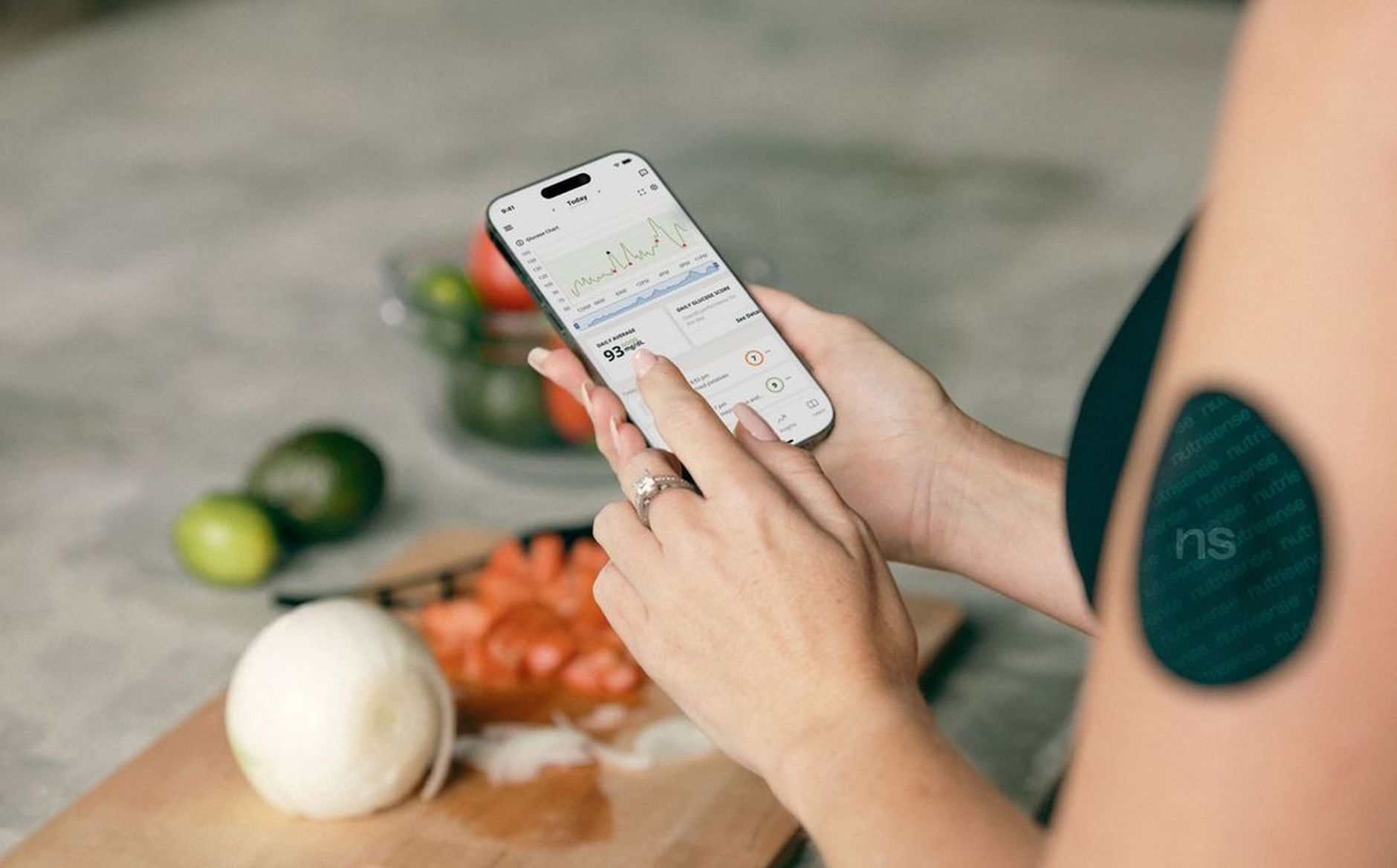
Photo: Nutrisense Inc / Pexels
What each one costs
Money is often the deciding factor, so let’s be plain about it. Note that OTC CGM pricing and availability were moving quickly as of 2024–2025, so treat these figures as a snapshot and confirm current specifics.
Fingerstick meter:
– The meter itself is cheap — often under $50, sometimes free with a strip purchase.
– Your ongoing cost is strips plus lancets.
– Generally the lowest-cost way to monitor if you test occasionally.
Prescription CGM:
– Sensors last about 10 to 15 days (Dexcom G7 around 10, FreeStyle Libre 3 around 14), then get replaced.
– Medicare covers a CGM and supplies if it’s prescribed and you either take insulin (any type or amount) or have a history of problematic hypoglycemia. After the Part B deductible you pay 20% of the approved amount, and most people with coverage pay about $20 or less per month. That coverage spans type 1, type 2, and gestational diabetes.
– Commercial insurance mostly covers CGM for type 1 and for insulin-using type 2. Out-of-pocket depends on your plan.
OTC CGM (cash pay):
– Dexcom Stelo launched at about $89 for a 2-pack — roughly a month of two 15-day sensors — and is HSA/FSA eligible.
– Abbott Lingo is on sale as well; Libre Rio had been cleared but wasn’t yet commercially launched at the time of these sources.
– OTC devices generally aren’t reimbursed by insurance. They’re aimed at wellness and lifestyle users.
So how would I actually choose?
Here’s the decision I’d walk through, in order.
1. Do you use insulin, or have hypoglycemia risk? Then a prescription real-time CGM with alarms, plus a fingerstick meter as backup. An OTC CGM is the wrong tool here — no alarm. The ADA recommends CGM for everyone with type 1, and for type 2 on insulin at any regimen, with the strongest evidence for lowering A1C and reducing lows.
2. No insulin, but you want lifestyle insight? An OTC CGM like Stelo or Lingo may fit — as long as you understand it has no alarms and isn’t for treatment dosing. The trend insight can be real; the hard-outcome data for this group is still emerging.
3. Testing only occasionally, or watching your budget? A fingerstick meter is the cheapest option and highly accurate per reading.
4. Check your coverage. Insulin use or a history of problematic hypoglycemia are the usual gates for Medicare and commercial plans.
5. Then weigh the practical stuff — alerts, phone compatibility, wear time, how comfortable the sensor site is, and whether you want to share data with a caregiver or clinician.
6. Keep a fingerstick meter either way. Even with a CGM, you’ll want it for confirmation during rapid change or a suspected low.

Let me add one last thing, because I think it’s the whole point.
I started out thinking the fingerstick was obsolete. It isn’t. It’s still the most accurate single reading you can take at home, and it’s the tool you confirm a low with when a low is the thing that matters most.
The CGM didn’t replace it. It gave it a partner — one that watches the trend while the meter checks the number.

Photo: Artem Podrez / Pexels
If you take just one line away, take this one. Use the CGM to see where your glucose is going. Use the fingerstick to confirm where it actually is. And leave the treatment decisions — every one of them — to you and your clinician.
Because with a topic like this, the goal was never a prettier number on a screen. It was catching the thing before it caught you.
References (from research):
– NIDDK (NIH) — Continuous Glucose Monitoring
– FDA — Clearance of the first over-the-counter CGM (Dexcom Stelo)
– American Diabetes Association — Guidance for the Use of CGM (2023); Standards of Care in Diabetes 2026, Sec. 6
– Medicare.gov — Continuous glucose monitors (coverage)
– Hortensius J. et al., Diabetes Care (2011) — first vs second drop of blood (PMC3041180)
– Analytical Performance of the FreeStyle Libre 2 in Healthy Adults — MARD 12.9% (PMC11397946, 2024)
– Lag Time with Real-Time CGM During Aerobic Exercise in Type 1 Diabetes (PMC6551983)
– Blood Glucose Monitoring — StatPearls (NCBI Bookshelf, NIH)
This article is general information, not medical advice. Devices, prices, and availability (especially OTC CGMs) can change; confirm current specifics. Treatment decisions and any suspected low must be handled with a fingerstick confirmation and a licensed clinician.


