Dog Ear Infection: Why Cleaning Comes After the Vet
I’ll admit what I believed before I read the veterinary literature on this. I thought a dog ear infection was basically a plumbing problem — water gets in after a bath or a lake weekend, the ear stays damp, yeast blooms, and the fix is to dry the ear out and clean it more often.
Two parts of that are wrong. One part is actively dangerous.
The dangerous part first, because it’s the reason this article is ordered the way it is.
A veterinarian should look inside the ear before anything goes into it.
You cannot see the eardrum from the outside. If it’s ruptured — and a moderate infection alone can rupture it — several ingredients found in ear cleaners and ear medications are ototoxic, meaning they can cause permanent deafness or balance damage if they reach the middle ear. That’s not a footnote at the bottom of the page. That’s step zero.
So here’s the honest version. What actually warrants a same-day call, why the eardrum question outranks everything else, why the “damp ear, yeast, clean it out” story is only an accomplice and not the culprit, why wax color can’t diagnose anything, and then — once all of that is settled — the cleaning sequence itself, including the part where doing it too often is on the veterinary list of things that cause ear disease.
Photo: AMSW Photography -Alisha Smith Watkins / Pexels
Start here: the signs that mean call the vet today
If any of these are present, don’t clean the ear, don’t wait for the weekend to end, and don’t put anything in it. Call your veterinarian the same day.
| Sign | Why it matters |
|---|---|
| Head tilt | Suggests middle or inner ear involvement; the tilt is usually toward the affected side |
| Stumbling, circling, falling, rolling | The balance apparatus sits in the inner ear |
| Eyes darting back and forth (nystagmus) | Same — a vestibular sign, not an eye problem |
| A drooping face, an eye that won’t blink, drooling | The facial nerve runs through the middle ear |
| Third eyelid up, a constricted pupil, a droopy lid | Horner’s syndrome — the nerve supply also passes through the middle ear |
| Sudden hearing loss — no response to a name or the door | Middle or inner ear involvement, or ototoxic injury |
| Thick, pus-like, or bloody discharge | Possible ruptured eardrum |
| Severe pain when the ear or its base is touched; crying when yawning | Deeper involvement — and a hard stop on home cleaning |
| Strong foul odor with green or yellow pus | Suggests rod bacteria such as Pseudomonas, which usually needs culture and veterinary management |
| A soft, warm, fluid-filled swelling of the ear flap | An aural hematoma |
| Something visibly lodged in the ear, or violent shaking right after a walk in tall grass | A foreign body such as a grass awn — often one-sided |
The neurologic signs on that list are the ones most owner-facing articles leave out, and they’re the ones that change the urgency completely.
Cornell’s Riney Canine Health Center gives a shorter, calmer list for “book an appointment” rather than “go now”: redness, itching, head shaking, discharge or increased wax, odor, and discomfort when the ear is touched. That’s still a veterinary visit. It just isn’t a same-day one.
Why a vet should look in the ear before anything goes in it
This is the correction I’d most like people to take from this article, because the usual advice has it backwards. The common version reads “try cleaning at home, and see your vet if it doesn’t clear up.” The safe version is the reverse.
You can’t answer the eardrum question at home
The tympanic membrane can rupture from trauma, infection, exposure to toxins, sudden pressure changes, very loud noises, and foreign objects. An owner has no way to check. And the reassuring assumption — “well, he’d be acting sicker if it were that bad” — doesn’t hold up either.
In dogs with recurrent ear infections lasting six months or longer, up to 89% may have concurrent otitis media (middle ear infection). About 70% of those have an intact but abnormal eardrum.
The line worth remembering from the clinical literature: an intact tympanic membrane does not rule out otitis media.
So even the vet’s own otoscopic exam isn’t a simple yes-or-no. Which is exactly why the assessment belongs to someone with an otoscope, and sometimes sedation, imaging, or a sterile middle-ear sample, rather than to a guess made in a kitchen.
The ingredients that are the concern
I’m naming these so you understand the stakes, not so you can shop from the list. Every one of these decisions belongs to a veterinarian working from cytology and an eardrum assessment.
Veterinary sources report ticarcillin, polymyxin B, neomycin, tobramycin and amikacin as potentially ototoxic in dogs with a ruptured tympanic membrane. Several common combination ear medications contain aminoglycosides such as neomycin or gentamicin. Isopropyl alcohol, present in a lot of drying-type cleaners, can be irritating and ototoxic if it reaches the middle or inner ear.
On the other side, fluoroquinolones, squalene, TrisEDTA, clotrimazole, miconazole and dexamethasone are deemed relatively safe in the middle ear, and chlorhexidine is described as not carrying ototoxicity risk in dogs at concentrations of 0.2% or lower.
That second list is not a shopping list. It’s a description of what a veterinarian has to weigh when the eardrum’s status is uncertain. As a general matter, ear products are not approved for use when the eardrum is ruptured or cannot be assessed — which is the regulatory way of saying nobody has established that it’s safe.
The counter-argument, stated fairly
I don’t want to overstate this, so here’s the other side.
Today’s Veterinary Practice takes a more nuanced position: ototoxicity is reported with all gentamicin topicals, but “as with chlorhexidine, this concern may be overstated,” citing data showing no vestibulotoxic or ototoxic effects from 21 days of otic gentamicin — while still advising caution with aminoglycosides. Merck and the veterinary professional press treat the same agents as a firm contraindication.
That’s a real disagreement and it’s worth knowing about. But notice who it’s between. It’s a debate among clinicians choosing prescription products under otoscopic guidance. It is not a debate about whether owners should pour an unknown liquid into an unexamined ear.
The owner-level conclusion doesn’t move: the eardrum’s status is a veterinary determination, and it dictates what may safely be used.
Photo: Samson Katt / Pexels
Why “damp ears cause dog ear infections” is only half the story
The anatomy part of the popular explanation is genuinely correct. The canine ear canal is L-shaped, with a vertical canal on top meeting a horizontal canal at roughly a right angle before it reaches the eardrum. That design naturally traps moisture and debris. And a healthy canal cleans itself through epithelial migration, with hair follicles and ceruminous glands producing wax that traps debris and protects the canal.
Where the popular version goes wrong is the causation.
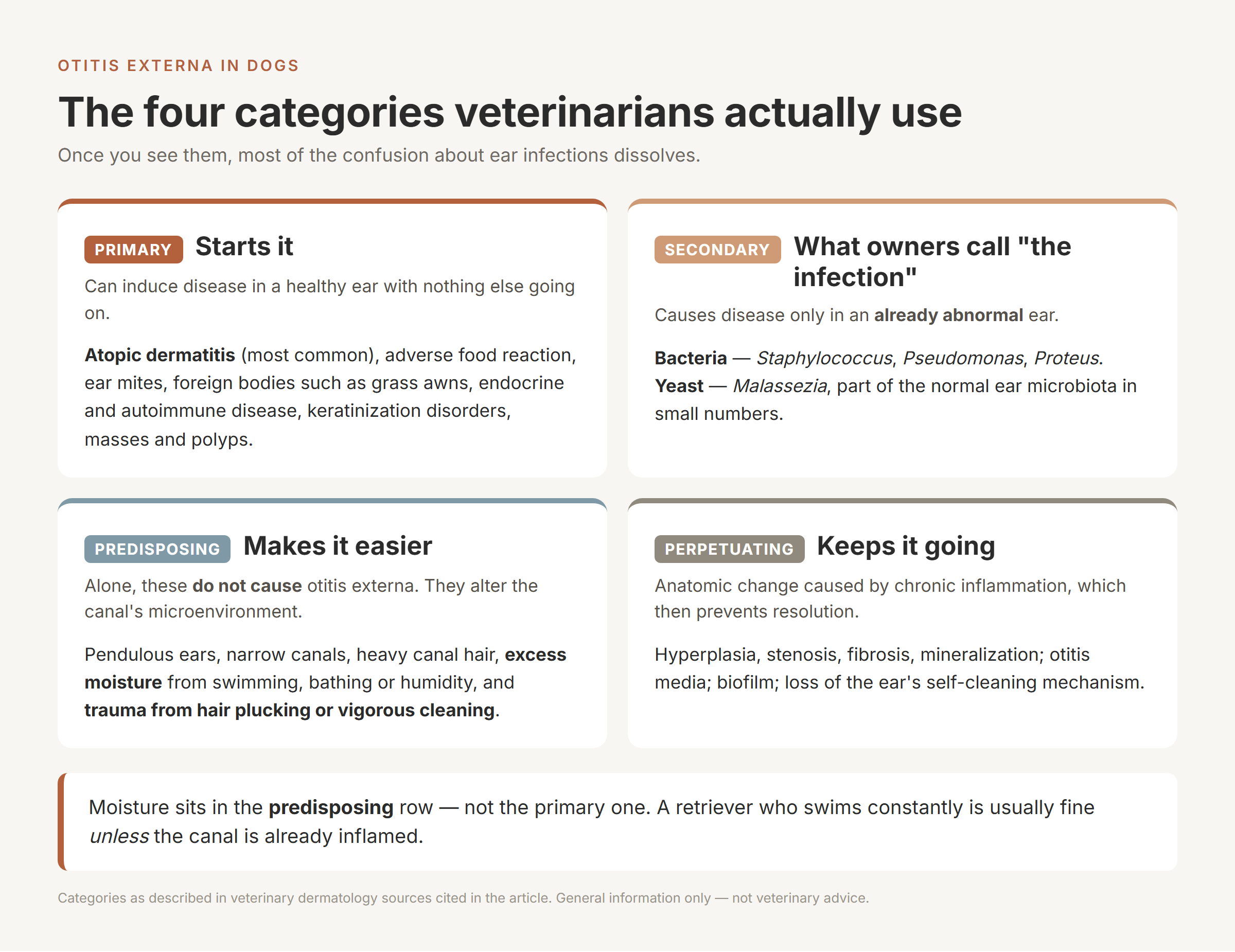
The four categories veterinarians actually use
Veterinary dermatology sorts the contributors to otitis externa into four buckets, and once you see them, most of the confusion about ear infections dissolves.
| Category | What it means | Examples |
|---|---|---|
| Primary causes | Conditions that can induce disease in a healthy ear with nothing else going on | Atopic dermatitis (most common), adverse food reaction, ear mites, foreign bodies such as grass awns, endocrine disease, autoimmune disease, keratinization disorders, masses and polyps |
| Secondary causes | Agents that cause disease in an already abnormal ear | Bacteria (Staphylococcus, Pseudomonas, Proteus) and yeast (Malassezia) — what owners think of as “the infection” |
| Predisposing factors | Alone they do not cause otitis externa; they alter the canal’s microenvironment and make inflammation easier | Pendulous ears, narrow canals, heavy canal hair, excess moisture from swimming, bathing or humidity, and iatrogenic trauma from hair plucking or vigorous cleaning |
| Perpetuating factors | Changes to normal anatomy caused by chronic inflammation, which then prevent resolution | Hyperplasia, stenosis, fibrosis, mineralization; otitis media; biofilm; loss of the ear’s self-cleaning mechanism |
Read the predisposing row again. Moisture lives there — not in the primary column. In the literature’s own words, predisposing factors “alone do not cause otitis externa.” They facilitate inflammation by permitting the canal’s microenvironment to be altered.
The clinical example used to make this point is a retriever. A Labrador or Golden who swims constantly generally has no trouble unless there’s underlying inflammation in the canal. Moisture plus inflammation produces clinical otitis. Moisture by itself mostly produces a wet dog.
And yeast? Malassezia pachydermatis is part of the normal microbiota of canine skin and the external ear canal. Finding it isn’t the diagnosis. Overgrowth in an already inflamed ear is.
Ear shape is blamed far more than it deserves
The AVMA is unusually direct here: “ear conformation is not considered to be a primary cause” of otitis externa, and “most dogs with hanging ears will not suffer from infections.” The association notes the evidence for the ear-shape theory has been inconsistent, and points instead toward breed-specific biology — Cocker Spaniels and Poodles, for instance, having a greater density of apocrine glands — along with allergic, immune-mediated, and systemic disease.
The numbers back that up, and I’ll get to them further down.
So what is causing the recurrence? Usually allergy
This is the second correction, and it’s the one that changes what you do next.
Atopic dermatitis is reported as the primary cause in 43% to 75% of dogs with otitis externa, and in 31% to 50% of dogs with chronic recurrent otitis. In one retrospective series, allergic dermatitis was the top-ranked primary cause — 43 of 100 dogs — with cases splitting roughly 37% acute and 63% chronic-recurrent.
VCA puts allergies at roughly 43% of ear infection cases, and notes that 65–80% of dogs with food allergy develop ear infections. The AKC quotes a veterinarian making the practical version of the point: in many dogs, recurrent ear infections are the first or only sign of a food or environmental allergy.
The US claims data tells the same story sideways
Here’s the detail I keep coming back to.
Nationwide, the largest US pet insurer, analyzed more than 3.3 million claims from more than a million insured pets over calendar year 2025 and published the most common dog conditions in March 2026. Ear infection ranked #2.
What sits around it is the interesting part. #1 was skin allergies. #3 was pyoderma. #7 was allergic dermatitis. Three of the top seven canine claim categories are allergic skin disease, and ear infection is wedged in the middle of them.
That ranking isn’t proof of anything on its own. But it’s a real-world echo of what the dermatology literature teaches: otitis is usually a manifestation of allergic skin disease, not an isolated ear event.
Which means an article that stops at “keep the ears dry” has handed you a solution to the wrong problem. For a single infection after a lake weekend, moisture may genuinely be the whole story. For the third infection this year, the honest answer is “look for allergy” — and that’s a veterinary workup, not a home fix.
Why the color of the gunk can’t tell you what it is
Almost every owner tries to read the discharge. I did too. It doesn’t work, and the reason is more interesting than the rule.
What the appearances are associated with
| Appearance | Commonly associated with |
|---|---|
| Dark brown to black, moist, greasy, musty or yeasty odor | Malassezia yeast overgrowth |
| Dry, crumbly, dark, like dry coffee grounds | Ear mites (Otodectes cynotis) |
| Yellow-green, slimy, purulent, foul odor | Pseudomonas and other rod bacteria — usually the more painful, more serious end |
| Thick, pus-like, or bloody | Possible eardrum rupture or middle ear involvement |
Those are associations, not diagnoses. And here’s why the shortcut fails:
- The categories overlap. Mites produce dark crumbly debris, but yeast and bacterial otitis also produce dark material. A dark ear is not a mite ear.
- Yeast is normal in small numbers. Cytology thresholds commonly cited are five or more yeast per high-power field as abnormal in canine ears — and even that is a guideline, because some dogs mount a hypersensitivity reaction to otherwise “normal” yeast numbers.
- The professional instruction is explicit. Veterinarians are told not to diagnose or select therapy based on past experience, the physical character of the discharge, or odor. If clinicians are instructed not to eyeball it, owners certainly can’t.
The stakes of guessing are the practical argument. Mites need a parasiticide, and every dog and cat in the household has to be treated — the parasitology guidance is unambiguous that when mites are present in one pet, all dogs and cats in the home need treatment. Yeast needs an antifungal. Rod bacteria may need culture and sensitivity testing. Guessing wrong buys you weeks of the wrong product on a painful ear.
What cytology actually is
It’s less dramatic than it sounds, and knowing the steps makes the bill make sense.
Two swabs are usually taken, from the vertical and horizontal canal. One goes into mineral oil on a slide and is examined for mites. The other is rolled onto a slide, heat-fixed, stained, and examined under 100× oil immersion for cocci, rods, yeast, and white blood cells. Malassezia has a distinctive unipolar-budding shape that clinicians describe as a “peanut,” “snowman,” or “footprint.”
One more useful detail: inflammatory and red blood cells are not seen in healthy ears. Their presence is itself diagnostic information.
Cytology isn’t perfect. It has high specificity but low sensitivity, so false negatives happen. It’s still the standard, and it’s still vastly better than looking at the color.
One place the sources genuinely disagree
I’d rather show you this than tidy it away. The Companion Animal Parasite Council’s guideline states that 85% of otitis externa cases in cats and 50% in dogs are caused by Otodectes cynotis.
That figure sits badly with mainstream veterinary dermatology, which reports allergy as the primary cause in 43–75% of canine cases. Both cannot be true at once. The likeliest explanation is different populations — shelter and young-animal caseloads versus primary-care dermatology referrals. I’m not going to headline the 50% number, because the rest of this article is built on the dermatology literature. The cat figure is much better supported, and it makes a useful contrast: mites are far more a cat problem than a dog problem.
Photo: Brett Jordan / Pexels
Head shaking isn’t only distress — it’s an injury mechanism
I used to read head shaking as the dog complaining. That undersells it.
Merck describes aural hematoma as a common complication of the intense head shaking that accompanies ear disease. The velocity of the shake slaps the ear flap against the skull with concussive and shear force — enough to fracture auricular cartilage and tear vessels inside the flap, which then fills with blood. The wording is blunt: trauma from head shaking or ear scratching in response to the itch of otitis externa is “almost always involved.”
To an owner it looks like a soft, warm, fluid-filled swelling of the ear flap that appears over hours to days.
And treating it takes two things, not one. Evacuation of the hematoma, with sutures with or without drains to eliminate dead space — and control of the underlying cause of the itch. Draining it without fixing the ear disease invites it straight back.
That’s the concrete answer to “does it really matter if he just shakes his head a lot?” The shaking creates a second problem, and the second one is surgical.
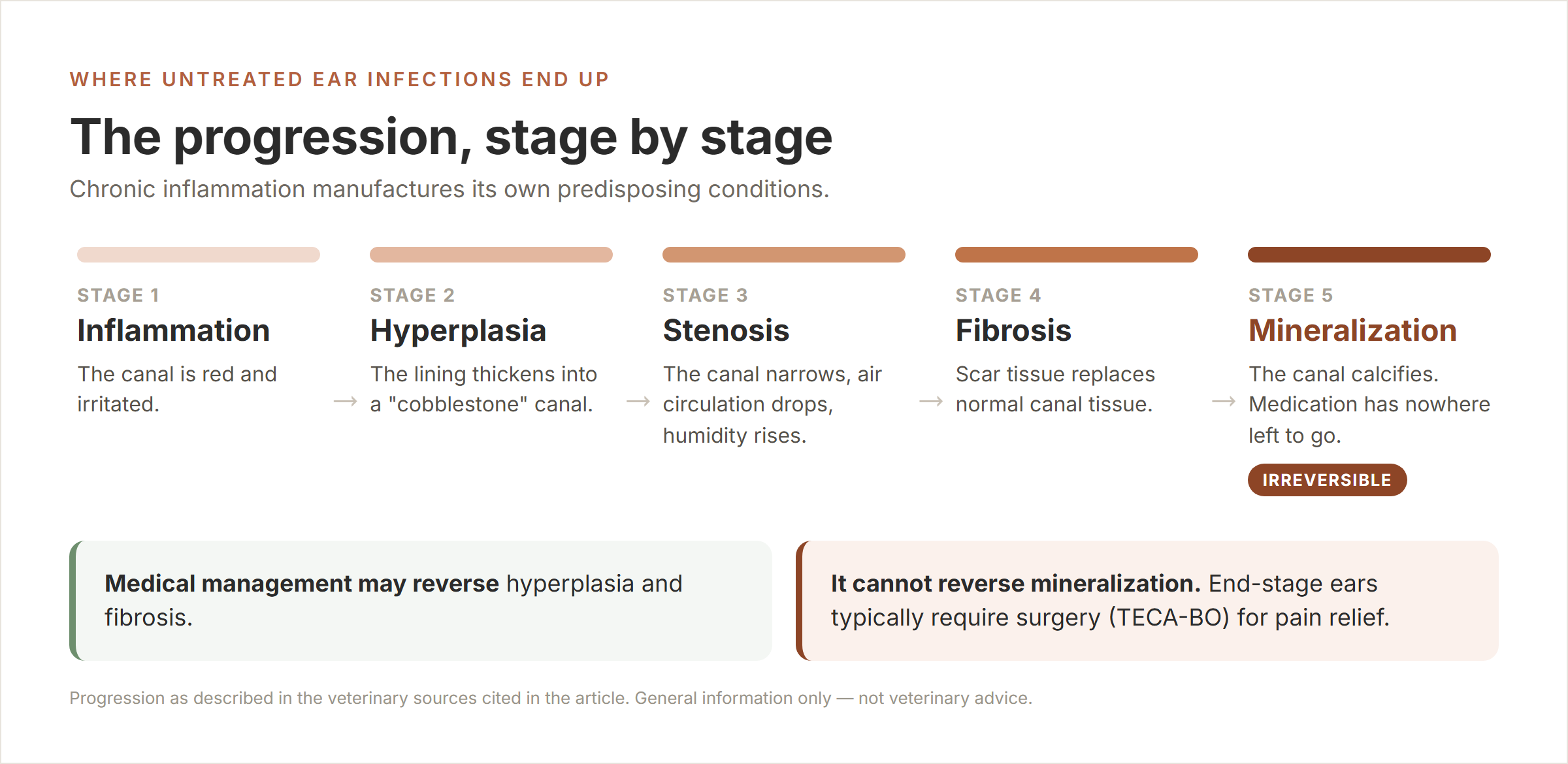
Where untreated ear infections end up
This part is uncomfortable, and I think it’s the strongest argument for going early rather than waiting.
Chronic inflammation drives a progression that’s well documented:
inflammation → hyperplasia (a “cobblestone” canal) → stenosis, as the canal narrows → fibrosis → mineralization → end-stage ear.
Notice the feedback loop in the middle. Stenosis narrows the canal, which reduces air circulation and raises humidity — the disease manufactures its own predisposing conditions. That’s why chronic otitis becomes self-sustaining, and why perpetuating factors are described as the most common reasons for surgical intervention.
Then there’s the line that made me sit up:
Medical management may be able to reverse hyperplasia and fibrosis. It cannot reverse mineralization.
Once the canal calcifies, medication has nowhere left to go. End-stage ears typically require total ear canal ablation with bulla osteotomy (TECA-BO) for pain relief, performed when all medical attempts have been made. I couldn’t find a credible published US price for that surgery, so I’m not going to invent one. It is substantially more expensive than treating an ear infection early — that much is safe to say.
One more flag worth knowing: a one-sided ear problem should raise suspicion for foreign bodies, otitis media, polyps, or neoplasia. A dog with one bad ear and one clean one is telling you something specific.
How to clean a dog’s ears safely
Now the practical part. The sequence below follows Cornell’s Riney Canine Health Center and the AKC.
Step 0 — Have the ear examined first, at least the first time. Cornell frames routine cleaning as maintenance for a healthy ear. Redness, discharge, odor, or pain is a veterinary visit, not a cleaning project.
Step 1 — Use a veterinary-approved otic cleaner. Cornell’s specific warning: avoid cleaners containing alcohol or hydrogen peroxide.
Step 2 — Fill the ear canal with the solution. If your dog won’t tolerate direct application, an accepted alternative is to saturate cotton balls or pads with cleaner and use those instead of squirting.
Step 3 — Massage the base of the ear. Below the ear opening, for about 30 seconds. You should hear a squelching sound as the fluid works around the L-bend into the horizontal canal.
Step 4 — Let the dog shake. Shaking is the mechanism that brings loosened debris up out of the horizontal canal. Stand back. Do this somewhere washable.
Step 5 — Wipe only what you can see and reach. Cotton pads, cotton balls, or absorbent gauze, wiping from the inner ear outward, about one knuckle deep — as far as your finger reaches, no further. Skip paper towels and loose cotton wool, which shed fibers into the canal.
Step 6 — Stop if it hurts. Cornell says it plainly: stop home cleaning if your dog shows pain during the process, and call your veterinarian.
Never:
- Cotton swabs in the canal. Cornell: avoid them, to prevent pushing debris deeper. The AKC adds that they can push wax deeper and even damage the eardrum. They’re acceptable only on the visible folds of the outer flap.
- Anything sharp, or forcing a nozzle deep into the canal.
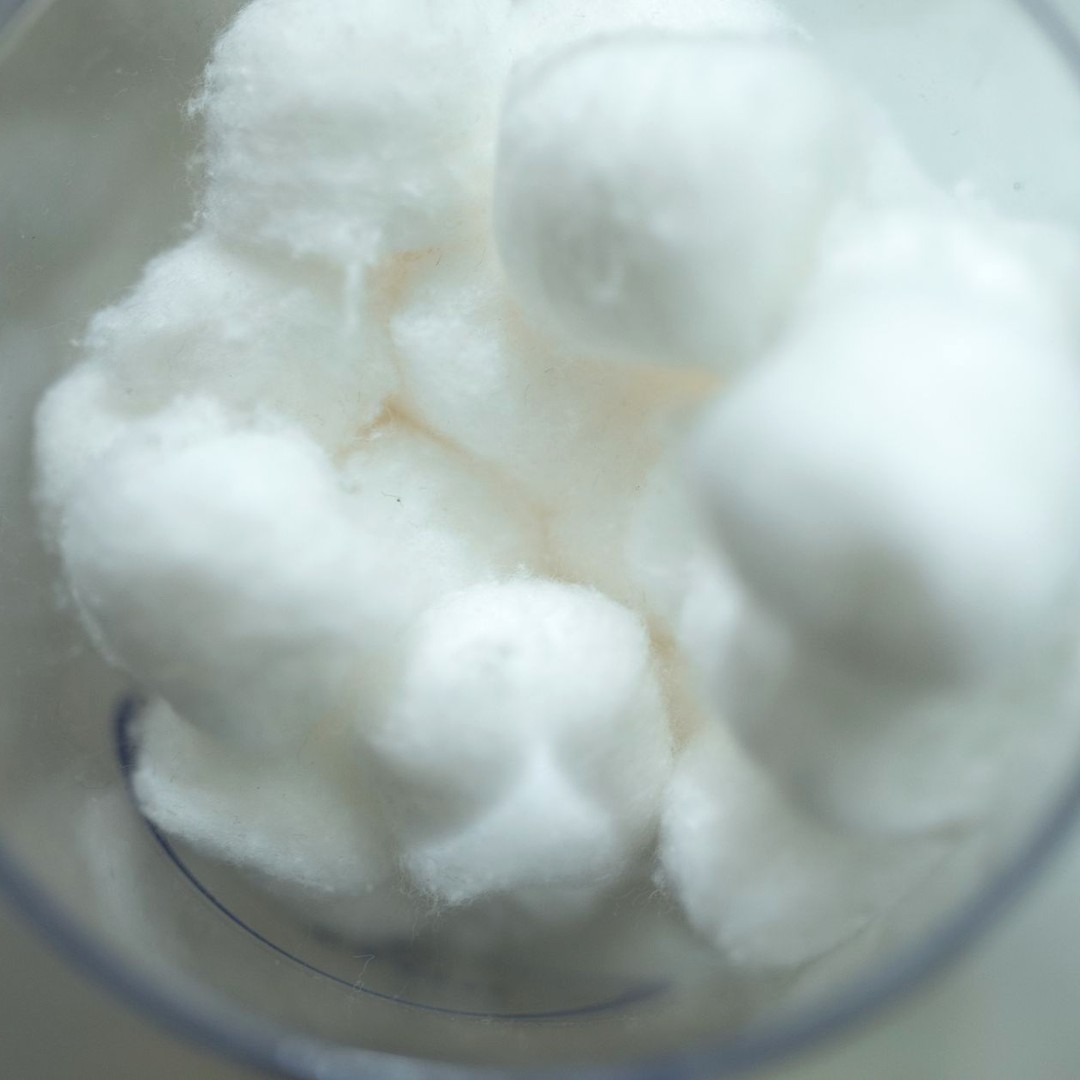
Photo: RDNE Stock project / Pexels
How often — and why more is not better
This is the part I found genuinely surprising, and it’s the correction I’d rank third after the eardrum and the allergy point.
Frequency varies by need. Cornell describes schedules ranging from up to daily at the start when treating an infection, down to every one to two weeks for maintenance, with dogs that have allergies, recurrent infections, or floppy ears generally needing more. Today’s Veterinary Practice describes home cleaner use in most protocols as once daily to twice weekly depending on severity.
Then both add the same caution. Cornell: overcleaning the ears can also lead to irritation. Today’s Veterinary Practice: overcleaning should be avoided because it can contribute to maceration and ear disease.
And remember the predisposing-factor list from earlier — “iatrogenic trauma from hair plucking or vigorous cleaning that induces inflammation or injury to delicate epithelial cells” is on it, by name.
Aggressive cleaning is on the official veterinary list of things that cause ear infections.
Set against the healthy ear’s self-cleaning epithelial migration, the conclusion is almost anticlimactic. If the ear is clean, pink, and odorless, the best thing you can do is leave it alone. More cleaning is not more care.
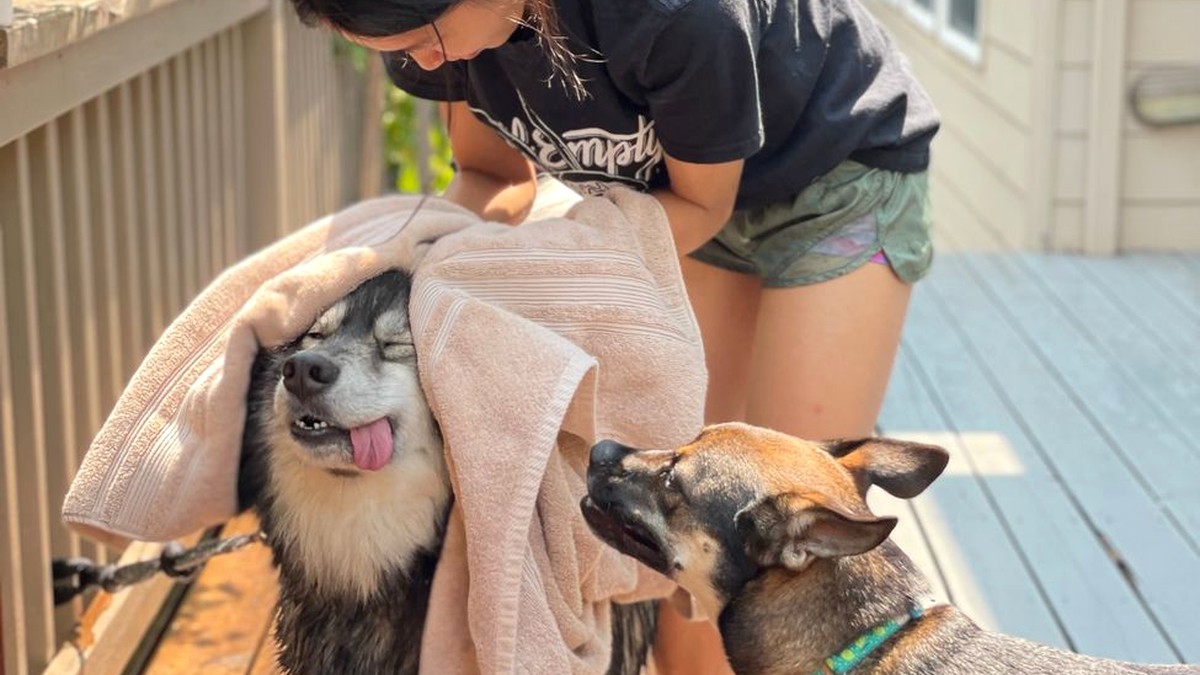
Photo: Nadia Jangmi Hong / Pexels
Breed, ear shape, and the hair-plucking argument
The best epidemiology available comes from VetCompass, a peer-reviewed primary-care study of 22,333 UK dogs. One caveat before the numbers: this is UK data. Breed popularity and climate differ in the US, so read it as the largest primary-care study of its kind rather than as an American statistic.
- One-year prevalence: 7.30% (95% CI 6.97–7.65)
- Highest odds versus crossbred dogs: Basset Hound OR 5.87, Chinese Shar Pei 3.44, Labradoodle 2.95, Beagle 2.54, Golden Retriever 2.23
- Lowest odds: Chihuahua 0.20, Border Collie 0.34, Yorkshire Terrier 0.49, Jack Russell Terrier 0.52
- Ear carriage versus erect ears: pendulous OR 1.76, V-shaped drop 1.84, semi-erect 1.03 (not significant)
- Also: “designer” crossbreeds 1.63, male sex 1.21, bodyweight above breed mean 1.45. Skull shape was not significantly associated.
Put the two lines side by side. Ear carriage roughly doubles the odds at most. Breed effects run up to about sixfold. That gap is precisely the AVMA’s point — breed biology, meaning glands, skin, and allergy predisposition, outweighs the shape of the flap.
On prevalence generally, you’ll also see the figure that 20% of all dogs in the United States have otitis externa, with higher incidence in warm, humid regions. That comes from one veterinary reference, and it measures something different from VetCompass’s 7.30% one-year primary-care diagnosis rate. They aren’t contradicting each other; they’re counting different things in different populations. I’d treat the 20% as an estimate rather than a hard number.
Should you pluck the ear hair?
Genuinely unsettled, so here are both sides.
Against: plucking causes micro-trauma and inflammation of the canal epithelium, and Today’s Veterinary Practice lists “iatrogenic trauma from hair plucking or vigorous cleaning” directly in its predisposing-factor list. Routine plucking of a healthy ear is, by that reading, one of the things that causes the problem.
For, narrowly: Merck states that hair plucking “remains controversial but may be necessary for resolution in certain cases” — specifically when a canal is infected and so full of hair that medication cannot reach its full length, or in breeds with extreme canal hair where airflow and drug delivery are blocked.
The middle path reported in grooming and veterinary sources is trimming the hair on the inner flap and at the canal opening short, rather than pulling it out.
The way I’d put it: plucking is a treatment decision, not a grooming default. Ask your veterinarian whether your dog’s ears need it.
What it costs in the US
I want to label this clearly, because it deserves a weaker claim than everything above.
No veterinary society or university published US cost data for this. The ranges below come from consumer cost-aggregator sites, not clinical or government sources, and they vary widely by region and clinic. Treat them as rough orientation, then ask your own clinic for an estimate.
- Uncomplicated ear infection treatment, including exam, cytology, and medication: roughly $150–$500
- One aggregator citing 21 real vet bills: $130–$650, median around $400
- Components: exam $50–$80; ear cytology $40–$80; in-clinic cleaning or flush $20–$50; prescription otic medication $25–$150
- Severe or chronic add-ons: culture and sensitivity $100–$200; sedated deep ear flush $100–$250; oral antibiotics $20–$60; allergy testing $200–$400
Nationwide’s claims release didn’t break out an average cost for ear infections specifically, and I found no credible published figure for TECA-BO or aural hematoma repair. So those numbers aren’t here.
Home remedies to skip
- Hydrogen peroxide. Cornell explicitly says to avoid cleaners containing it. It leaves water behind in the canal, can damage healthy tissue, and can drive debris deeper in an already inflamed ear.
- Rubbing alcohol and alcohol-heavy “drying” solutions. Cornell says avoid. It stings badly on inflamed or broken skin, dries and irritates the canal, and isopropyl alcohol is ototoxic if it reaches the middle or inner ear.
- Vinegar or apple cider vinegar flushes. Veterinarians generally advise against these. They’re acidic, they disrupt canal pH, and the dilution is guesswork.
- Human ear drops or human earwax removal kits. No veterinary source I found supports using these in dogs. They’re formulated for a straight human canal and human pathology. Ask your vet rather than improvising.
- Coconut oil, essential oils, garlic or olive oil mixes. I couldn’t verify anything either way in the veterinary sources, so I won’t claim they help or that they’re safe. What I can say is that any oil or home mixture put into an ear whose eardrum status is unknown carries the same ototoxicity and debris-trapping concerns. Ask first.
- Leftover medication from a previous infection, or from another pet. The organism may be completely different, the eardrum’s status has changed, and aminoglycoside-containing products are the exact class flagged for ototoxicity.
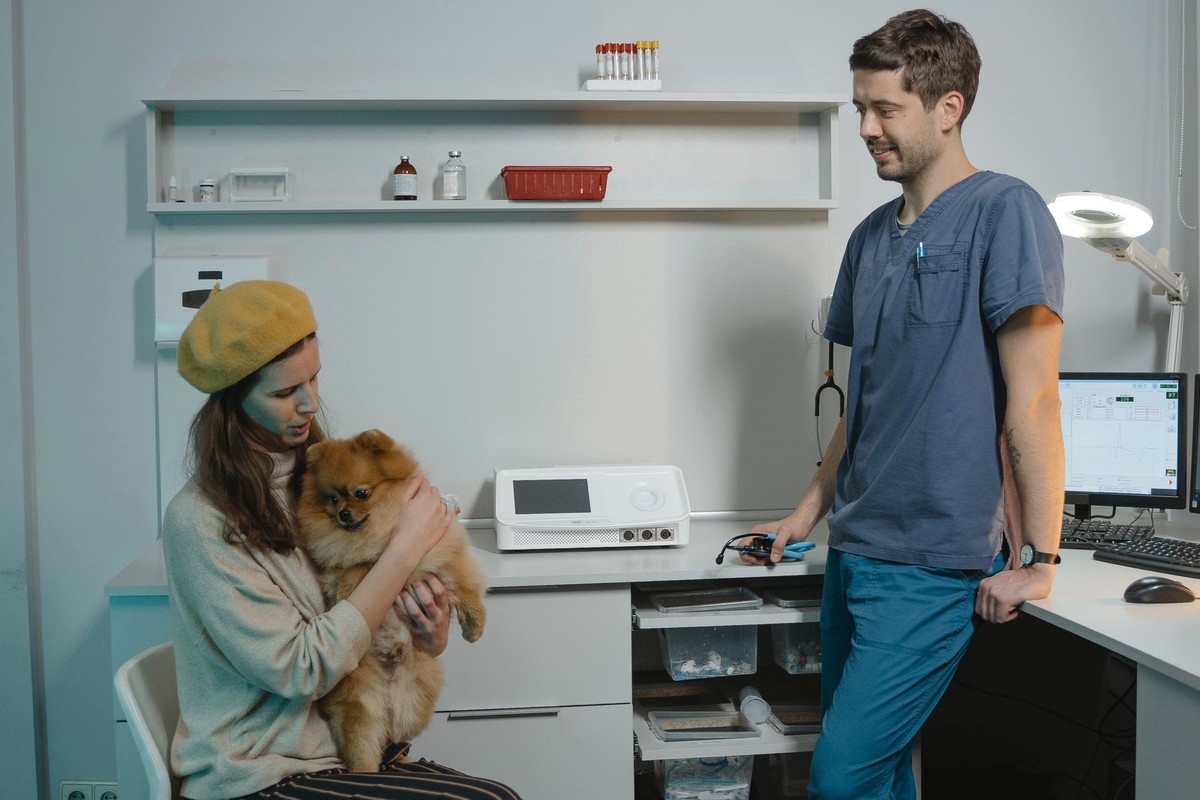
Photo: Tima Miroshnichenko / Pexels
What the whole thing comes down to
If a dog is shaking his head as you read this, the sequence is: check the same-day list at the top, book the appointment, and leave the ear alone until someone has looked inside it.
Then ask the longer question. If this is the first infection after a summer of swimming, moisture may be the whole story. If it’s the third one this year, the ear is probably not the disease — it’s where the disease is showing up. And the answer to that lives in a dermatology workup, not in a bigger bottle of cleaner.
What changed my thinking wasn’t any single number. It was the realization that almost everything I’d have done instinctively — look at the color, clean it more often, clean it harder, keep the ears bone dry — was either useless or, on the official list, part of the cause.
The ear that’s clean, pink, and odorless doesn’t need anything from you. The one that’s red, smelly, or sore doesn’t need you either. It needs someone with an otoscope.
Call your veterinarian the same day if your dog has any of these: pain when the ear or its base is touched; a foul odor or pus; head tilt; stumbling, circling, or loss of balance (ataxia); eyes darting back and forth (nystagmus); sudden hearing loss; facial paralysis or an eye that won’t blink; thick, pus-like or bloody discharge; or a soft, swollen, fluid-filled ear flap. Do not clean the ear, and do not put anything into it, before that visit.
Veterinary disclaimer. This article is general information about canine health, not veterinary advice, and it does not establish a veterinarian–client–patient relationship. Ear disease in dogs is painful and progressive, and it cannot be diagnosed from a photograph, a smell, or a blog post. An ear that is red, smelly, discharging, or painful is a veterinary appointment, not a home project. Diagnosis, cleaner selection, medication, and the assessment of the eardrum all belong to a licensed veterinarian who has examined your dog.
Medication note. Ingredient and drug-class names appear in this article only in the context of ototoxicity risk, so that you recognize them in a conversation with your veterinarian. No doses and no product brands appear here, and none should be inferred. Do not start, stop, or change any medication based on this article, and never put a leftover or borrowed ear product into your dog’s ear.
References
- American Veterinary Medical Association — Ear cropping and canine otitis externa FAQ
- Cornell University College of Veterinary Medicine, Riney Canine Health Center — How to Clean Your Dog’s Ears
- VetCompass / peer-reviewed — Frequency and predisposing factors for canine otitis externa in the UK: a primary veterinary care epidemiological view (22,333 dogs)
- Merck Veterinary Manual — Otitis Externa in Animals; Auricular Hematomas in Dogs, Cats, and Pigs
- Today’s Veterinary Practice — Diagnosing and Treating Chronic and Recurrent Otitis Externa; The Challenge of Chronic Otitis in Dogs: From Diagnosis to Treatment
- Today’s Veterinary Nurse — Otitis Externa: Inflammation of the Ear Canal
- VCA Animal Hospitals — Ear Infections in Dogs (Otitis Externa); Tympanic Membrane Rupture and Middle Ear Infection in Dogs
- Vet Times — Otitis externa: cleaning dogs’ ears (ototoxic and relatively safe agents; note that the licensing statements in that source are UK-specific)
- Companion Animal Parasite Council — Otodectic Mite guideline
- Nationwide pet insurance — 2025 claims analysis, 3.3M+ claims, published March 2026
- American Kennel Club — Dog Ear Infections: Symptoms, Causes, Treatment, and Prevention; How to Clean a Dog’s Ears Safely
- Clinician’s Brief — Diagnosis & Management of Otitis (US 20% estimate; treat as an estimate)
- Consumer veterinary-cost aggregators — US cost ranges only, labeled as consumer estimates