
Pet Dental Care at Home: What Brushing Can and Can’t Do
I want to start with the thing I got wrong, because it shaped every product I bought for years.
I thought the yellow-brown crust on my dog’s back teeth was the disease. Scrape it off, dissolve it, powder it away — and the mouth would be healthy again. That belief is exactly what most pet dental care at home marketing is built on, and it is backwards.
Here is the short version, up front.
Home care removes plaque. It never removes tartar. And the damage that actually destroys a mouth happens below the gumline, in a place no brush, gel, chew or water additive has ever reached.
That sounds discouraging. It isn’t, quite — because the one thing you can do at home is also the thing with the strongest evidence behind it. It just has to be done properly, and it has to be honest about its limits.
Photo: KATRIN BOLOVTSOVA / Pexels
Plaque vs tartar: the distinction that changes what you buy
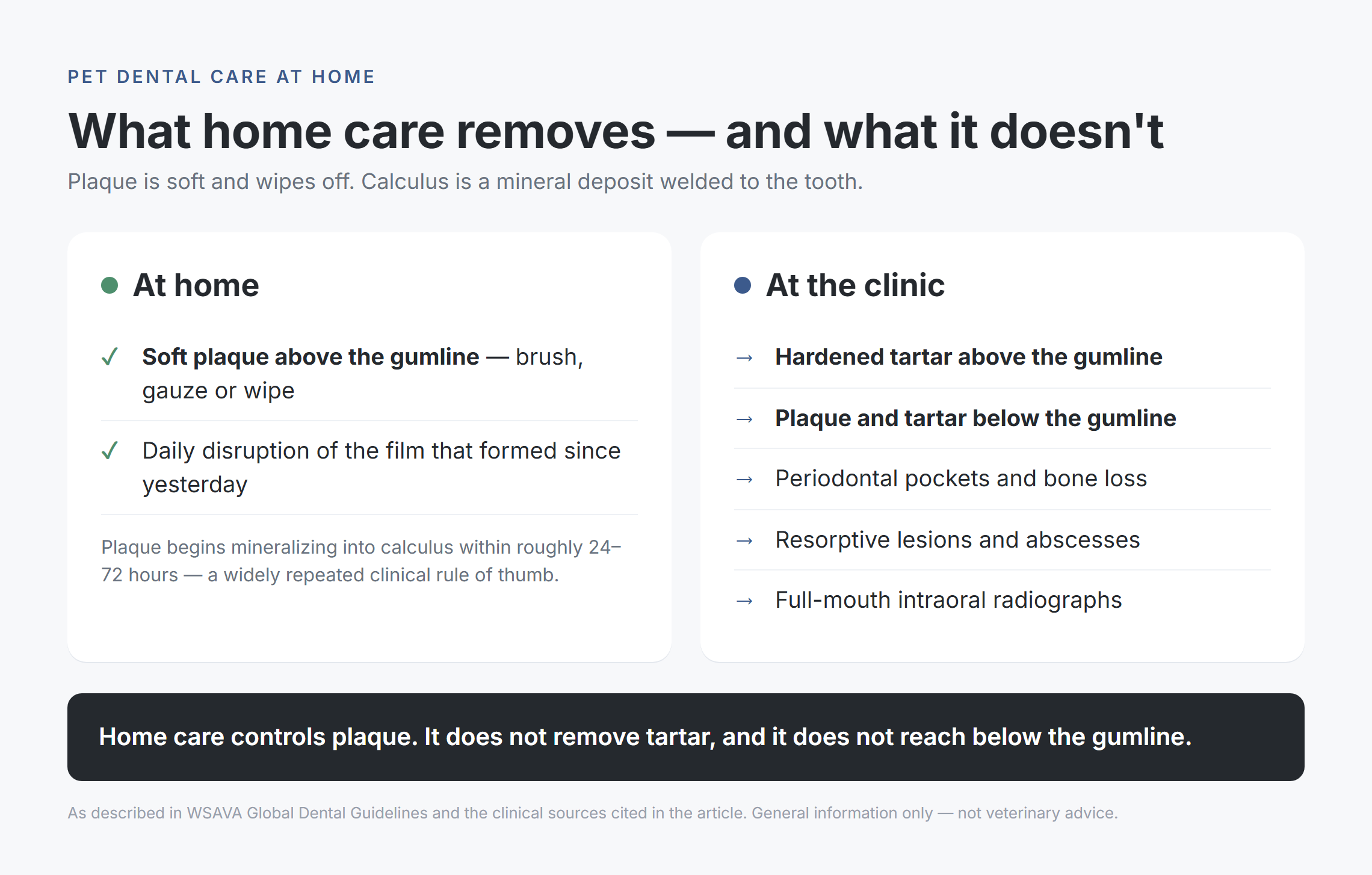
Plaque is a soft bacterial biofilm that forms continuously on the tooth surface. It wipes off. A brush, a gauze pad, even a finger with the right technique disrupts it.
Tartar — calculus, to use the clinical word — is plaque that has mineralized with calcium and phosphate salts and bonded to the enamel. It is a mineral deposit welded to a tooth.
Nothing you can buy dissolves it. Only professional scaling does.
The nuance that surprised me most comes from a clinical review in Today’s Veterinary Practice, and I’ll quote it because paraphrasing softens it:
“Calculus, or tartar, is also relatively nonpathogenic.”
So the crust I was so fixated on is not the villain. The same review states that the damaging effects of periodontal disease come from subgingival plaque sitting inside the gingival sulcus or periodontal pocket. It also notes that gingivitis can occur with no calculus present at all, and that heavy calculus can coexist with very little inflammation.
Calculus is best understood as two things: a rough, plaque-retentive surface that makes the problem worse, and a visible marker that plaque has been there a long time. It is the smoke, not the fire.
What home care can and cannot reach
| Removable at home | Needs the veterinary clinic | |
|---|---|---|
| Plaque above the gumline (soft) | Yes — brush, gauze, wipe | — |
| Tartar above the gumline (hard) | No | Ultrasonic or hand scaling under anesthesia |
| Plaque and tartar below the gumline | No | Subgingival scaling, probing, root planing |
| Pockets, bone loss, resorptive lesions, abscesses | No | Probing plus full-mouth intraoral radiographs |
WSAVA’s Global Dental Guidelines draw the same line: plaque is soft and brushable, calculus is hardened and requires professional removal, and home care does not address subgingival disease.
Timing matters here too. Plaque begins mineralizing into calculus within roughly 24 to 72 hours. I’d treat that as a widely repeated clinical rule of thumb rather than a single hard study number — but the practical meaning holds. Miss a few days and you are no longer removing plaque. You are looking at something a brush can’t touch.
Does dental disease damage the kidneys, heart and liver?
This is the claim I see repeated most confidently, and it deserves a careful answer rather than a scary one.
Part of it is well accepted: bacteria from an inflamed mouth can enter the bloodstream. WSAVA notes that patients with periodontal disease are exposed to oral bacteria in the bloodstream daily.
The organ part is where the language has to get precise. The AVMA’s own wording for pet owners is this:
“Other health problems found in association with periodontal disease include kidney, liver, and heart muscle changes.”
Found in association with. Not caused by. That distinction is not lawyer-speak — it is what the underlying research supports.
Today’s Veterinary Practice puts it directly: “While no causal relationship has been identified, and much of the research is in human medicine, the evidence that periodontal disease has negative consequences on systemic health is mounting.” WSAVA describes the relevant studies as “generally comprised of correlation rather than causation.”
The largest US dataset is Glickman and colleagues, published in JAVMA in 2009 — roughly 120,000 dogs with periodontal disease compared against an age-matched cohort without it, drawn from Banfield’s electronic records. It found significant associations between the severity of periodontal disease and later presumptive diagnoses of cardiovascular disease, including endocarditis.
And in the interest of not quoting only the half I like: those findings were publicly questioned by veterinary cardiology specialists (Peddle and Sleeper, 2009), who noted they were inconsistent with a previously published clinical study. A companion Glickman paper on kidney disease was more candid still — the authors themselves said a prospective study would be needed to establish whether the relationship is causal.
So here is the honest sentence.
Dogs with more severe periodontal disease are more likely to be diagnosed with cardiovascular and kidney disease. Researchers have not established that the dental disease is what caused it. Age and chronic inflammation sit underneath both, and either could be driving the pattern.
Brushing your dog’s teeth is worth doing. It is not a guarantee against kidney disease, and anyone selling it that way is overselling.
Is it really 80% of pets by age three?
You’ll see that figure everywhere — roughly 80% of dogs and 70% of cats showing evidence of periodontal disease by age three. It is genuinely widespread in US veterinary communications, but I’d rather give you the AVMA’s own softer phrasing: “By the time your pet is 3 years old, he or she will very likely have some early evidence of periodontal disease.”
Then there’s a counterpoint worth knowing, because it made me trust the topic more, not less.
O’Neill and colleagues (2021, Journal of Small Animal Practice) used VetCompass primary-care records — a random sample of 22,333 dogs across 784 clinics — and found a one-year period prevalence of diagnosed periodontal disease of just 12.52%.
The authors explain the gap themselves. Higher-prevalence studies used targeted selection of animals, often in laboratory-like or referral settings, and primary-care diagnoses rest on clinical examination alone rather than full-mouth radiography, which finds lesions the eye misses.
The two figures aren’t really contradicting each other. They’re counting different things. What “80%” means is some early evidence on close examination — not 80% of pets needing dental surgery.
That study is UK data, so don’t read it as a US prevalence rate. Its risk-factor findings travel better: dogs aged 12 and over had 3.91 times the adjusted odds of dogs aged two to four, and dogs under 10 kg had more than three times the odds of dogs in the 30–40 kg range.
If you have a small, older dog, this article is more about you than most.

Photo: Erwin Bosman / Pexels
How often to brush: there is an actual trial
Most brushing advice is asserted. This one was tested.
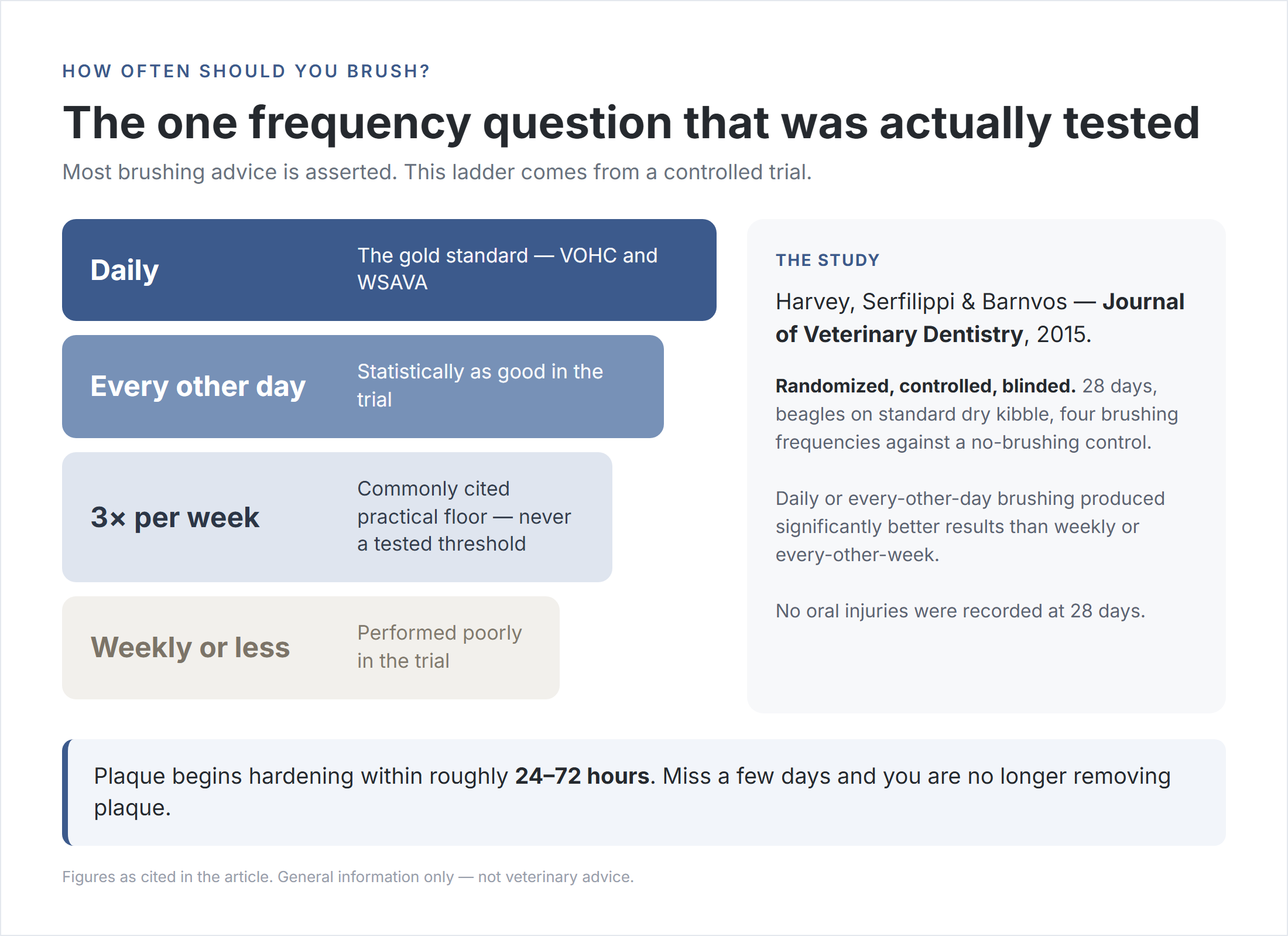
Harvey, Serfilippi and Barnvos published a randomized, controlled, blinded 28-day trial in the Journal of Veterinary Dentistry in 2015. Beagles on standard dry kibble, a clearly defined brushing technique, four frequencies — daily, every other day, weekly, every other week — against a no-brushing control.
The result: more frequent brushing was more effective at retarding plaque and calculus accumulation and at reducing existing gingivitis. Specifically, daily or every-other-day brushing produced statistically significant improved results compared with weekly or every-other-week brushing.
The professional bodies land in the same place. VOHC says it in five words: “The gold standard is brushing.” WSAVA calls daily brushing the gold standard for plaque control. The AVMA calls regular brushing “the single most effective thing you can do to keep their teeth healthy between dental cleanings.”
Now the part I want to be straight about, because I’ve repeated the wrong version myself.
You will constantly hear “at least three times a week.” It is real, widely used US client education, and as a practical floor it is fine. But it is not a trial-validated threshold — the Harvey trial never tested three times weekly. The arms that showed the significant benefit were daily and every other day, and the arms that fared poorly were weekly and every other week.
Combine that with plaque hardening within a couple of days and you get a simple ladder:
- Daily — the standard.
- Every other day — still performs well in controlled trials.
- Three times a week — the commonly cited practical minimum.
- Once a week or “when I remember” — do not treat this as adequate.
One reassuring detail from the same trial: at the end of 28 days there were no gingival or non-gingival lacerations or other signs of oral injury. Correctly performed brushing did not damage these dogs’ mouths.
Starting from zero: a finger, some gauze, and weeks of patience
If you’ve never brushed, don’t start with a brush. That approach is standard veterinary advice for a reason — it works, and it protects the relationship.
- Touch and lift. Short, calm sessions touching the muzzle and lifting the lip. Seconds, not minutes. Reward immediately.
- Let them taste the toothpaste. Pet-formulated paste on your finger. The flavor is the reward — that’s the whole point of this step.
- Finger plus gauze. Wrap a moist gauze or soft cloth around your finger, add pet toothpaste, and rub along the outer tooth surfaces. This is the intended intermediate stage, not a shortcut.
- Introduce the brush. A soft pet toothbrush or finger brush, angled toward the gumline.
- Prioritize the outer surfaces, especially the upper carnassial and canine teeth, where calculus builds most visibly.
- Stop before your pet objects. Progress here is measured in weeks.
With cats, the same progression applies and generally takes longer. Very short sessions, gauze or a bare finger long before any brush, and stop at the first stress signals — flattened ears, a twitching tail, attempts to leave. Never force restraint. A cat who learns that brushing is frightening will refuse permanently, and you don’t get that trust back cheaply.
One safety point that matters more than the technique. If the mouth already hurts — bleeding gums, a fractured tooth, a resorptive lesion — brushing will hurt, and you may get bitten by an animal who has never bitten anyone. Have a veterinarian examine and treat the mouth first. Then start home care on a comfortable mouth.
Photo: Cup of Couple / Pexels
Never use human toothpaste
This one is not a preference. It’s a poisoning risk.
Xylitol is toxic to dogs, and the Merck Veterinary Manual specifically lists toothpaste and other oral hygiene products among the places it hides. Dogs ingesting more than 0.1 g/kg are at risk of hypoglycemia; more than 0.5 g/kg may develop acute liver failure. Xylitol triggers a rapid, dose-dependent insulin release in dogs.
The timeline is fast. Profound hypoglycemia can appear 30 minutes to two hours after ingestion, with vomiting, weakness, lethargy, seizures and coma. Higher exposures raise liver enzymes within 12 to 48 hours, with liver failure possible within 24 to 48.
Now the detail most articles get wrong, and I’d rather be accurate than dramatic: dogs are the only domestic species in which xylitol toxicosis has been reported. Cats are not at risk of xylitol-induced hypoglycemia or liver injury.
Human toothpaste is still wrong for cats, for different reasons. Pets can’t rinse and spit, so they swallow everything — including detergents and foaming agents never meant to be swallowed, and sometimes a lot of sodium. Baking soda is also unsuitable; it’s alkaline and can upset stomach acid balance. Fluoride gets cited a lot, but honestly it’s the weakest part of the case. Lead with xylitol.
If your dog has eaten a xylitol-containing product, that’s a same-day emergency. Call a veterinarian or an animal poison control service immediately. Don’t induce vomiting at home, and don’t try to treat it yourself.
Gels, chews, additives: what they can honestly do
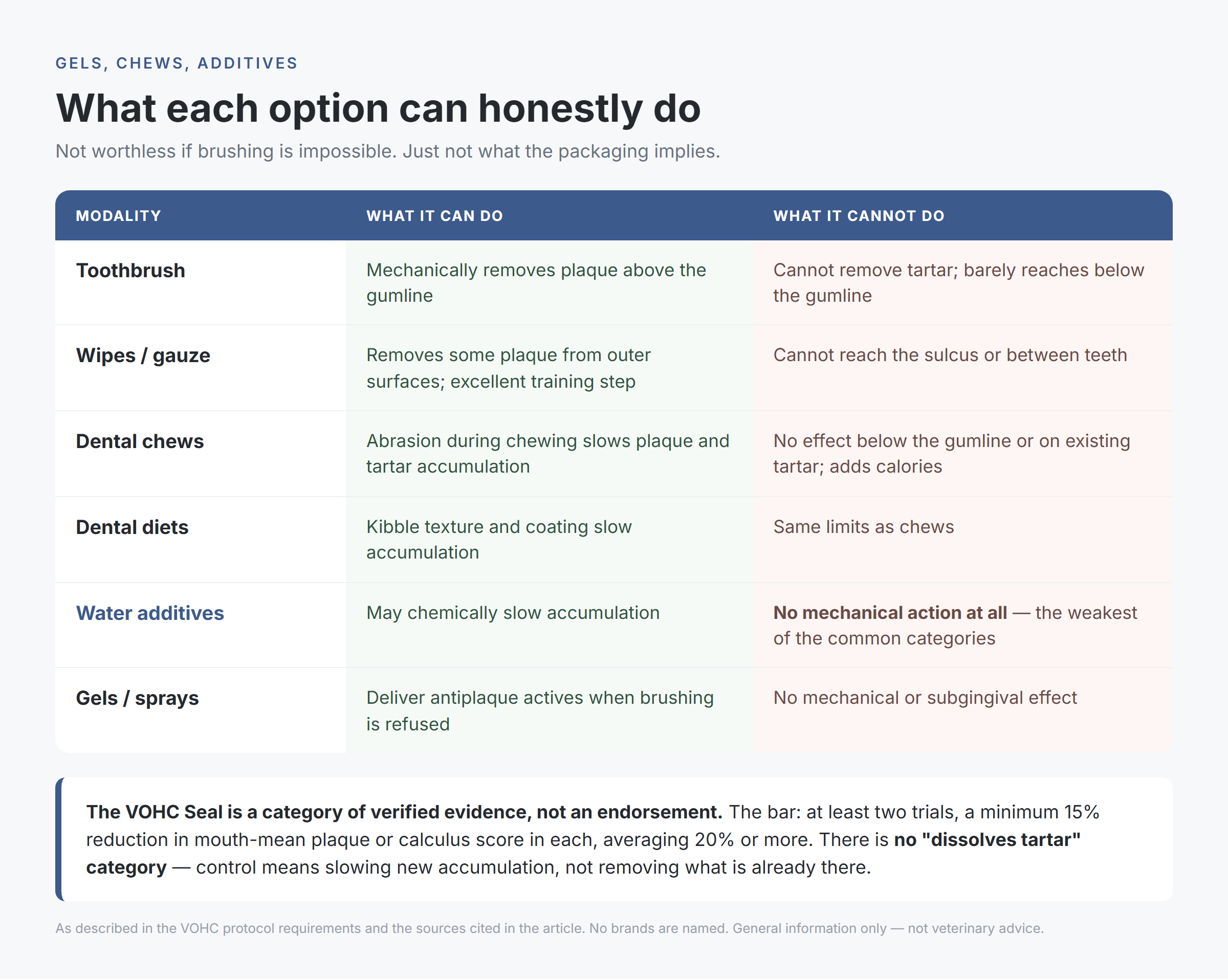
If brushing is truly impossible in your household, these are not worthless. They’re just not what the packaging implies.
The useful filter is the VOHC Seal of Acceptance. VOHC describes itself as existing “to recognize products that meet pre-set standards of plaque and calculus (tartar) retardation in dogs and cats,” and it’s careful to state that it does not test products itself — it reviews data from trials run to its protocols.
The bar is specific: a minimum of two trials, at least a 15% reduction in mouth-mean plaque or calculus score versus control in each trial, an average of at least 20% across the two, with statistical significance in each. Seals are awarded in a “helps control plaque” and/or “helps control tartar” category.
That seal is a category of verified evidence, not an endorsement, and not a claim that the product equals brushing. Most dental-branded products on the shelf have never submitted data to VOHC at all. I’m naming no brands here — look for the seal, and ask your veterinarian.
| Modality | What it can do | What it cannot do |
|---|---|---|
| Toothbrush | Mechanically removes plaque above the gumline | Cannot remove tartar; barely reaches below the gumline |
| Wipes / gauze | Removes some plaque from outer surfaces; excellent training step | Cannot reach the sulcus or between teeth |
| Dental chews | Abrasion during chewing slows plaque and tartar accumulation | No effect below the gumline or on existing tartar; adds calories |
| Dental diets | Kibble texture and coating slow accumulation | Same limits as chews |
| Water additives | May chemically slow accumulation | No mechanical action at all — the weakest of the common categories |
| Gels / sprays | Deliver antiplaque actives when brushing is refused | No mechanical or subgingival effect |
Water additives deserve the extra flag. They cannot scrub anything. Most shelf products have no published efficacy data, and killing bacteria in a test tube is not the same as reducing plaque in a live mouth. One peer-reviewed trial of a pomegranate-based additive did show reduced plaque and calculus — that’s one study, for one formulation, not a category endorsement.

Photo: KATRIN BOLOVTSOVA / Pexels
“Dissolves tartar” is not a real thing
There is no legitimate product that dissolves established tartar. Calculus is a mineralized deposit of calcium and phosphate bonded to the tooth surface, and once formed it comes off by professional scaling or not at all.
VOHC has no “dissolves tartar” category. The two award categories are “helps control plaque” and “helps control tartar” — and control means retarding new accumulation, not removing what’s already there. Any powder, additive, gel or chew advertised as melting off existing tartar is making a claim entirely outside that framework.
So the corrected version of the promise reads like this: a VOHC-accepted product used daily is better than nothing and a genuine option for a pet who refuses a brush. It slows new plaque and tartar. It does not remove what’s on the teeth, it does nothing below the gumline where periodontal disease actually happens, and it does not replace a veterinary dental exam.
Anesthesia-free cleaning: not a gentler option
I understand the appeal completely. No anesthesia, lower price, and the teeth look white afterward. It reads like the sensible middle path.
The American Veterinary Dental College has opposed it since 2004 and prefers the more accurate name non-professional dental scaling. The AVDC’s own position-statement page returned a 404 when we went looking, so the 2004 wording below is quoted as reported by the AVMA’s JAVMA News:
“Access to the subgingival area of every tooth is impossible in an unanesthetized canine or feline patient.”
“A complete oral examination, which is an important part of a professional dental scaling procedure, is not possible in an unanesthetized patient.”
The same statement notes that even slight head movement by the patient could result in injury to the oral tissues — and that the operator may be bitten when the patient reacts.
AVDC’s public education site adds the rest of it. X-rays and a full examination of every surface are impossible in an awake pet. Hand-scraped teeth are left with grooves and rough surfaces that encourage bacterial growth, rather than the smooth polished surface that follows professional scaling. The restraint itself causes significant discomfort. And it produces false reassurance, summed up in one line I keep coming back to:
“White teeth do not mean a clean and healthy mouth.”
AVMA policy from 2014 is the formal version: when procedures such as periodontal probing, intraoral radiography, dental scaling and dental extraction are justified by the oral examination, they should be performed under anesthesia.
There’s also a function of anesthesia that has nothing to do with pain or cooperation, and it’s the one I’d never considered: protection of the airway and lungs from accidental aspiration. Without an endotracheal tube, debris and fluid can go where they shouldn’t.
But is anesthesia actually safe?
That’s a fair question and it deserves numbers rather than reassurance.
The most-cited large dataset is CEPSAF (Brodbelt et al., 2008) — 98,036 dogs and 79,178 cats anesthetized or sedated. Anesthetic-related death risk was 0.17% in dogs and 0.24% in cats overall, and roughly 0.05% and 0.11% in healthy patients. Sick patients (ASA 3–5) carried far higher risk, around 1.37%.
The caveat is important: that’s UK data collected between 2002 and 2004. Monitoring standards and anesthetic drugs have moved on since. Treat it as the best large study available, not as a current US figure.
Two findings from it are directly actionable. Poor health status, increasing age, extremes of body weight and procedural complexity raised risk — and pulse monitoring and pulse oximetry were associated with reduced odds of death. That’s a concrete reason to ask a clinic what monitoring they use, alongside AVDC’s own advice to ask about the specific anesthesia protocol beforehand.
For senior pets, the honest framing is risk assessment rather than age exclusion: pre-anesthetic exam, bloodwork, an individualized protocol, IV catheter and fluids, intubation, dedicated monitoring, temperature support. Untreated painful dental disease carries its own welfare cost, and that belongs on the same scale.
What anesthesia-free scaling is not is a budget alternative, or a workaround for a pet who “can’t handle anesthesia.”
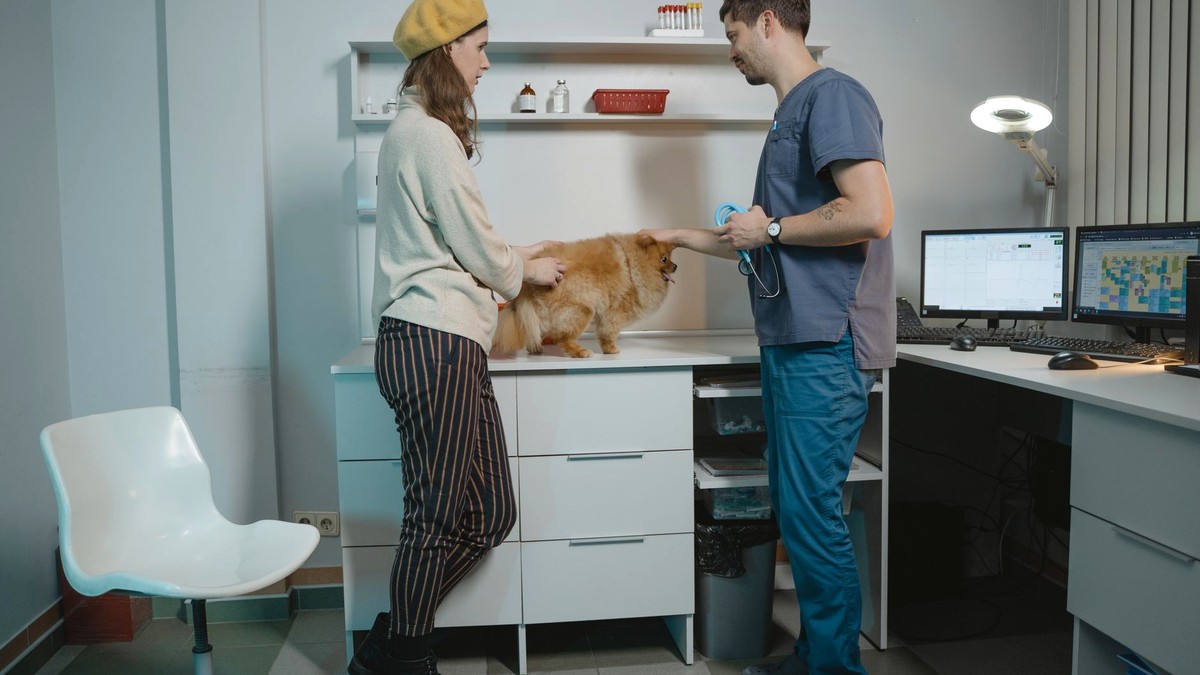
Photo: Tima Miroshnichenko / Pexels
Bones and antlers are not toothbrushes
This is the one that costs owners a tooth.
Chewing hard items is a leading cause of fractured teeth in dogs: bones, antlers, hooves, hard nylon toys, ice cubes, rocks, and cage bars. Antlers and bones get marketed as natural chews and are among the most common causes of fracture.
Two rules of thumb, both widely taught by veterinary dentists — clinical heuristics rather than a validated hardness standard, but useful:
- The thumbnail test. You should be able to dent the chew with your fingernail. If you can’t, it’s hard enough to fracture a tooth. No bone reliably passes this test.
- The kneecap rule, attributed to veterinary dentist Dr. Fraser Hale. If you wouldn’t want the object thrown at your kneecap, it’s too hard for your dog’s teeth.
The usual casualty is the upper fourth premolar — the carnassial — typically a slab fracture. And this isn’t cosmetic. A fracture that exposes pulp is painful and opens a route for infection down to the tooth root. Treatment is root canal therapy or extraction.
Dogs almost never stop eating over it, which is exactly why owners miss it.
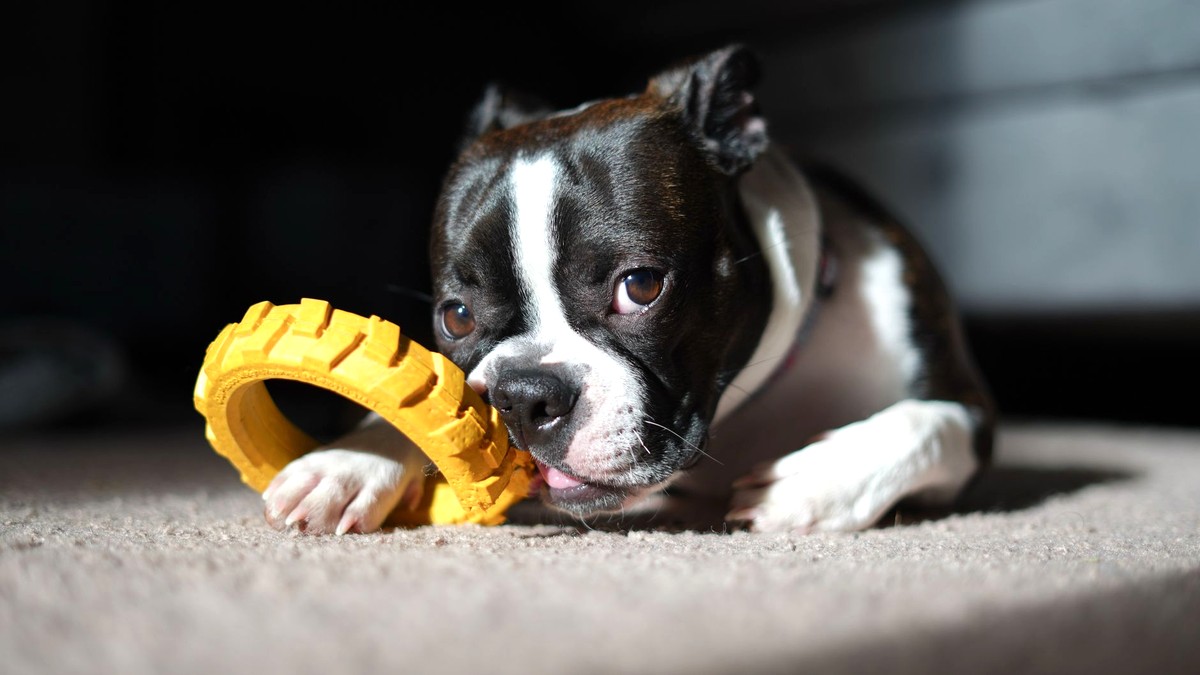
Photo: Sean Brannon / Pexels
Cats: the part home care cannot fix
I want to be careful not to promise cat owners something brushing can’t deliver.
Tooth resorption affects an estimated 20–60% of all cats, and close to three-quarters of cats aged five and over, per Cornell’s Feline Health Center. The cause is unknown — Cornell’s own wording is that there are a few theories, but no one is sure what really stimulates the condition.
Diagnosis requires full-mouth intraoral radiographs. In one study, 53% of cats had clinically obvious lesions, while radiographs revealed additional lesions in nearly half of the cases that looked normal on examination. The only effective treatment is extraction of affected teeth.
No amount of brushing, gel, or water additive prevents or treats it.
The same applies to feline chronic gingivostomatitis — severe, painful oral inflammation with an unknown underlying cause. A range of medical therapies has been tried, but the treatment most likely to give lasting relief is surgical extraction of the premolar and molar teeth, or of all teeth. That is a conversation with your veterinarian, not a decision informed by an article.
Brushing a cat is still worth doing for plaque and gingivitis. It just isn’t a shield against the two most common painful feline oral diseases.

Photo: Tranmautritam / Pexels
What a professional cleaning actually includes
Worth knowing, because “a cleaning” undersells it. Under general anesthesia it includes tooth-by-tooth periodontal probing, full-mouth intraoral radiographs, ultrasonic or hand scaling above and below the gumline, polishing to leave a smoother surface, a dental chart for every tooth, pain management, any indicated extractions, and airway protection via intubation.
The radiographs are the part that can’t be replicated anywhere else. Bone loss, resorptive lesions, abscesses and retained roots are invisible on examination.
On frequency, AAHA’s 2019 guidance is more assertive than most owners expect: small- and medium-breed dogs and all cats should have a first anesthetized dental evaluation by one year of age, with dental procedures at least annually from age one for cats and small-breed dogs, and from age two for large-breed dogs.
On cost, I’ll be transparent about the source quality. No authoritative body publishes a US price index for veterinary dentals. The figures you’ll see quoted — roughly $300–$700 for a routine cleaning in a healthy adult dog, and $500–$1,500 once radiographs and extractions are involved — come from commercial cost-guide sites, not primary data. Get an estimate from your own clinic and treat those ranges as orientation only. The message underneath them is simpler anyway: prevention is cheaper than extraction.
Signs worth a veterinary appointment
The AVMA lists bad breath first, and it’s the right starting point — persistent bad breath isn’t normal “dog breath,” it’s usually the smell of bacterial activity in an inflamed mouth.
The rest of the AVMA’s list: broken or loose teeth, teeth that are discolored or covered in tartar, abnormal chewing, drooling or dropping food, reduced appetite or refusal to eat, pain in or around the mouth, bleeding from the mouth, and swelling around the mouth.
A few more that are easy to miss:
- Chewing on one side only, or swallowing food without chewing. In cats, a sudden preference for soft food is one of the first signs of tooth resorption.
- Facial swelling below the eye, or a draining hole or crusted discharge on the cheek below the eye. That’s the classic picture of an abscessed upper fourth premolar root, which sits just in front of the eye. It needs prompt veterinary care.
- A cat who flinches or chatters when a specific tooth is touched. Cornell’s description is blunt: a cat may clearly indicate excruciating pain when it bites down on an affected tooth.
And the sentence I’d most like to leave with cat owners in particular: pets almost never stop eating from dental pain until it is severe. Cornell notes that the condition must reach an extreme level before most cats stop eating entirely — meaning many live with subthreshold pain for months or years.
“He’s still eating fine” is not evidence of a healthy mouth.
February is National Pet Dental Health Month in the US, which is as good a prompt as any. But I’ve come to think an annual reminder is the wrong unit of time for this.
The useful unit is about 48 hours — the window in which plaque is still soft enough for you to matter.
That’s what I’d tell my past self. I spent years staring at the hard yellow crust and buying things that promised to remove it, when the only thing I could actually influence was the invisible film that had been there since yesterday.
You can’t scrape your way out of this one. You can only stay slightly ahead of it, most days, with a soft brush and about ninety seconds.
And when you can’t — that’s what the exam room is for. Not because home care failed, but because half of this disease was never yours to reach in the first place.
Veterinary disclaimer. This article is general information about pet dental care, not veterinary advice, and it does not replace an examination. Periodontal disease, tooth resorption, fractured teeth and oral pain cannot be diagnosed by looking — they require a physical examination, probing under anesthesia, and full-mouth intraoral radiographs. No product, supplement, or dental diet mentioned here should be started, stopped, or changed except on your veterinarian’s guidance. No brand is recommended and no doses are given anywhere in this article. Never give a pet a human medication, and never use human toothpaste.
See a veterinarian promptly. Bleeding gums or bleeding from the mouth · reluctance to eat, dropping food, or chewing on one side only · facial swelling around or below the eye · a draining hole or crusted discharge on the cheek below the eye · a broken or loose tooth · a cat who suddenly prefers soft food or swallows without chewing.
Same-day emergency: a dog known or suspected to have swallowed a xylitol-containing product, including human toothpaste — contact a veterinarian or an animal poison control service immediately. Do not induce vomiting at home.
References
- American Veterinary Medical Association — Pet dental care; AVMA policy on veterinary dentistry (2014); Below the surface of anesthesia-free dentistry, JAVMA News (2016)
- American Veterinary Dental College — Anesthesia Free Pet Dental Cleanings: Know the Facts (afd.avdc.org); 2004 position statement on dental scaling without anesthesia, quoted as reported by AVMA JAVMA News
- Niemiec B et al. — WSAVA Global Dental Guidelines, J Small Anim Pract
- American Animal Hospital Association — 2019 AAHA Dental Care Guidelines for Dogs and Cats
- Veterinary Oral Health Council — About VOHC; Trial Protocol Requirements; Accepted Products
- Harvey C, Serfilippi L, Barnvos D — Effect of Frequency of Brushing Teeth on Plaque and Calculus Accumulation, and Gingivitis in Dogs, J Vet Dent (2015)
- O’Neill DG et al. — Epidemiology of periodontal disease in dogs in the UK primary-care veterinary setting, J Small Anim Pract (2021), VetCompass
- Glickman LT et al. — Evaluation of the risk of endocarditis and other cardiovascular events on the basis of the severity of periodontal disease in dogs, JAVMA (2009); Peddle G, Sleeper MM — published critique (2009); Glickman LT et al. — Association between chronic azotemic kidney disease and the severity of periodontal disease in dogs, Prev Vet Med
- Brodbelt D et al. — The risk of death: the Confidential Enquiry into Perioperative Small Animal Fatalities (CEPSAF), Vet Anaesth Analg (2008) — UK data, 2002–2004
- Merck Veterinary Manual — Xylitol Toxicosis in Dogs; Cornell Riney Canine Health Center — Xylitol toxicities; Risks from a fractured tooth
- Cornell Feline Health Center — Tooth Resorption
- Today’s Veterinary Practice — Current Concepts in Periodontal Disease
- VCA Animal Hospitals — Brushing Your Dog’s Teeth; Brushing Your Cat’s Teeth; Fractured Teeth in Dogs
- A water additive with pomegranate can reduce dental plaque and calculus accumulation in dogs (2023)
- ⚠ Cost ranges: US commercial veterinary cost-guide sites, 2026 — not primary data. Insurer claims figures were omitted as unverifiable.