Normal Body Temperature in Dogs and Cats: Fever Signs
I’ll be honest with you.
For years, I checked my dog’s nose to decide if he was sick.
Cold and wet meant fine. Warm and dry meant trouble. That was the whole system.
It turns out I had it wrong, and so do a lot of loving pet owners. The normal body temperature in dogs and cats is not something you can read from a nose, and it isn’t the same as ours either. Your pet runs warmer than you do, which means “he feels warm” tells you almost nothing.
So let me walk you through what I wish someone had told me sooner. What counts as normal, what counts as a fever, when it becomes an emergency, and how to actually check without guessing.

Photo: www.kaboompics.com / Pexels
What is the normal body temperature in dogs and cats?
Here is the part that surprised me most.
Our pets are simply warmer than we are. A person sits around 98.6°F (37°C). A healthy dog or cat sits noticeably higher.
According to VCA Animal Hospitals and The Animal Medical Center, the normal range for both dogs and cats is roughly 100.0 to 102.5°F (37.7 to 39.2°C).
The Merck Veterinary Manual splits it a little more finely by species:
- Dogs: 99.5–102.5°F (37.5–39.2°C)
- Cats: 100.5–102.5°F (38.1–39.2°C)
You’ll also see 101–102.5°F quoted for dogs specifically. All of these overlap around the same place.
So the honest, practical answer is this.
Think of 100 to 102.5°F as the healthy window for both, with a cat’s floor sitting just a touch higher than a dog’s.
Why can’t I judge by a warm nose?
Because the nose is a myth. I say that as someone who believed it.
A dry or warm nose on its own is not a sign of illness or fever. A nose can be warm simply because your pet just woke from a nap, ran around the yard, or was lying in a sunny spot. Dogs keep their noses moist by licking, and they don’t lick in their sleep, so a bone-dry nose after a nap is completely normal.
The myth has an origin, at least. Before vaccines were common, distemper often caused a hot, dry nose, so a warm nose got linked to serious illness. Vaccination made that rare, but the old rule of thumb stuck around.
The reliable way to know is a thermometer, which brings me to the next part.
What temperature counts as a fever?
This is where the numbers actually matter, so I’ll keep them clear.
The Animal Medical Center considers a true fever to be 103 to 106°F (39.5 to 41.1°C). Since the top of normal is 102.5°F, anything at 103°F and above is climbing into fever territory.
Above that, it stops being “keep an eye on it” and becomes urgent.
- 106°F (41°C) and up is dangerously high, often heat-related, and needs immediate care.
- 107 to 109°F (41.2 to 42.7°C) is the critical zone where organs begin to fail. That’s VCA’s language, and it’s worth taking seriously.
And it goes the other way too. A temperature below about 99°F (37.2°C) is hypothermia, which is also a reason to call your vet, not to wait.
Here’s the whole picture in one place.

| Reading | Dog | Cat | What it means |
|---|---|---|---|
| Normal | 99.5–102.5°F (37.5–39.2°C) | 100.5–102.5°F (38.1–39.2°C) | Healthy range |
| Watch / call vet | 102.5–104.5°F (39.2–40.3°C) | 102.5–104.5°F (39.2–40.3°C) | Consult your veterinarian |
| True fever | 103–106°F (39.5–41.1°C) | 103–106°F (39.5–41.1°C) | Something is wrong |
| Emergency | above 104.5°F, and 106°F+ | above 104.5°F, and 106°F+ | Immediate care |
| Hypothermia | below ~99°F (37.2°C) | below ~99°F (37.2°C) | Too cold, call vet |
Ranges from Merck Veterinary Manual, VCA Animal Hospitals, and The Animal Medical Center. Sources vary slightly at the edges; the differences are small.
What are the signs of a fever?
A number is only half of it. The behavior tells the rest of the story.
Watch for these:
- Lethargy, or just less interest in things they usually love
- Loss of appetite
- Shivering, as the body tries to generate heat through muscle contractions
- Warm ears, warm body to the touch
- Panting, with gums that can look dark red
- Red or glassy eyes, nasal discharge, coughing, or vomiting
None of these are proof by themselves. But any of them is a good reason to reach for a thermometer instead of guessing.

How do I take my pet’s temperature the right way?
I resisted this for a long time. It felt awkward. But it’s the only method that actually works, and it’s quicker than you’d expect.
The reliable tool is a rectal digital thermometer made for pets.
- Coat the tip with a little petroleum jelly or water-based lubricant.
- Gently insert it until the metal tip is fully in, only about an inch is left showing.
- Wait for the beep, usually around a minute, then read it.
- It genuinely helps to have a second person calmly steady and reassure your pet.
A quick, honest word on the alternatives.
Pet ear (tympanic) thermometers exist and are less invasive, which is appealing. But they’re generally considered less consistently accurate than a rectal reading, so rectal stays the dependable standard. And the nose, as we covered, tells you nothing.

When is it an emergency? Heatstroke and the danger zone
There’s one situation where you shouldn’t wait for a thermometer at all.
Heatstroke.
This isn’t the slow fever of an infection. It’s a fast, environmental spike, and it’s a true emergency. Pets are especially vulnerable because they don’t sweat the way we do. They cool down mainly by panting, with a little help from their paw pads. Flat-faced breeds like bulldogs and pugs are far less efficient at this, so they’re at higher risk.
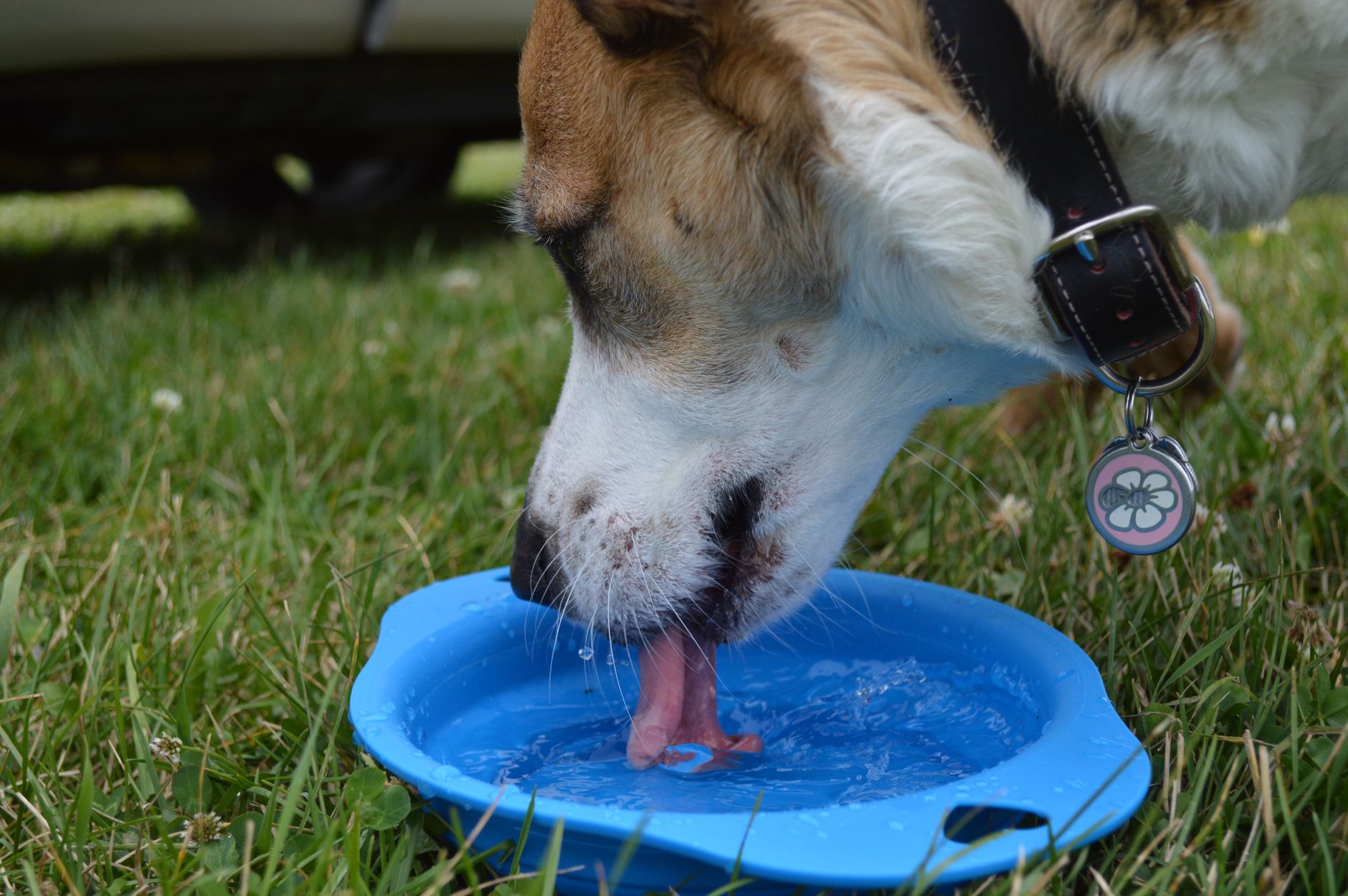
Photo: Doug Brown / Pexels
The AVMA lists warning signs worth memorizing: heavy panting or drooling, difficulty breathing, dry or sticky gums, abnormal gum color, weakness, disorientation, vomiting, collapse, or seizures.
If you suspect heatstroke, move your pet to a cool or air-conditioned space, apply cool, not ice-cold, water to the head, belly, armpits, and feet, use a fan, and get to an emergency vet right away. Skip the ice packs, the rubbing alcohol, and the wet-blanket wrap.
Prevention is simpler and it matters more. Never leave a pet in a parked car, even in shade with the windows cracked. Walk during the cooler hours. Avoid hot asphalt. Keep fresh water and shade available.
One thing you should never do
Please don’t reach for the human medicine cabinet.
Common human fever medicines, acetaminophen, ibuprofen, aspirin, can be toxic to dogs and cats. What helps us can seriously harm them. Any medication decision belongs to your veterinarian.
A quick note before you go
I want to be clear about what this article is, and isn’t.
This is general information to help you notice when something’s off and act sooner. It is not a diagnosis, and it isn’t a replacement for your veterinarian. If your pet’s temperature climbs above 104.5°F, reaches 106°F, drops below 99°F, or comes with real fever signs, call your vet or an emergency clinic. When in doubt, make the call.
I still catch myself reaching for my dog’s nose out of habit.
But now I keep a pet thermometer in the drawer, and I actually know what the number means. That small change is the difference between guessing and knowing, and when it’s someone you love, knowing is the only thing that ever really settles the worry.
References
- VCA Animal Hospitals — Taking Your Pet’s Temperature; Heat Stroke in Dogs
- Merck Veterinary Manual (MSD Veterinary Manual) — Normal Rectal Temperature Ranges; Fever of Unknown Origin in Dogs
- The Animal Medical Center (AMC) — Does My Pet Have a Fever?
- American Veterinary Medical Association (AVMA) — Warm Weather Pet Safety
This content is for educational purposes only and does not replace professional veterinary care. Always consult your veterinarian about your pet’s health.