How to Clean and Disinfect an Ultrasonic Humidifier Safely
I have to be honest about something first.
For most of one winter, I never really cleaned my humidifier.
I rinsed the tank now and then, refilled it with tap water, and told myself that was enough. It wasn’t. When I finally opened the base one morning, there was a slick pink film around the little metal disc, and a chalky white crust on everything else.
That was the day I learned how to properly clean an ultrasonic humidifier — and why it matters more than I thought.
An ultrasonic humidifier doesn’t boil water. It vibrates a small transducer thousands of times a second to fling water into a fine cool mist. That’s efficient and quiet. But it also means whatever is living in your tank gets sprayed straight into the air you breathe. So this guide walks through the whole thing: why it matters, what water to use, how often, the exact step-by-step, and the mistakes I want you to avoid.

Photo: Polina / Pexels
Why does a dirty ultrasonic humidifier matter?
Because a humidifier that isn’t cleaned doesn’t just get ugly. It can make you sick.
The U.S. Environmental Protection Agency (EPA) puts it plainly: inhaling material dispersed by a humidifier has been implicated in causing a certain type of lung inflammation. Dirty tanks grow bacteria and mold, and the mist carries them into the room.
The Mayo Clinic says the same in different words. Dirty humidifiers can trigger flu-like symptoms — and this isn’t only a problem for people with asthma or allergies. Even healthy people can react to mist tainted with bacteria or fungi.
There’s a name for the serious end of this: humidifier lung, a form of hypersensitivity pneumonitis. In documented medical cases, microorganisms growing in standing humidifier water got aerosolized and caused cough, shortness of breath, fever, and fatigue — usually 4 to 12 hours after exposure. The main treatment is simple and sobering: remove the contaminated humidifier.
So this is a home-health task, not just a housekeeping one.
Why should you use distilled water, not tap?
There are two enemies here, and water type decides how fast they show up.
The first enemy is biological — mold and bacteria.
The second is mineral scale, better known as that “white dust” that settles on your nightstand.
Tap water contains minerals. The Mayo Clinic notes those minerals can encourage bacterial growth inside the unit. The EPA recommends using water with low mineral content, such as distilled water, and calls distillation the most effective way to demineralize (reverse osmosis and deionization also work).
That white dust is the giveaway. When you see it, minerals are being dispersed into your air — and the same minerals are crusting onto your transducer as scale. The EPA warns that scale itself can become “a breeding ground for microorganisms.”
Switching to distilled water won’t replace cleaning. But it slows both problems down, so you’re fighting a smaller battle each week.
How often should you clean it?
This is where honest sources disagree a little, so I’ll give you both.
- Every day: Empty the tank, wipe the inside surfaces dry, and refill with fresh water. The EPA and Mayo Clinic both recommend this, and Mayo calls it especially important for cool-mist and ultrasonic units.
- Every third day: A deeper clean to remove scale and microorganisms. This is the EPA’s stated cadence, and Mayo echoes roughly every three days.
- Weekly: Some manufacturers, such as Levoit, suggest a weekly empty-and-wipe with periodic descaling.
If you’re wondering which to trust, I lean toward the more frequent guidance from the EPA and Mayo Clinic — and then defer to whatever your own manual says for your specific model.

How do you clean and disinfect it, step by step?
Here’s the order that matters most: descale first, then disinfect, and rinse well after each. Never do both chemicals at once.
Step 1 — Unplug and empty
Turn it off and unplug it before anything else.
Pour out all the leftover water.
And never submerge the base — that’s where the electronics live. Levoit is explicit about this: don’t immerse the base in liquid.
Step 2 — Take it apart
Separate the tank, the tank cap, the base reservoir, and any filter or wick, following your manual. You want the transducer and the corners where water pools to be reachable.
Step 3 — Descale with white vinegar
Mineral scale needs an acid, and distilled white vinegar is the gentle one that manufacturers actually recommend.
As a real example, Levoit’s own instructions pour about 2 to 3 cups of distilled white vinegar into the tank, let it soak 15 to 20 minutes, and let it drain into the base so it can loosen the scale around the transducer and float. A lighter everyday mix is equal parts white vinegar and distilled water.
Step 4 — Clean the transducer gently
The little metal disc is the heart of the machine, and it’s fragile.
Wipe loose residue with a soft cloth or a cotton swab.
For stubborn scale, use a soft-bristled brush in light, circular motions.
Do not scrape it with anything metal or abrasive.

Photo: www.kaboompics.com / Pexels
Step 5 — Rinse out the vinegar
Rinse the tank and base with clean water — ideally distilled — before you disinfect. This matters for safety: you never want vinegar sitting where you’re about to add another cleaner.
Step 6 — Disinfect with 3% hydrogen peroxide
Here’s the EPA’s headline recommendation. In the absence of specific manufacturer directions, clean all surfaces that touch water with a 3% hydrogen peroxide solution. Wet the surfaces thoroughly and let it sit for about 20 minutes.
Bleach is a heavier option only for serious contamination, and only if your manual permits it, at the maker’s dilution. For most home cleaning, 3% hydrogen peroxide is the safer default.
Step 7 — Rinse thoroughly, then dry
The EPA is firm here: rinse the tank thoroughly with several changes of water so no cleaning chemical gets dispersed into the air when you run the unit.
Then let every part air-dry completely before you reassemble it. Standing moisture is exactly how the whole cycle starts again.

What should you never do?
Some of these I learned the hard way. Please don’t repeat them.
- Never mix bleach and vinegar. Together they release toxic chlorine gas. Keep descaling and disinfecting as separate, rinsed steps.
- Never scrub the transducer with abrasives. No metal brushes, scouring pads, or sharp picks. You can strip its coating.
- Never leave standing water in the unit between uses. That still water is the single biggest cause of biofilm and mold.
- Don’t use soap or detergent unless your manual allows it. Levoit, for one, says to use only distilled white vinegar and no detergents.
- Don’t skip the final rinse after any disinfectant. Unrinsed chemical gets aerosolized straight into your lungs.
What about your health and the room’s humidity?
Cleaning is half the job. The other half is not overdoing the moisture.
The EPA advises keeping indoor relative humidity from exceeding 50 percent, because higher levels encourage biological growth. Consumer Reports and Energy Star point to an ideal band of 30 to 50 percent — and in cold-weather heating season, 30 to 40 percent can help avoid condensation on your windows. A cheap hygrometer, or a unit with a built-in humidistat, takes the guesswork out.
People with asthma and allergies are the most sensitive to mold spores from a dirty unit. But as the Mayo Clinic reminds us, this reaches healthy people too.
A quick, honest disclaimer: this is general home-health information, not medical advice. If you or someone at home develops a lingering cough, shortness of breath, fever, or flu-like symptoms that appear or worsen when the humidifier runs, stop using it and talk to a doctor. And for cleaning products and dilutions specific to your device, always follow the manufacturer’s manual.
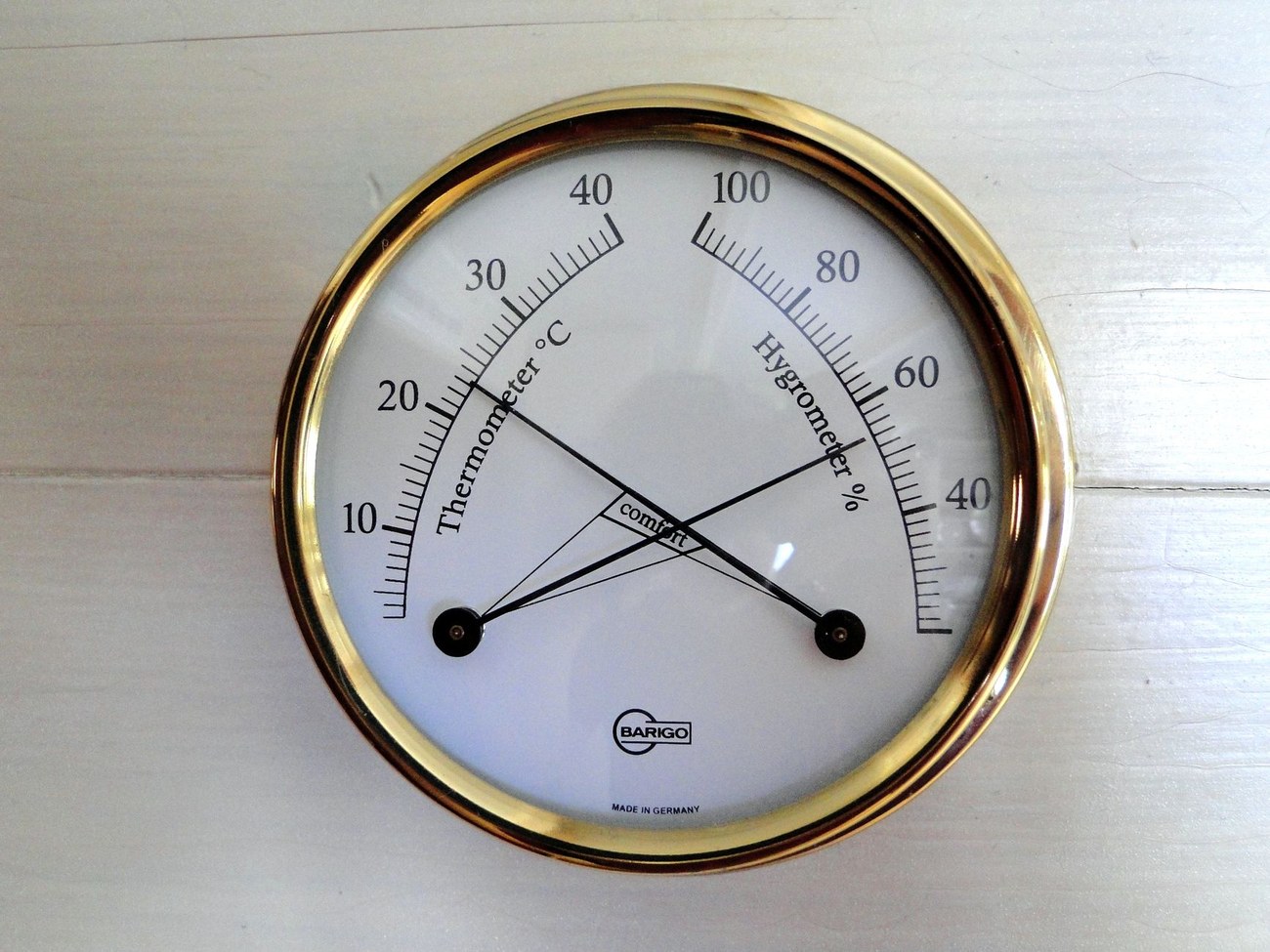
Photo: Peter Klauss / Pexels
The part I wish someone had told me
If I could go back to that pink-film winter, I’d tell myself one small thing.
The humidifier is only as clean as the air it hands you.
You don’t need special equipment or harsh chemicals. Distilled water, a little white vinegar, some 3% hydrogen peroxide, a soft brush, and a few minutes every few days. That’s the whole toolkit.
Empty it daily. Descale and disinfect on a schedule you’ll actually keep. Rinse well, dry fully, and don’t let it sit wet.
Do that, and the mist stays what it’s supposed to be — just clean, quiet moisture in the air.
Because in the end, you’re not really cleaning a machine. You’re cleaning the air you breathe all night.
References
- U.S. Environmental Protection Agency (EPA) — Use and Care of Home Humidifiers
- Mayo Clinic — Humidifiers: Ease skin, breathing symptoms
- Consumer Reports — How to Clean Your Humidifier; Why the Right Home Humidity Matters (with Energy Star humidity guidance)
- Levoit (manufacturer) — How to Clean Your Humidifier and Best Practices
- National Library of Medicine (NCBI/PMC), peer-reviewed case reports and reviews — Humidifier-related lung injury and hypersensitivity pneumonitis (“humidifier lung”)