Cut Your Hand Cooking? Why Antiseptic Isn’t the First Step
I will admit what I did the last time I cut my finger in the kitchen.
I was slicing an onion too fast, the knife slipped, and the tip of my index finger opened up. My first move was not to press on it. It was to walk, dripping, to the bathroom cabinet for the brown bottle of hydrogen peroxide. The fizzing felt like proof it was working.
Then a friend sent me one of those posts: “Cut your hand while cooking? Did you know putting antiseptic on it can actually make the wound worse?”
That line is half right. And the half that is wrong matters less than the thing it leaves out.
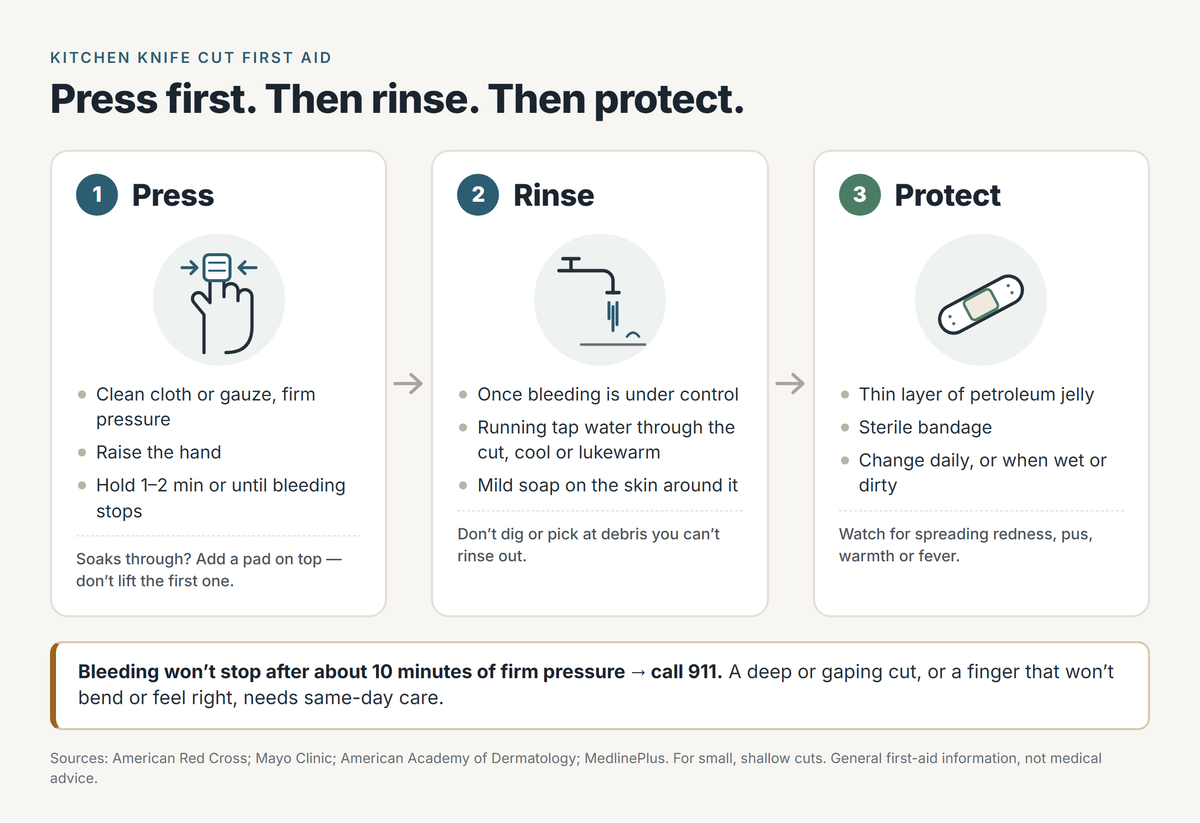
Here is the short version of kitchen knife cut first aid, as US sources actually give it. Press first. Then rinse under running tap water. Then protect it with petroleum jelly and a bandage. You do not need hydrogen peroxide or iodine — Mayo Clinic says both can irritate a wound, and plain water does the cleaning. But “antiseptic makes your cut worse” is a bigger claim than the evidence supports, and I will show you exactly where it stops.
The part that post skipped entirely is the question that actually decides what happens next: does this cut need stitches?
This article is general first-aid information, not medical advice, and does not replace evaluation by a licensed clinician. A kitchen cut that is deep, gaping, bleeding heavily, contaminated, or that affects feeling or movement in a finger needs professional care — don’t manage it at home. If bleeding won’t stop with firm pressure, call 911.
How common are kitchen knife cuts, really?
Common enough that most of us will do this more than once.
A study of US emergency department records estimated about 434,000 knife injuries a year, averaged over 1990–2008. 66% involved fingers or thumbs, and 94% were lacerations — cuts, not scrapes. Among the injuries where the type of knife was recorded, kitchen and cooking knives accounted for 36%.
Those are older numbers, and they only count people who went to an ER. The point is not the exact figure. It is that a cut finger is one of the most ordinary injuries there is, which is exactly why the folk advice around it spreads so easily.
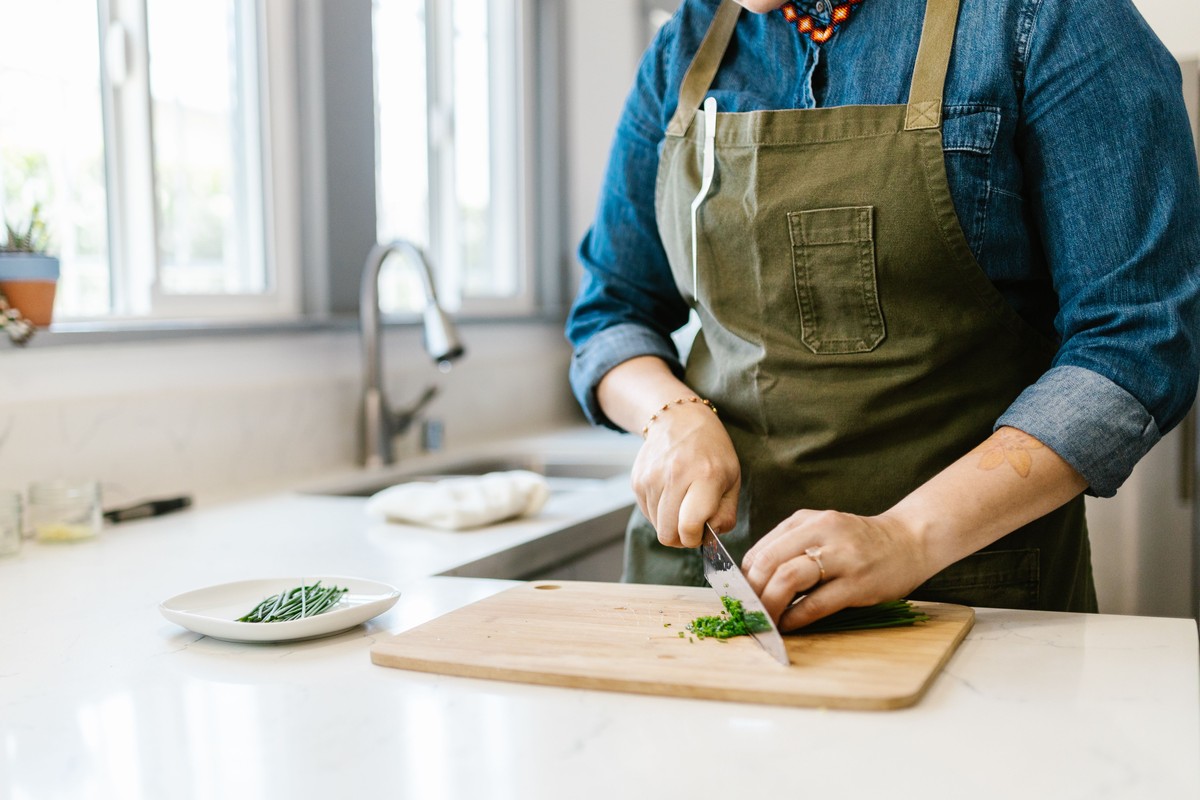
Photo: RDNE Stock project / Pexels
Kitchen knife cut first aid: why pressure comes before washing
The viral version says the “very first priority” is washing the wound. For a cut that is actively bleeding, that gets the order wrong.
The American Red Cross is direct about it: the most important thing is to “get pressure on the bleeding right away.” Mayo Clinic’s sequence agrees — wash your hands, then stop the bleeding, then clean the wound.
So, in order:
- Wash your hands if you can do it quickly.
- Press. Put a clean cloth or gauze on the cut and press firmly. Raise the hand. The American Academy of Dermatology (AAD) says to hold pressure for 1–2 minutes or until the bleeding stops.
- If blood soaks through, add another pad on top. Don’t lift off the first one to check — the Red Cross is specific on this.
- Rinse once the bleeding is under control.
In fairness to the washing-first crowd, AAD and MedlinePlus do list washing before pressure in their steps for minor cuts. And Mayo notes that minor cuts usually stop bleeding on their own. For a tiny nick, the order barely matters.
For a knife cut that is actually bleeding, it does. Press first.
And some cuts are not a home job at all. MedlinePlus says to call 911 if bleeding cannot be stopped after about 10 minutes of pressure. The Red Cross treats blood that is flowing continuously or spurting, or a loss of roughly half a soda can (less in a small child), as life-threatening. MedlinePlus also says plainly: don’t try to clean a major wound.
Rinse under the tap: water in the wound, soap around it
Once the bleeding has stopped, running water is the part every source agrees on.
AAD says to use cool or lukewarm water — either is fine, and no source I found insists on lukewarm. Mayo adds that keeping the wound under running water lowers the risk of infection.
Soap is where the sources split, which surprised me.
- Mayo Clinic: wash around the wound with soap, but don’t get soap in the wound.
- AAD and MedlinePlus: wash the cut with mild soap and water.
I’m not going to pretend one side wins. The common ground is simple and safe: let water run through the cut, and soap the skin around it.
And you don’t need anything fancier than your kitchen tap. In a Stanford emergency department trial of 625 laceration patients (bites, punctures, tendon injuries and wounds over 9 hours old were excluded), infection rates were 3.5% (11 of 317) with tap water versus 6.4% (20 of 308) with sterile saline — not a statistically significant difference. A 2022 Cochrane review of 13 trials and 2,504 participants rated the tap-versus-saline comparison as uncertain, with very low-certainty evidence. In other words, nothing shows sterile saline beats clean tap water.
One word in the viral post needs correcting: “completely.” Rinsing lowers contamination. It does not make a wound sterile. MedlinePlus warns not to push or pick debris out of a wound, and not to assume a cut is clean just because you can’t see dirt. Mayo suggests removing visible specks with tweezers cleaned with alcohol — and if you can’t get it all out, that’s a reason to see a clinician.
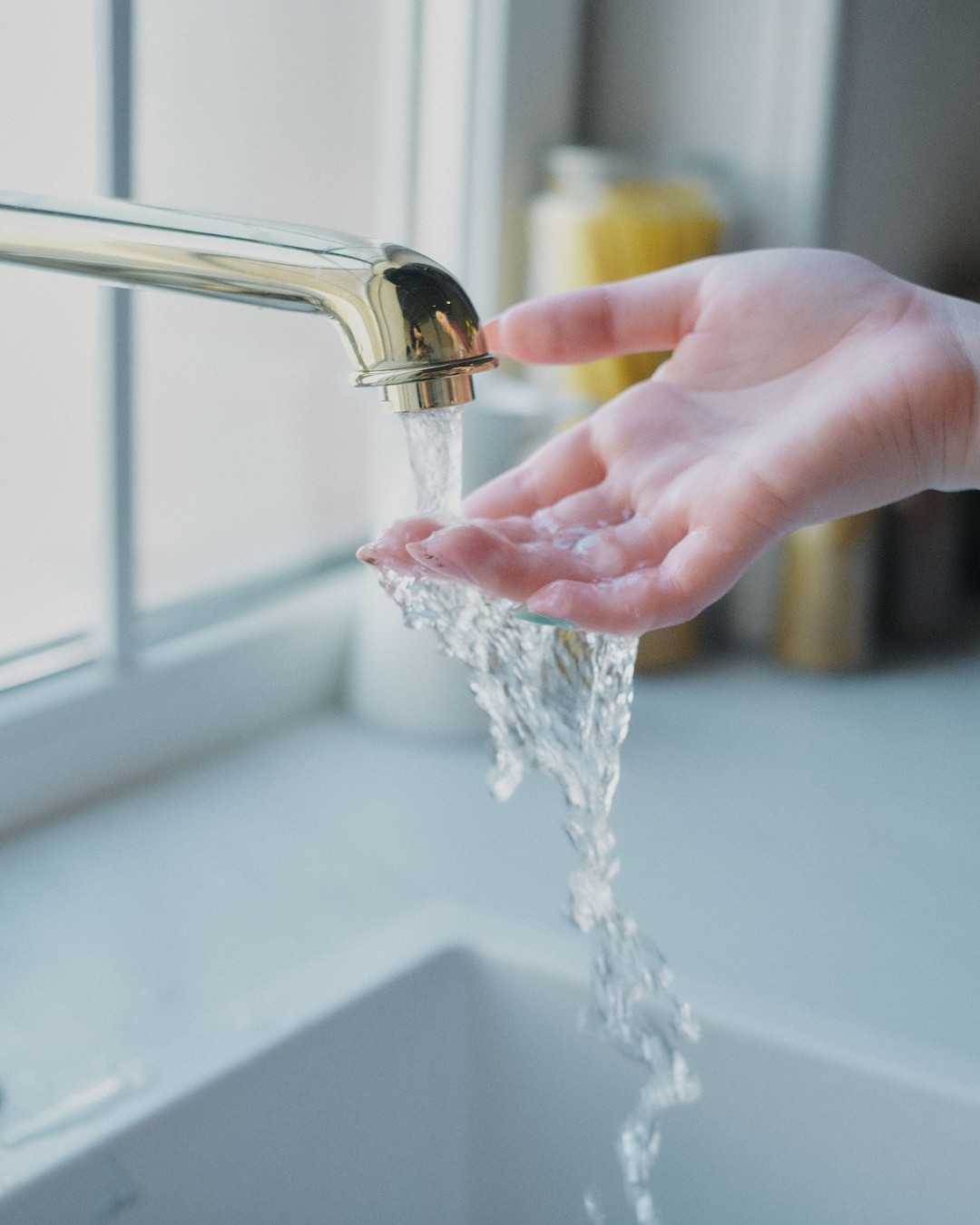
Photo: ZUMRAD NORMATOVA / Pexels
Hydrogen peroxide and iodine on a cut: what the evidence actually shows
This is the heart of the hook, so let’s be precise about it.
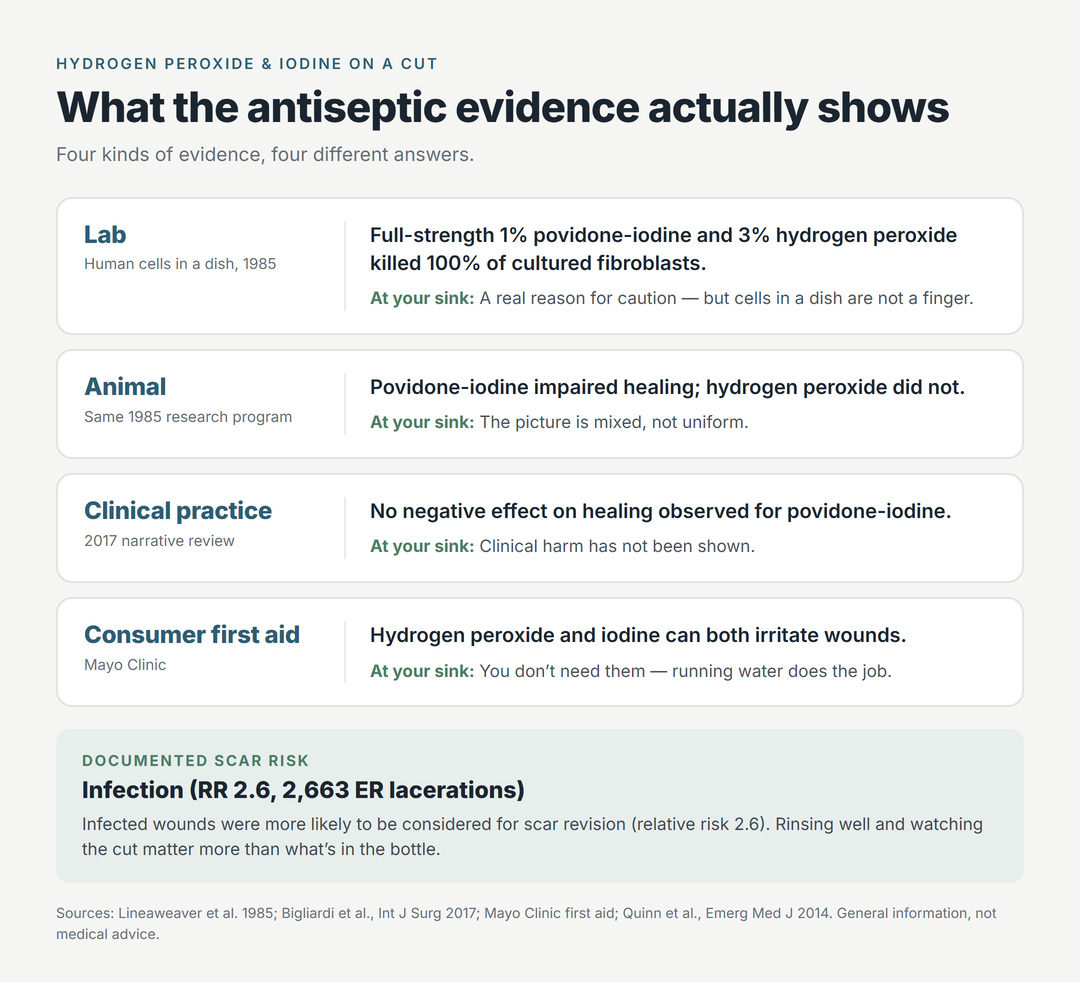
What’s true. Mayo Clinic’s first-aid advice says: don’t use hydrogen peroxide or iodine, because both can irritate wounds. And in a 1985 lab study, full-strength 1% povidone-iodine and 3% hydrogen peroxide killed 100% of cultured human fibroblasts — the skin cells that help rebuild tissue. The authors concluded these agents were unsuitable for wound care.
Where it stops. That was cells in a dish. In the same research program’s animal model, hydrogen peroxide did not impair healing (povidone-iodine did). A 2012 mouse study found hydrogen peroxide actually helped wound closure at a very low concentration and slowed it at a higher one — and household 3% peroxide is far stronger than either. A 2017 review of povidone-iodine reported that no negative effect on wound healing had been observed in clinical practice, though that was a narrative review and it sits on one side of a real disagreement.
I looked specifically for the version I’d heard — “antiseptic leaves a bigger scar.” The research behind this article found no clinical study linking home use of peroxide or iodine to larger scars. So I won’t repeat it as fact.
What is documented is this: in 2,663 ER-treated lacerations, infected wounds were more likely to get a worse cosmetic rating and to be considered for scar revision (relative risk 2.6). The scar risk that has evidence behind it is infection — which is exactly why rinsing well and watching the cut afterward matter more than what’s in the bottle.
| Type of evidence | What it found | What it means at your sink |
|---|---|---|
| Lab (human cells, 1985) | Full-strength 1% povidone-iodine and 3% peroxide killed 100% of fibroblasts | A real reason for caution, but cells in a dish are not a finger |
| Animal (same 1985 program) | Povidone-iodine impaired healing; hydrogen peroxide did not | The picture is mixed, not uniform |
| Clinical practice (2017 review) | No negative effect on healing observed for povidone-iodine | Clinical harm has not been shown |
| Consumer first aid (Mayo Clinic) | Both can irritate wounds | You don’t need them — running water does the job |
| Scar research (2,663 ER lacerations) | Infected wounds more often considered for scar revision, RR 2.6 | Preventing infection is the scar-relevant step |
It’s also worth knowing that both products are over-the-counter first-aid antiseptics, and their own labels limit them. The Drug Facts for 3% hydrogen peroxide and 10% povidone-iodine both say to ask a doctor before use on deep or puncture wounds, animal bites or serious burns, and not to use them longer than one week, or over large areas. If a cut is deep enough that you’re reaching for the peroxide with real worry, the label is already telling you it’s a doctor’s cut.
So the honest version of the hook is less dramatic. Antiseptics aren’t needed for a clean kitchen cut and can irritate it. Water is enough.
Petroleum jelly and a bandage: moist healing, US-style
The viral post’s third line recommended a foam or hydrocolloid pad to keep the wound moist. The idea behind it is sound. The details need adjusting.
Moist healing is real and mainstream. AAD recommends a thin layer of petroleum jelly to keep the wound moist and prevent a scab, noting that wounds with scabs take longer to heal. AAD also suggests using petroleum jelly from a tube rather than a jar, to limit contamination. Cover it with a sterile bandage and change it daily, or whenever it gets wet or dirty (Mayo). For repaired lacerations, the American Academy of Family Physicians (AAFP) notes that occlusive and semi-occlusive dressings lead to faster healing, less contamination, fewer infections and more comfort than dry gauze.
That’s the everyday US default — a tube of petroleum jelly and a box of bandages — not a specialty pad.
Hydrocolloid bandages have a place, with limits. Per StatPearls, they suit clean wounds with minimal to moderate drainage, are not for infected wounds, and are typically changed every 2 to 4 days. They are for a small, closed, clean cut — not a substitute for stitches, and not something to seal over a wound that’s turning red and swollen.
What about antibiotic ointment? Here the sources disagree again.
- AAD advises against topical antibiotics on minor cuts, because they can irritate the skin.
- Mayo lists antibiotic ointment or petroleum jelly, and says to stop if a rash appears.
- AAFP supports antibiotic ointment for stitched traumatic lacerations.
The closest thing to a head-to-head test comes from surgery, not kitchens. In a trial of 1,249 dermatologic surgery wounds, infection rates were 2.0% with petrolatum versus 0.9% with bacitracin — not a significant difference — while 4 patients in the bacitracin group developed allergic reactions versus none with petrolatum.
My takeaway: petroleum jelly is enough for most small cuts. Ointment is optional, not required.
If you’re restocking after this, I wrote up what belongs in a home first-aid kit — and since that half-used tube has probably been in your cabinet a while, here’s what the after-opening dates on medicines actually mean.
Photo: Tara Winstead / Pexels
When does a kitchen knife cut need stitches?
This is the question the viral post never asked, and it’s the one that decides whether the rest of this article applies to you.
The post was describing a scrape — skin rubbed raw. A knife injury is a laceration, a cut from a sharp edge, and a gaping or deep one needs to be closed, not padded.
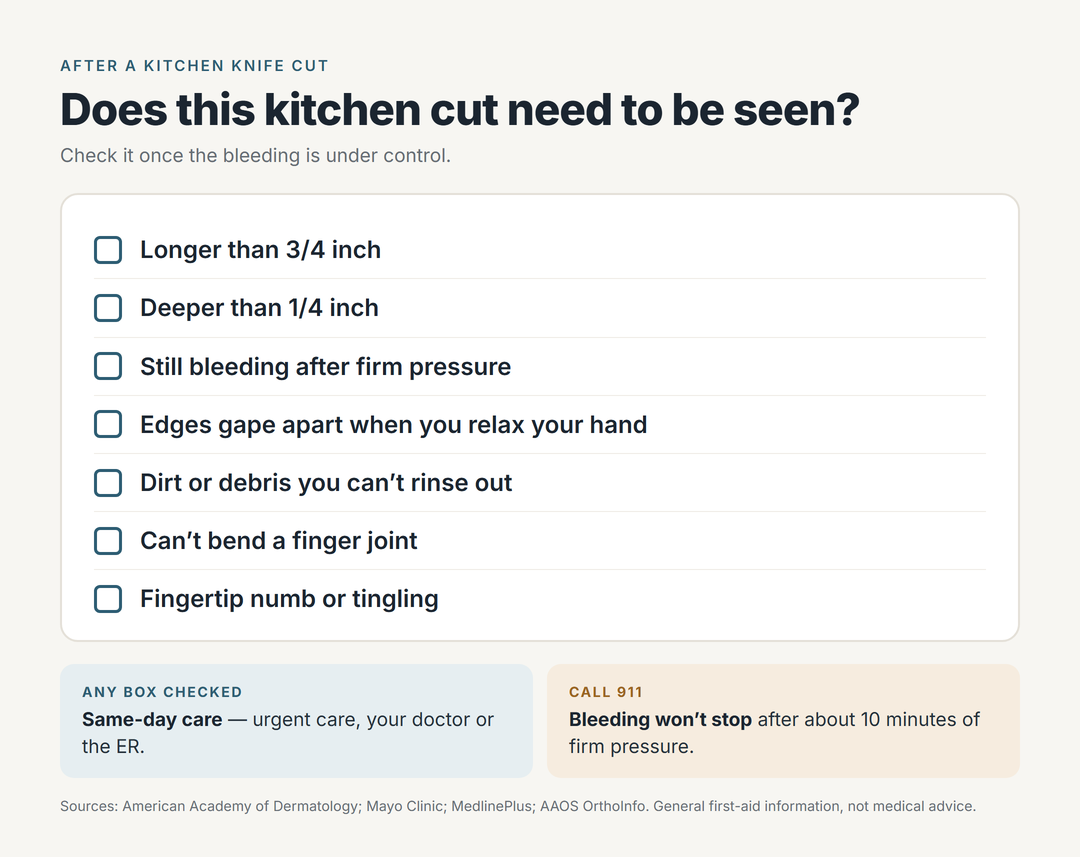
AAD’s rule is concrete: seek immediate medical attention if the cut is longer than 3/4 inch, deeper than 1/4 inch, or won’t stop bleeding. Other reasons to be seen:
- The edges pull apart when you relax your hand.
- Dirt or debris won’t rinse out (Mayo, MedlinePlus).
- Loss of feeling or function in the area (MedlinePlus).
How long can you wait?
You’ll see “6 hours” quoted as a hard deadline. The evidence doesn’t support a fixed cutoff.
AAFP practice guidance says clean, uninfected cuts may be closed up to 18 hours after injury, and up to 24 hours on the head; skin glue is used only on wounds under 12 hours old. A systematic review of 4 studies and 3,724 patients found the evidence doesn’t support a strict “golden period” — though it was low-quality evidence. One small study of hand and forearm wounds, with only 19 delayed wounds, found more infections when closure happened after 12 hours.
So I’d put it this way: if you think it might need stitches, get it looked at the same day. Don’t wait overnight to see whether it closes on its own.
A small cut can still hide a tendon injury
This part genuinely changed how I look at finger cuts.
The American Academy of Orthopaedic Surgeons (AAOS) notes that flexor tendon injuries typically come from a cut on the palm side of the fingers, hand, wrist or forearm, and that the nerves and blood vessels sit very close to those tendons. Warning signs:
- You can’t bend one or more joints of a finger.
- Your fingertip feels numb.
- Tenderness along the palm side.
A cut tendon’s ends pull apart, so it cannot heal on its own. AAOS says repair should happen within 7 to 10 days, “although early evaluation is important.” AAFP goes further: any suspected tendon, nerve, vessel, bone or nail-bed injury warrants immediate referral to a hand surgeon.
The size of the cut is not reassurance here. If a finger won’t bend or the tip is numb, it’s a same-day visit, however small the cut looks.
Do you need a tetanus shot for a kitchen cut?
Not automatically — and “only if the knife was rusty” isn’t the rule either. CDC’s rule depends on your vaccine history and the type of wound.
| Prior tetanus doses | Clean, minor wound | All other wounds (puncture, dirt- or saliva-contaminated, crush) |
|---|---|---|
| 3 or more | Booster only if 10+ years since your last dose | Booster only if 5+ years since your last dose |
| Unknown or fewer than 3 | Vaccine | Vaccine, plus tetanus immune globulin (TIG) |
For people 11 and older who have never had Tdap, CDC prefers Tdap over Td.
Where does a kitchen cut fall? CDC doesn’t list kitchen knives specifically. A shallow cut from a clean knife plausibly counts as clean and minor; a deep stab-type wound, or one contaminated with soil — say, from unwashed garden produce — fits “all other wounds.” That call belongs to a clinician, so if you’re unsure or don’t know your dates, ask.
Tetanus is rare in the US — CDC reports roughly 50 to 100 cases a year since the mid-1970s. Rare is not the same as never, which is why the dates are worth checking.
Watching it heal: infection signs, and who should be seen sooner
For the next several days, check the cut when you change the bandage. Signs of infection, per Mayo and AAD:
- Redness or color change that spreads
- Pain that increases instead of fading
- Warmth or swelling
- Pus or drainage
- Fever
The OTC antiseptic labels say the same: stop and ask a doctor if swelling, rash or fever develops, or if irritation, pain or redness persists or worsens.
For perspective, infection isn’t common, but it isn’t rare either. In 2,663 ER-treated lacerations, 2.6% became infected within 30 days; in a smaller study of 125 simple hand lacerations, it was 4.8% (6 of 125). Those were clinic-treated wounds — no one has measured the rate for cuts cared for at home.
In that larger study, diabetes raised infection risk (relative risk 2.7), and so did a contaminated wound (relative risk 2.0). If you have diabetes, a weakened immune system, or take blood thinners, lower your threshold for getting a cut checked. If diabetes is part of your picture, the daily skin checks in diabetic foot care follow the same logic: catch small wounds early.
Photo: Berna / Pexels
When to get help: 911, same day, or watch at home
Call 911 or go to the ER now
- Bleeding that spurts or flows continuously, soaks through pads, or hasn’t stopped after about 10 minutes of firm pressure.
- Blood loss of about half a soda can or more (less in a small child).
- Signs of shock: a rapid, weak heartbeat, fast breathing, pale or gray cool clammy skin, confusion.
- Loss of feeling or movement, or a fingertip that is pale, blue or cold.
- A partial or complete fingertip amputation, or an object still stuck in the wound — don’t pull out a deeply stuck object.
Same day (urgent care, your doctor, or the ER)
- A cut longer than 3/4 inch, deeper than 1/4 inch, or with gaping edges.
- Can’t bend a finger joint, or numbness or tingling in a fingertip after a palm-side cut.
- Dirt or debris you can’t rinse out.
- A dirty or puncture-type cut and a tetanus booster that’s 5+ years old, or an unknown history.
- Diabetes or a weakened immune system, with anything more than a trivial cut.
Within a day or two (call your clinician)
- Infection signs appearing over the following days.
- A clean, minor cut but your last tetanus dose was 10+ years ago or you don’t know.
- A cut that isn’t improving, or you find yourself still using an OTC antiseptic past one week.
Watch at home
- A small, shallow cut with edges together, bleeding that stopped within minutes of pressure, full finger movement and normal feeling, and tetanus up to date. Rinse, petroleum jelly, bandage, change it daily, and keep an eye on it.
That onion cut healed fine, by the way. Not because of the peroxide, and probably not in spite of it either.
What I got wrong wasn’t the bottle. It was the order — walking to the cabinet with a bleeding finger instead of pressing on it — and never once asking whether the cut was deep enough to need a closer look.
If you want it on a sticky note by the stove, it fits in one line.
“Press, then rinse, then protect — skip the peroxide. If it gapes, won’t stop, or your finger won’t bend or feel right, it’s a same-day visit.”
The bottle was never the important part. The first two minutes were.
A note on what this article is and is not
This article is general first-aid information, not medical advice, and does not replace evaluation by a licensed clinician. Home care is for small, shallow cuts only. A cut that is deep (more than 1/4 inch), long (more than 3/4 inch), gaping, dirty, puncture-type, or that affects feeling or movement in a finger needs professional care. Don’t dig for debris, don’t pour peroxide or iodine into a deep cut, don’t use an OTC antiseptic for more than one week, don’t put a hydrocolloid bandage on a wound showing signs of infection, and stop any ointment that causes a rash. The same rules apply to children’s cuts, with a lower blood-loss threshold for emergency care. If bleeding won’t stop with firm pressure, call 911.
References
- American Red Cross — Bleeding (Life-Threatening External); Wounds: Symptoms, Types, and First Aid
- Mayo Clinic — Cuts and scrapes: First aid (via licensed Mayo Clinic Health Information reproductions)
- American Academy of Dermatology — How to treat minor cuts; Minimize a scar: proper wound care tips
- NIH MedlinePlus — Cuts and puncture wounds
- CDC — Clinical Guidance for Wound Management to Prevent Tetanus (reviewed 09/08/2026); Pink Book, Chapter 21: Tetanus (04/25/2024)
- AAOS OrthoInfo — Flexor Tendon Injuries
- Forsch RT, Little SH, Williams C — Laceration Repair: A Practical Approach, American Family Physician 2017
- Britto EJ et al. — Wound Dressings, NCBI StatPearls (updated 01/23/2024)
- DailyMed (NIH) — Hydrogen Peroxide 3% and Povidone-Iodine 10% first-aid antiseptic Drug Facts
- Fernandez R et al. — Water for wound cleansing, Cochrane Database of Systematic Reviews 2022
- Weiss EA et al. — tap water vs sterile saline for laceration irrigation, BMJ Open 2013
- Lineaweaver W et al. — Topical antimicrobial toxicity, Arch Surg 1985; Cellular and bacterial toxicities of topical antimicrobials, Plast Reconstr Surg 1985
- Loo AE et al. — hydrogen peroxide and wound healing in mice, PLoS One 2012
- Bigliardi PL et al. — Povidone iodine in wound healing: A review of current concepts and practices, Int J Surg 2017
- Quinn JV et al. — Traumatic lacerations: what are the risks for infection and has the “golden period” of laceration care disappeared?, Emerg Med J 2014
- Zehtabchi S et al. — wound age and infection in simple lacerations, Injury 2012
- Roodsari GS et al. — infection risk after simple hand laceration, World J Emerg Med 2015
- Smack DP et al. — white petrolatum vs bacitracin ointment, JAMA 1996
- Knife-related injuries treated in United States emergency departments, 1990–2008, J Emerg Med 2013