Indoor Air Quality on Smoke Days: What Builds Up Inside
You sealed the house shut all day because the air outside was bad — here is what built up inside instead
The first smoke week we had, I did everything I was told.
Windows down. Doors shut. Towel at the bottom of the front door, because someone on the internet said so.
Then I cooked dinner on the gas range, lit a candle because the house smelled like a campfire, and vacuumed the hallway.
By nine at night I had a headache and I was blaming the smoke outside.
I want to be honest about what I found when I actually went and read the evidence on indoor air quality: the part of the advice I had absorbed best was the part that was wrong, and the part I had ignored — source control inside the house — was the part that mattered most. Sealing up is the right call on a bad-air day. It just means the things your own house produces have nowhere to go.
And one very widely repeated claim about what accumulates in there does not survive contact with the sources at all.

First, the correction: your gas stove does not make radon
This one circulates constantly, and I believed it for a while too.
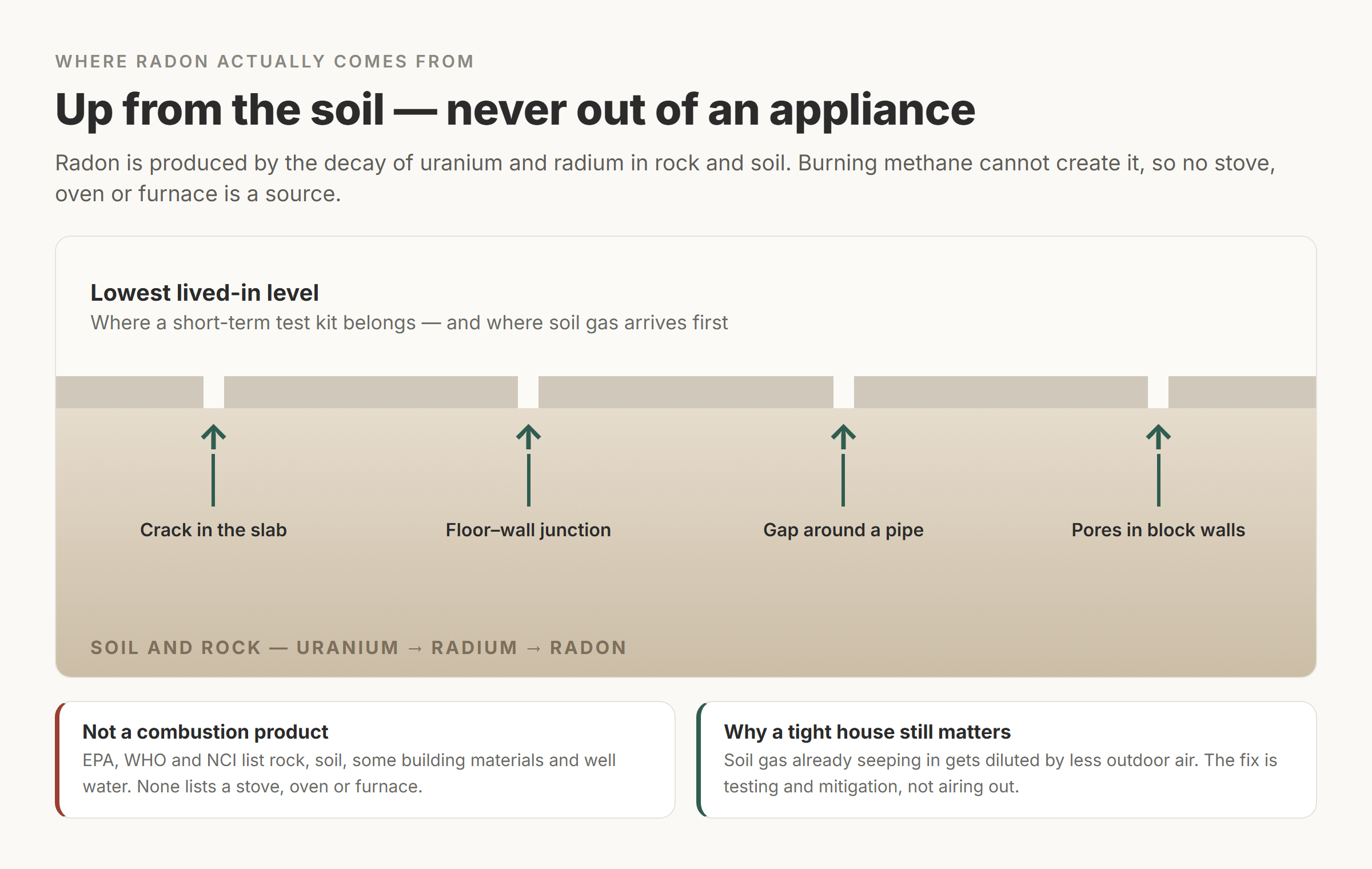
Radon is not a combustion product. It is not made by burning anything.
Radon is a naturally occurring radioactive gas produced by the decay of uranium and radium in rock and soil. EPA puts it plainly: uranium “is essentially ubiquitous in the earth’s crust,” so radium-226 and radon-222 “are present in almost all rock and all soil and water.” WHO describes the same origin — decay of uranium “found in all rocks and soils” — and NCI adds a secondary contribution from some building materials and from well water.
So where does it come in? From below. WHO lists the entry points: cracks in floors, floor–wall junctions, gaps around pipes or cables, pores in hollow-block walls, cavity walls, sumps and drains.
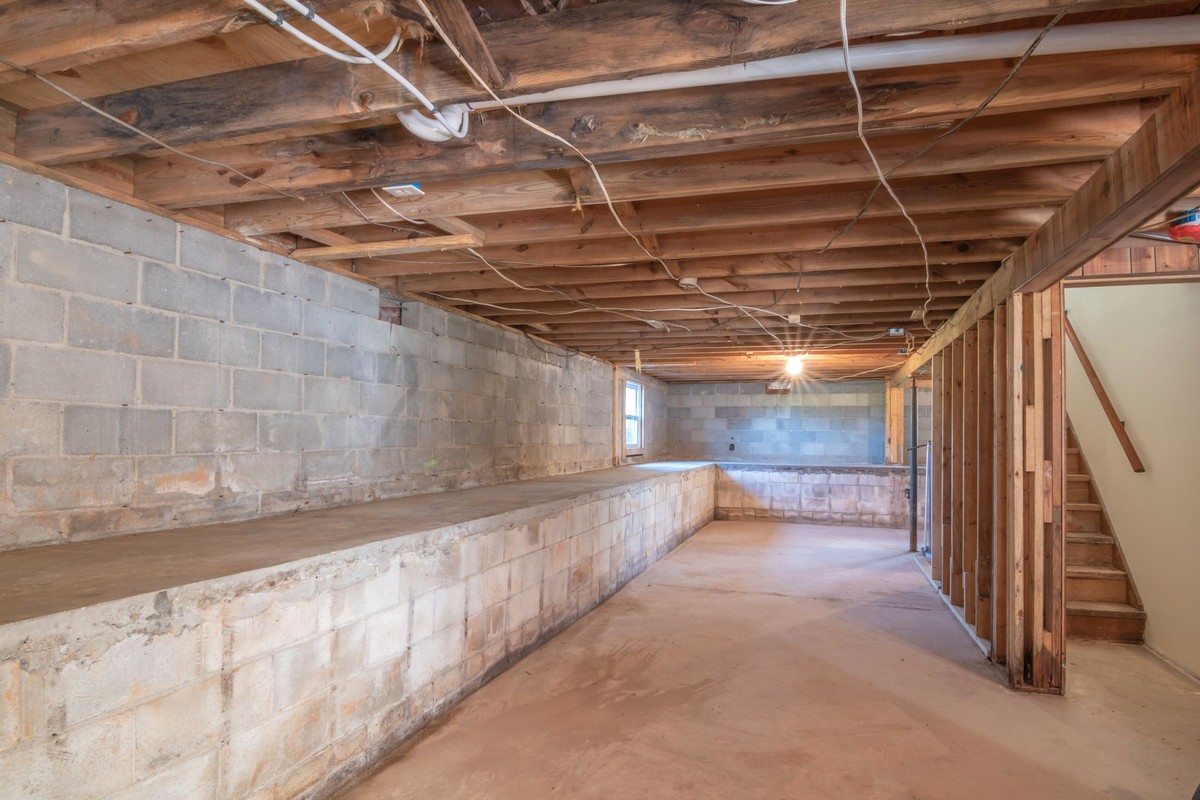
Photo: Curtis Adams / Pexels
No authoritative source — EPA, WHO or NCI — lists a stove, oven, furnace or any combustion appliance as a source of radon. Burning methane cannot create an element that comes from radioactive decay.
Here is the part of the original worry that is completely valid, though.
A tightly sealed house can end up with higher indoor radon. Not because it makes any, but because the soil gas that was already seeping in is now being diluted by much less outdoor air. EPA notes that how much radon reaches the house depends partly on “the suction within the house.”
So the concern was right. The mechanism was wrong. And the fix is different from what you would expect, because you cannot air your way out of a radon problem — that is a soil-gas issue solved by testing and mitigation, which I have put in its own section further down.
What a gas stove actually emits
Not radon. A different and better-documented list: nitrogen dioxide, carbon monoxide, fine particles (PM2.5), formaldehyde and benzene.

Photo: Sarah Chai / Pexels
The benzene work is the one that changed how I think about my own kitchen. Kashtan and colleagues at Stanford measured 87 homes across California and Colorado (Environmental Science & Technology, 2023) and found that gas and propane combustion “emitted detectable and repeatable levels of benzene that in some homes raised indoor benzene concentrations above well-established health benchmarks.”
The numbers:
- Mean benzene emissions from gas and propane burners on high, and ovens set to 350°F, ran 2.8 to 6.5 μg per minute.
- That is 10 to 25 times higher than electric coil and radiant alternatives.
- Induction stoves emitted none. The food being cooked emitted none. It is the combustion, not the cooking.
- And this is the line that stuck with me: the benzene “migrated throughout homes, in some cases elevating bedroom benzene concentrations above chronic health benchmarks for hours after the stove was turned off.“
Hours after. In a room where nobody cooked anything.
On nitrogen dioxide, the same group published in Science Advances (2024) using measurements from more than 100 homes: gas and propane stoves increase long-term NO2 exposure by 4.0 parts per billion on average across the United States — 75% of the WHO exposure guideline, from one appliance. Short-term NO2 during typical stove use “frequently exceeds both World Health Organization and U.S. Environmental Protection Agency benchmarks.” They estimate this exposure likely causes roughly 50,000 cases of current pediatric asthma from long-term NO2 alone.
Two findings from that paper deserve more attention than they get:
- Home size decides the dose. People living in residences under 800 ft² take on four times more long-term NO2 exposure than people in residences over 3,000 ft². Same stove, smaller volume of air.
- The burden is not evenly distributed. American Indian/Alaska Native households incur 60% more NO2 exposure than the national average; Black and Hispanic/Latino households 20% more.

Carbon monoxide rides along too. EPA’s own figures: homes without gas stoves average 0.5 to 5 ppm; near a properly adjusted gas stove, levels “are often 5 to 15 ppm“; near a poorly adjusted one, 30 ppm or higher.
The 12.7% asthma figure, and the fight over it
You have probably seen the headline: gas stoves cause about 13% of childhood asthma in the US. It deserves to be presented honestly, which means presenting the argument around it.
The estimate comes from Gruenwald and colleagues (IJERPH, 2022): 12.7% (95% CI 6.3–19.3%) of current US childhood asthma attributable to gas stove use, from a meta-analytic odds ratio of 1.34 (1.12–1.57), with 35% of US households cooking with gas. By state it ranges from Illinois at 21.1% down to Florida at 3.0%.
The criticism is substantive. Cox (Global Epidemiology, 2023) argues the claim is “not supported by the data.” A 2024 paper by Li, Goodman and Long in the same journal asks “what was missed?” — and I have to disclose something there, because it matters when you weigh it: that paper’s record indicates American Gas Association funding. That does not make it wrong. It does mean it is not a neutral referee.
The real methodological objection is worth understanding, because it is not about gas stoves specifically. A population attributable fraction converts an observational association into a preventable fraction, which only holds if the association is causal, unconfounded and the exposure correctly specified. The original authors list their own limits too: aggregate rather than individual data, housing-survey data for only nine states, and an assumption that gas cooking is independent of other asthma risk factors. They also say ventilation “reduce[s], but not eliminate[s]” the risk.
For balance in the other direction: an independent Australian group (Knibbs et al., Med J Aust, 2018) calculated the gas-stove PAF for Australian children at 12.3% (95% CI 8.9–15.8%) — a near-identical number, different country, different data.
Where I land, personally: treat 12.7% as a contested estimate, and treat the measured exposure work as the sturdier ground. Nobody is arguing about whether the benzene was in the bedroom. They measured it.
The range hood is the first-line fix — and almost nobody uses it
EPA’s first recommendation for both NO2 and CO is not a purifier and not a window. It is this: “Install and use an exhaust fan vented to outdoors over gas stoves.”
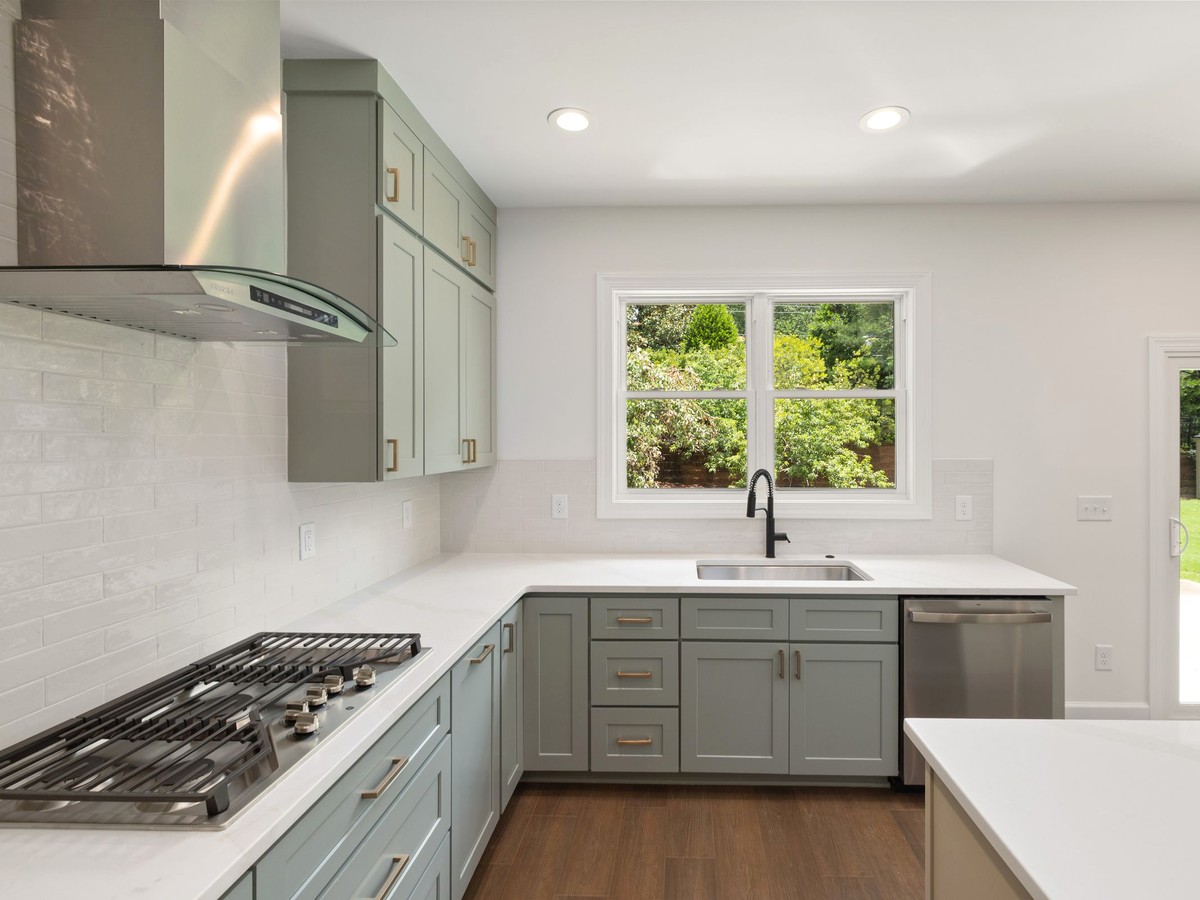
Photo: Curtis Adams / Pexels
Then there is what actually happens in kitchens. Zhao and colleagues monitored 54 single-family houses and 17 low-income apartments in California for a week each (IJERPH, 2020):
- Hoods ran during only 36% of cooking events in houses, and 28% in apartments.
- People who said they used the hood often did use it more — but “actual use was far lower than self-reported frequency.” We all think we are better at this than we are.
- Use went up with cooktop burner time but not with oven time. So oven-emitted benzene and NO2 often go entirely uncaptured.
- Behavior was driven by smoke and smell. NO2, CO, benzene and formaldehyde are invisible and, at these levels, odorless. There is no cue to respond to.
Two practical things I had to fix in my own kitchen:
Check whether your hood actually vents outdoors. A recirculating hood — very common with over-the-range microwave units — pulls air through a charcoal filter and blows it back into the kitchen. It handles some grease and odor. It removes no NO2, no CO, no CO2. Go look for a duct that leaves the house; that is the only way to know which one you have.
Use it more, and earlier. Back burners capture better. Turn it on before you start and leave it running a few minutes after you finish. Run it for the oven too. And accept that it is imperfect even when used — one study measured a 26.4% drop in primary capture efficiency when cooking movement disturbed the airflow.
One caution on very powerful hoods. A high-capacity hood pulls a large volume of air out of a house, and in a tight home that air gets replaced through whatever leaks exist — potentially including the flue of a natural-draft furnace or water heater. EPA lists backdrafting from “furnaces, gas water heaters, wood stoves and fireplaces” as a carbon monoxide source. Depressurization can also pull more soil gas in. If you have a large hood in a tight house, have a licensed HVAC contractor assess whether you need dedicated makeup air.

The stuffy-room headache is real. CO2 is probably not the reason.
This surprised me, and I had to rewrite my own mental model.
The headache and heavy-headedness in a closed-up room is well documented. But the best controlled evidence says the culprit is not the carbon dioxide molecule.

Photo: Tim Witzdam / Pexels
Zhang and colleagues (Indoor Air, 2017) ran 255-minute blinded exposures on 25 subjects. Adding chemically pure CO2 to clean air produced no significant effect on perceived air quality, acute symptoms or cognition. But exposure to bioeffluents — what human bodies off-gas — with CO2 at 3,000 ppm reduced perceived air quality and “increased the intensity of reported headache, fatigue, sleepiness, and difficulty in thinking clearly.“
Same CO2 number. Completely different result depending on what else was in the air.

And the famous CO2-and-cognition findings have not held up:
- Rodeheffer et al. (2018) exposed 36 blinded, submarine-qualified sailors to 600, 2,500 and 15,000 ppm and found “no significant differences across the nine SMS decision-making measures” — at more than an order of magnitude above earlier study levels.
- Klausen et al. (2023), a double-blinded crossover in children aged 10–12 exposed during sleep: “There were no significant exposure effects on cognitive performance.”
- Du et al. (2020) reviewed 37 experimental studies and found the field heavily confounded.
NIST’s Persily (Indoor Air, 2022) is blunt about the number everyone quotes: a single concentration such as 1,000 ppm “is often used as a metric of IAQ and ventilation without an understanding of the significance” of that value, and he concludes “CO2 concentrations are of limited value as IAQ metrics.”
So what do you do with a CO2 monitor? Read it as a ventilation proxy, not a toxicity meter. A rising number means air is not being exchanged — and unexchanged air carries the bioeffluents and VOCs that actually do the damage. EPA notes indoor levels of several organics average 2 to 5 times higher indoors than outdoors, and lists headaches, nausea, loss of coordination, fatigue and dizziness among VOC effects.
No US agency sets a binding residential indoor CO2 limit, and I am not going to give you a “safe ppm.” That is not how this works.
So do you open the windows, or not?
Here is the tension nobody resolves cleanly. Official US smoke guidance says keep the house closed. Common sense says stale air needs flushing. Both are right, at different times.
Let me deal with the specific instruction first, because it is everywhere: open two opposing windows about two inches, cross-ventilate for five minutes, once or twice a day.
I went looking for the source. There isn’t one.
No EPA, CDC, WHO, AirNow or ASHRAE document I could find specifies a two-inch gap, a five-minute duration, or a once-or-twice-daily frequency. Those numbers appear to be folk guidance. The structure of the advice is sound — brief, purposeful cross-ventilation moves more air per minute of exposure than one window cracked all day, and filtration afterward is the right order. But please do not treat the numbers as agency recommendations, because they are not.
What official guidance actually says is: time it by the air, not by the clock.
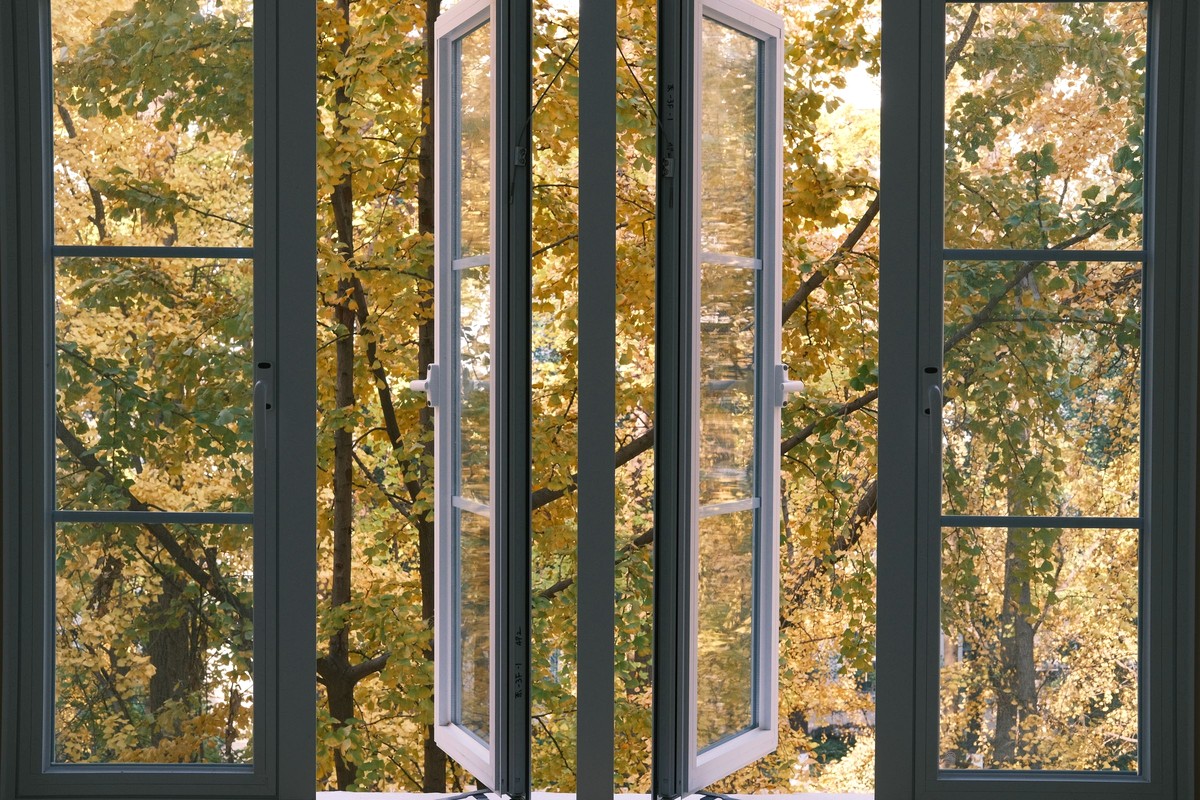
Photo: Tito Zzzz / Pexels
EPA’s hinge sentence, from its wildfire guidance, is the permission slip: when conditions improve temporarily, “air out your home by opening windows or the fresh air intake on your HVAC system.” And from its ventilation guidance: “Avoid ventilation with outdoor air when outdoor air pollution or humidity are high.” Check AirNow first. AirNow itself notes that “smoke levels can change a lot during the day.”
A practical framework by AQI band
| AQI (PM2.5) | Category | What AirNow says | The window call |
|---|---|---|---|
| 0–50 | Good | “Air quality is satisfactory, and air pollution poses little or no risk.” | Open up. This is your airing window — flush CO2, VOCs and cooking residue. |
| 51–100 | Moderate | “Air quality is acceptable. However, there may be a risk for some people, particularly those who are unusually sensitive to air pollution.” | Open up, briefly. For most households indoor accumulation is the bigger problem. Sensitive people keep it shorter. |
| 101–150 | Unhealthy for Sensitive Groups | “Members of sensitive groups may experience health effects. The general public is less likely to be affected.” | Judgment call. Short and purposeful if the house is stuffy or you have been cooking. Skip it if anyone at home has asthma, COPD or heart disease, is pregnant, a young child or an older adult. |
| 151–200 | Unhealthy | “Some members of the general public may experience health effects; members of sensitive groups may experience more serious health effects.” | Keep closed, filter. Watch the curve — smoke often drops overnight or mid-morning. Take your airing then. |
| 201–300 | Very Unhealthy | “Health alert: The risk of health effects is increased for everyone.” | Closed. Recirculate, MERV-13, filtration, clean room. Do not open. |
| 301+ | Hazardous | “Health warning of emergency conditions: everyone is more likely to be affected.” | Closed. Consider relocating if you cannot keep the house cool or filtered. |
This table is a practical framework, not an official cutoff. It is built from AirNow’s own category language plus EPA’s “air out when conditions improve” instruction. No source I could find publishes a crossover AQI number where “ventilate” flips to “don’t.” AirNow does note that an AQI of 100 “generally corresponds to the national ambient air quality standard.”
And the thing that decides a smoke day is not the window at all.
It’s source control. AirNow’s list of what to avoid indoors is exactly that: “frying foods, sweeping, vacuuming, and using gas, propane, or wood-burning stoves and furnaces.” Add candles and smoking. Not cooking on the gas range on a red-AQI day removes far more of your indoor load than a five-minute window ever adds.

The rest of the smoke-day setup
- Doors and windows closed; portable air cleaners run continuously, which AirNow notes “work best… with doors and windows closed.”
- Central system: MERV-13 or higher filter, fan setting “On” rather than “Auto,” system set to Recirculate, and close the fresh-air intake if you have one. (If you are not sure what your filter is rated or when it was last changed, that is worth sorting out before smoke season — see AC filter care and replacement timing.)
- Build a clean room: EPA says “choose a room that is comfortable and fits everyone” and “spend as much time as possible in the clean room.”
- Masks: “N95 respirator masks can provide protection from wildfire smoke,” while “cloth masks will not protect you.”
- Heat comes first. EPA: “Use fans and air conditioning to stay cool. If you cannot stay cool, seek shelter elsewhere.” Heat illness is an immediate danger; smoke exposure is usually a slower one.
Filtration is not ventilation
If you take one sentence from EPA out of this whole article, take this one:
“Filtration does not replace the need to control pollutants and ventilate.”
I had to sit with that, because I had quietly assumed the machine in the corner was handling it.

Photo: tommy picone / Pexels
It is not, and the limits are specific:
- HEPA removes particles. It removes no CO2 at all. No residential filter medium takes carbon dioxide out of the air — CO2 is only diluted by exchange with outdoor air. A purifier running in a sealed room leaves the CO2 exactly where it was.
- Most gases need activated carbon, and thickness is everything. EPA: carbon filters “can be effective when there is a large amount of material used in the filter (the thicker the better).” The thin carbon pre-filter wrapped around a consumer HEPA cartridge saturates quickly and does little.
- “No air cleaner or filter will eliminate all of the air pollutants in your home” — EPA again.
- Size by CADR. Multiply the room’s length by width in feet and match the unit’s rated area; if ceilings are above 8 feet, choose a unit rated for a larger square footage.
- Avoid anything that intentionally produces ozone. EPA: “Ozone is a lung irritant.”
The DIY box, with EPA’s own numbers
EPA’s Office of Research and Development tested box-fan filter builds against wildfire smoke particles:
| Build | CADR (smoke particles) |
|---|---|
| Box fan + one 1″ MERV-13 filter | 111 ± 1 |
| + cardboard shroud | 156 ± 4 |
| 4″ filter + shroud | 248 ± 15 |
| Two 1″ filters + shroud | 263 ± 22 |
| Corsi-Rosenthal box (four 1″ filters) | 401 ± 31 |
The shroud detail is the best value in the table: adding a cardboard shroud “increases the CADR by 40% without any change in the cost or physical footprint.”
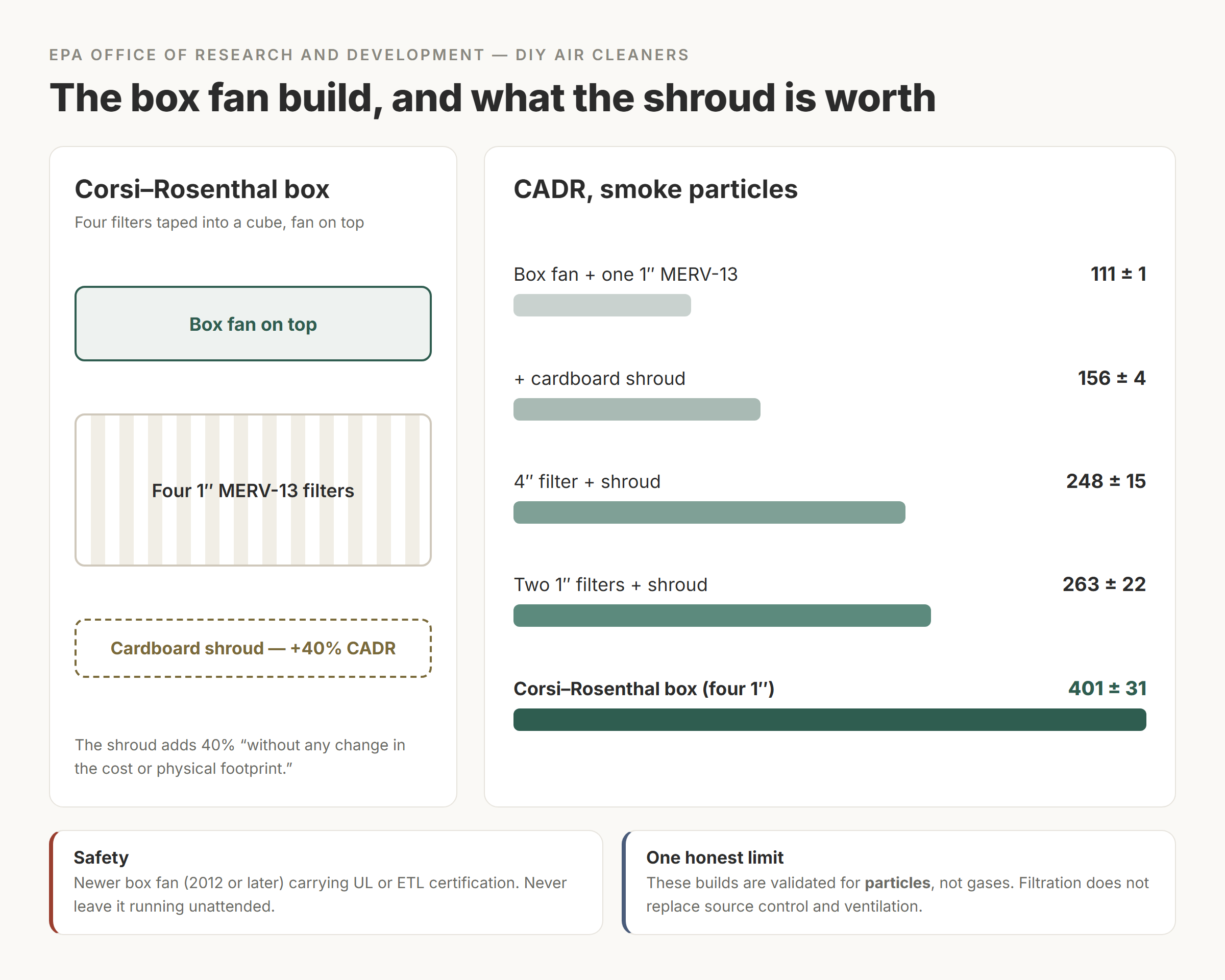
Safety, because this is a fan with filters taped to it: Underwriters Laboratories testing found “none of the filter/fan test scenarios caught fire” and all measured temperatures stayed below maximum acceptable safety thresholds. EPA recommends a newer box fan (2012 or later) carrying UL or ETL certification. AirNow’s rule is simple and I would not bend it: never leave it unattended.
One honest limit: these DIY units are validated for particles, not gases. EPA describes evaluating commercial cleaners for smoke VOCs as separate, ongoing work.
The structural answer, if you ever get to choose
Most American homes have no mechanism for this at all. EPA notes that most US residential heating and cooling systems “do not mechanically bring fresh air into the house” — your furnace recirculates what is already indoors.
Newer energy-efficient designs are starting to include heat recovery ventilators (air-to-air heat exchangers). An HRV or ERV is the actual structural resolution to this entire dilemma: continuous filtered outdoor air without opening a window, with most of the heating or cooling energy recovered. I am deliberately not quoting efficiency percentages or installed costs here, because I could not confirm them from a primary source — get local quotes and ask for the specific model’s rated performance.
On standards: ANSI/ASHRAE 62.1-2025 (buildings generally) and 62.2-2025 (residential) are the current editions in force. The 2025 residential edition now requires local exhaust in toilet rooms and raised the minimum residential filtration requirement from MERV 6 to MERV 11 — which puts the MERV-13 smoke advice above code minimum, but pointed in the same direction.
Carbon monoxide: the one that can kill before you notice
This is the callout I would not skip.
Carbon monoxide is, in CDC’s words, “an odorless, colorless gas that kills without warning.” More than 400 Americans die each year from unintentional, non-fire CO poisoning. There are over 100,000 emergency department visits and more than 14,000 hospitalizations annually.
- Install CO alarms near every sleeping area. Battery-operated or battery-backup, batteries checked at least twice a year, a digital-readout model if you can, and replace the alarm every 5 years (CDC).
- Never use a gas oven or cooktop to heat your home. Never run a generator, grill, camp stove or any fuel-burning device indoors, in a garage, or near a window.
- Sealing a house does not create CO — it concentrates it. The day you close everything up for smoke is exactly the day a working alarm matters most.
- A CO alarm detects only CO. It will not warn you about radon, NO2, CO2, VOCs or smoke particles. Do not let one device stand in for all of them.
- Infants, older adults, and people with chronic heart disease, anemia or respiratory problems are at elevated risk — but CO can harm anyone.
Radon: a testing pathway, not a symptom pathway
I am keeping this separate on purpose, because it does not work like anything else in this article.
Radon causes no acute symptoms. None. No headache, no dizziness, no smell, no taste, no color. There is nothing to watch for. You cannot detect it with a CO alarm or a consumer air-quality monitor, and your neighbor’s result tells you nothing about your house.
Why it matters: EPA attributes about 21,000 US lung cancer deaths a year to radon (with an uncertainty range of 8,000 to 45,000). It is the number one cause of lung cancer among non-smokers, and the second leading cause overall. WHO estimates radon causes 3% to 14% of a country’s lung cancers, depending on national radon levels and smoking prevalence.
And the risk multiplies with smoking. At the US average indoor level of 1.3 pCi/L, EPA’s figures put lifetime lung cancer risk at about 2 per 1,000 never-smokers — and about 20 per 1,000 smokers. Tenfold, same air.
The steps:
- Test. Discounted kits are sold online by National Radon Program Services at Kansas State University (sosradon.org/test-kits); hardware and home-improvement stores carry them; some states provide free or reduced-cost kits — ask your state radon program. Short-term kits give a quick screen; long-term kits better represent your annual average.
- Test the lowest lived-in level of the home, and follow the kit instructions exactly — closed-house conditions matter for the result to mean anything.
- Read it against both benchmarks. EPA’s action level is 4 pCi/L (150 Bq/m³). WHO’s reference level is 100 Bq/m³ (roughly 2.7 pCi/L), and WHO says it should not exceed 300 Bq/m³ where the lower level is not achievable. So EPA’s action level sits at roughly one and a half times WHO’s reference. EPA also suggests considering action between 2 and 4 pCi/L. US outdoor air averages 0.4 pCi/L.
- At or above 4 pCi/L, fix it. Hire a contractor credentialed by the National Radon Proficiency Program (NRPP) or the National Radon Safety Board (NRSB). The standard fix is sub-slab depressurization — a pipe and fan that pull soil gas from beneath the slab and vent it above the roofline.
- On cost: EPA’s current position is only that “most homes can be fixed for about the same cost as other common home repairs.” Its 2016 Citizen’s Guide cited roughly $800–$2,500 installed — treat that as a dated figure and get local quotes.
- Re-test after mitigation, and periodically after that, including after major renovations or changes to the foundation or HVAC.
- Opening windows is not a fix. Airing out is not a substitute for a mitigation system. This is the one problem in this article that a window cannot touch.

Photo: Arina Krasnikova / Pexels
When to get help
Tier 1 — Call 911 now: suspected carbon monoxide poisoning. Get everyone, including pets, outside into fresh air first, then call from outside. Do not go back in.
- Several people — or people and pets — in the same home develop headache, dizziness, weakness, nausea, vomiting, chest pain or confusion at the same time, and especially if symptoms improve outdoors and return when everyone goes back in. That pattern is the classic signature.
- A CO alarm sounds. Leave immediately. Do not stop to investigate the source.
- Anyone is unconscious, cannot be woken, is seizing, is severely confused, or is struggling to breathe.
- Anyone becomes drowsy or loses consciousness while a fuel-burning appliance, generator or vehicle has been running in or near the home.
- Symptoms appear during or after using a gas range for heat, or after running a generator, grill or camp stove indoors or in an attached garage.
CDC lists CO symptoms as headache, dizziness, weakness, upset stomach, vomiting, chest pain and confusion — often described as flu-like. The difference from flu: no fever, and several people in the household affected at once.
Also seek emergency care for severe respiratory distress on a smoke day: severe shortness of breath, chest tightness or pain, wheezing that does not respond to a rescue inhaler, lightheadedness or fainting, or palpitations. Smoke can trigger cardiac events as well as respiratory ones.
Tier 2 — Same day to within a few days: see a clinician.
- Headache, fatigue, dizziness or trouble concentrating that consistently appears at home and clears when you leave, and persists after you have improved ventilation and removed obvious sources.
- New or worsening cough, chest tightness, wheeze or shortness of breath during or after a smoke event.
- Asthma or COPD symptoms increasing, or needing a rescue inhaler more often than usual, during a smoke period.
- Eye, nose and throat irritation that does not resolve once the smoke clears and the house has been aired out.
- Any symptom at all in a person with asthma, COPD or heart disease, or in a pregnant person, infant or older adult during a smoke episode. Lower your threshold for these groups.
- A CO alarm that has alarmed even once, even if everyone feels fine — get the appliances inspected by a qualified technician.
Tier 3 — Routine: bring it up at your next visit.
- Ongoing questions about whether a gas stove is affecting a child’s asthma. Bring specifics: hood vented outdoors or recirculating, how often it runs, home size, whether symptoms cluster around cooking times.
- Planning a kitchen change — induction, or adding or upgrading a vented hood — for a household member with asthma.
- Building a household plan for smoke season: clean room, filtration, medication refills, action thresholds.
- Long-term exposure and lung cancer screening eligibility, especially if you smoke or used to smoke, since radon risk and smoking multiply.
Related reading: if you run a humidifier through a closed-up season, the maintenance matters more than people expect — see how to clean and disinfect an ultrasonic humidifier. [내부링크: 관련 글 – childhood asthma triggers in the home]
I still close the house on smoke days. That part was never wrong.
What changed is the order of operations. I check AirNow instead of the clock. I take the airing when the number dips instead of on a schedule I invented. I run the hood before the burner goes on, not after the pan starts smoking. And I stopped thinking of the purifier as the thing that solves it, because the EPA sentence I keep coming back to says otherwise.
The radon kit is the one I put off longest, and it cost less than a decent dinner out. It sat in the basement for a few days and then went in the mail.
If there is one thing worth doing after reading this, I would make it that one — because radon is the only thing on this list that gives you no symptom, no smell and no warning, and the only way you will ever know is to look.
Disclaimer
This article is general information about indoor air quality and home ventilation. It is not medical advice, and it is not a substitute for diagnosis or treatment by a licensed clinician. Individual risk varies with age, pregnancy, and existing heart or lung conditions. If you have asthma, COPD, heart disease, are pregnant, or care for an infant or an older adult, talk to your own healthcare provider before changing how you manage air quality at home — and follow any action plan they have already given you. Nothing here should delay or replace emergency care. Air-quality guidance also changes; check EPA.gov, AirNow.gov and CDC.gov for current recommendations, and follow instructions from your local health department or air quality agency during a smoke event.
References
- US EPA — Health Risk of Radon; Where does radon come from?; Radon Risks and Solutions; Radon FAQ; How much can a radon mitigation system cost?; Find a Radon Test Kit or Professional; A Citizen’s Guide to Radon (2016)
- WHO — Radon and health
- NIH / National Cancer Institute — Radon and Cancer
- US EPA — Nitrogen Dioxide’s Impact on Indoor Air Quality; Carbon Monoxide’s Impact on Indoor Air Quality; Volatile Organic Compounds’ Impact on Indoor Air Quality; Improving Indoor Air Quality
- US EPA — Guide to Air Cleaners in the Home; Wildfires and Indoor Air Quality; Ventilation and Coronavirus (COVID-19); Research on DIY Air Cleaners to Reduce Wildfire Smoke Indoors
- AirNow — AQI Basics; When Smoke Is in the Air; Fire and Smoke Map
- US CDC — About Carbon Monoxide Poisoning
- ASHRAE — ANSI/ASHRAE Standards 62.1-2025 and 62.2-2025
- Kashtan Y, et al. — “Gas and Propane Combustion from Stoves Emits Benzene and Increases Indoor Air Pollution,” Environmental Science & Technology, 2023 (DOI 10.1021/acs.est.2c09289)
- Kashtan Y, et al. — “Nitrogen dioxide exposure, health outcomes, and associated demographic disparities due to gas and propane combustion by U.S. stoves,” Science Advances, 2024 (DOI 10.1126/sciadv.adm8680)
- Gruenwald T, Seals BA, Knibbs LD, Hosgood HD — “Population Attributable Fraction of Gas Stoves and Childhood Asthma in the United States,” IJERPH, 2022 (PMC9819315)
- Cox LA Jr. — “The gas stove-childhood asthma kerfuffle: A teaching opportunity,” Global Epidemiology, 2023 (DOI 10.1016/j.gloepi.2023.100104)
- Li W, Goodman JE, Long C — “Population attributable fraction of gas cooking and childhood asthma: What was missed?” Global Epidemiology, 2024 (DOI 10.1016/j.gloepi.2024.100141) — record indicates American Gas Association funding support
- Knibbs LD, et al. — “Damp housing, gas stoves, and the burden of childhood asthma in Australia,” Med J Aust, 2018 (DOI 10.5694/mja17.00469)
- Zhao H, et al. — “Factors Impacting Range Hood Use in California Houses and Low-Income Apartments,” IJERPH, 2020 (DOI 10.3390/ijerph17238870)
- Zhang X, Wargocki P, Lian Z, Thyregod C — “Effects of exposure to carbon dioxide and bioeffluents…,” Indoor Air, 2017 (DOI 10.1111/ina.12284)
- Rodeheffer CD, et al. — “Acute Exposure to Low-to-Moderate Carbon Dioxide Levels and Submariner Decision Making,” Aerosp Med Hum Perform, 2018 (DOI 10.3357/AMHP.5010.2018)
- Du B, Tandoc MC, Mack ML, Siegel JA — “Indoor CO2 concentrations and cognitive function: A critical review,” Indoor Air, 2020 (DOI 10.1111/ina.12706)
- Klausen FB, et al. — double-blinded, placebo-controlled crossover trial in children aged 10–12, Int J Occup Med Environ Health, 2023 (DOI 10.13075/ijomeh.1896.02032)
- Persily A — “Development and application of an indoor carbon dioxide metric,” Indoor Air, 2022 (DOI 10.1111/ina.13059)
- Chen R, You XY — “Effects of chef operation on oil fume particle collection of household range hood,” Environ Sci Pollut Res Int, 2020 (DOI 10.1007/s11356-020-08710-7)