
Itchy Dog Paw Licking: Food Allergy Is Rarely the Cause
I went into this topic believing the same thing most owners believe: that a dog who licks his paws raw is telling you something is wrong with his food.
It’s a comfortable belief, because it comes with an action. Change the bag. Fix the dog.
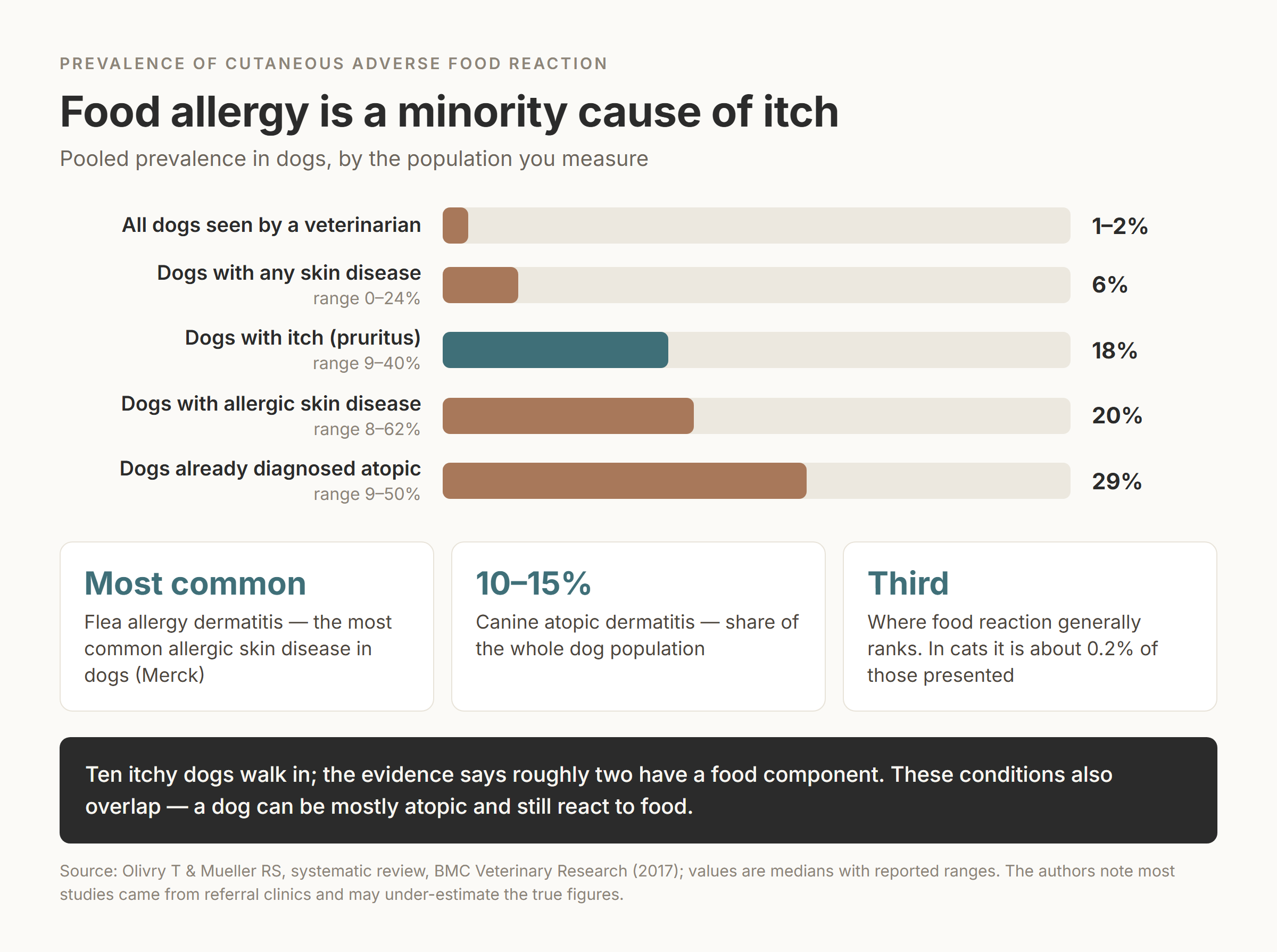
The evidence doesn’t support it. Food allergy is a real cause of itch, and it’s worth testing for — but in most itchy dogs it isn’t the driver. Cutaneous adverse food reaction shows up in roughly 1–2% of all dogs seen by veterinarians, and in a median of about 18% of dogs that are already itchy. Meanwhile canine atopic dermatitis — environmental allergy — affects 10–15% of the dog population, and flea allergy dermatitis is described by the Merck Veterinary Manual as the most common allergic skin disease in dogs.
Food reaction generally ranks third.
So here’s the honest version of this subject. What the prevalence numbers really say, why paw licking can’t tell you which allergy you’re dealing with, the order things have to be ruled out in, and how an elimination diet trial actually works — including the final step that almost everyone leaves out, and without which you haven’t diagnosed anything at all.
Photo: Kaelin / Pexels
What the numbers actually say about food allergy in itchy dogs
The reference point here is a 2017 systematic review by Olivry and Mueller in BMC Veterinary Research, which pooled the published prevalence literature. The picture it produces is not the one the internet gives you.
| Population | Food-reaction prevalence |
|---|---|
| All dogs presented to a veterinarian | 1–2% |
| Dogs with any skin disease | 0–24% (median 6%) |
| Dogs with itch (pruritus) | 9–40% (median 18%) |
| Dogs with any allergic skin disease | 8–62% (median 20%) |
| Dogs already diagnosed with atopic dermatitis | 9–50% (median 29%) |
In cats the overall figure is lower still — about 0.2% of cats presented to a university hospital, and a median of roughly 5% of cats with skin disease.
Notice what the itch row means in practice. If ten itchy dogs walk into a clinic, the evidence says something like two of them have a food component. The other eight are itching for another reason, and putting all ten on a prescription diet for two months is a slow way to find that out.
The caveat the authors raised themselves
I want to be fair to the data, because the authors were.
Olivry and Mueller flagged that most of the studies came from university and specialty referral clinics rather than general practice, that the diagnostic criteria varied between studies, and that in all but four of them not every animal actually underwent an elimination diet. Their conclusion was that the figures may under-estimate the true prevalence.
So the honest framing isn’t “food allergy is rare, stop worrying about it.” It’s this: food is a minority cause that is genuinely worth testing for, and the test is a diet trial rather than a guess.
One more thing the numbers hide: these conditions overlap
Merck notes that food allergy frequently coexists with environmental atopic dermatitis and flea allergy, and that perfect control of itch may be impossible unless every contributing factor is addressed.
A dog can have a real food component and still be mostly atopic. Framing it as either/or is where a lot of frustration comes from.
Why paw licking doesn’t tell you which allergy it is
This is the part I got wrong.
Cornell’s Riney Canine Health Center describes the classic atopic dog as one that scratches behind the elbows, licks and chews its feet, rubs its face, and scoots. Paws are a signature atopic site — front and center.
And Merck lists feet among the typical food-allergy sites too, alongside the ear flaps, the belly, and sometimes the perianal and genital skin.
So both conditions hit the paws. Both produce itch as the primary sign. Both cause secondary changes — hair loss, thickened leathery skin, recurrent bacterial or yeast infections — and otitis externa frequently accompanies food allergy.

Photo: Brendan Rühli / Pexels
That overlap is not an inconvenience. It’s the entire reason the elimination diet trial exists. If you could tell food allergy from environmental allergy by looking at the feet, nobody would spend eight weeks on a diagnostic diet.
There are two clues that do shift the odds, though, and they’re worth knowing:
- Gastrointestinal signs alongside the itch. Vomiting, diarrhea, more frequent stools, weight loss. GI comorbidity is the most common non-skin sign of food reaction, so itch plus chronic gut trouble raises food suspicion more than itch alone.
- Age of onset. Environmental atopy usually begins between about 1 and 3 years old (Cornell says 6 months to 3 years). Food allergy has been reported from under 6 months to 13 years in dogs, and 4 months to 15 years in cats. A very young puppy or a newly itchy senior makes food a more valuable differential.
Not everything that licks is allergic
Before anyone changes a food, it’s worth remembering that Merck lists a set of non-allergic causes of paw licking that get missed regularly: demodicosis, hookworm dermatitis, foreign bodies such as grass awns, contact irritants, pain or arthritis altering the gait, and plain behavioral licking.
A dog licking one paw and three normal ones is a different story from a dog licking all four.
The order things have to be ruled out in
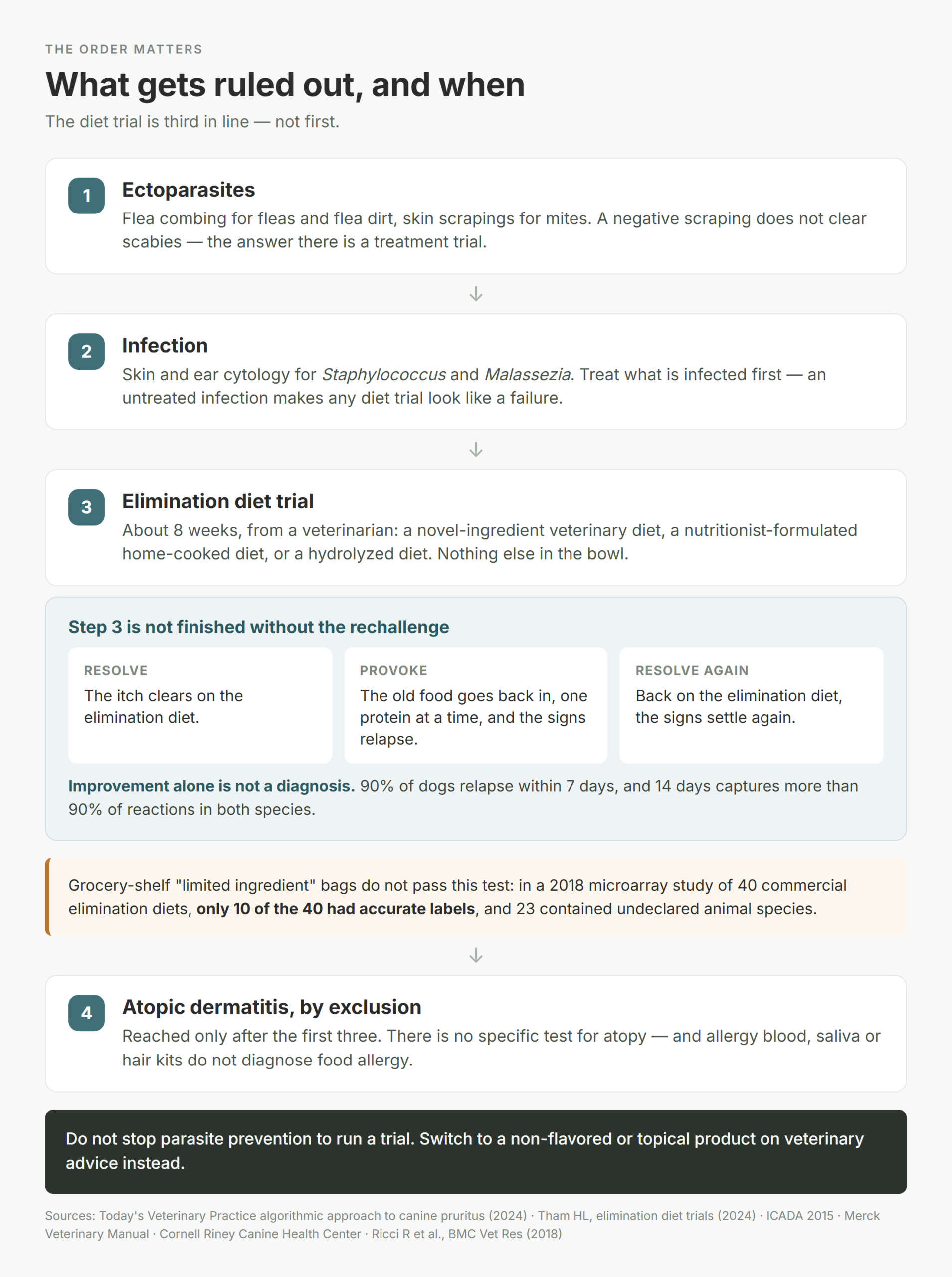
There is a sequence, and the diet trial is not first in it. Today’s Veterinary Practice published an algorithmic approach to canine pruritus in 2024, and it lines up with Merck, Cornell, and UC Davis:
- Ectoparasites. Flea combing for fleas and flea dirt, skin scrapings for mites.
- Infection. Skin and ear cytology — an impression smear or tape prep — looking for Staphylococcus and Malassezia. If inflammatory cells show up without organisms, a ringworm culture.
- Diet trial — only once 1 and 2 are handled.
- Atopic dermatitis, which is reached as a rule-out diagnosis. Cornell puts it plainly: there is no specific test for atopy.
“My dog doesn’t have fleas” is not evidence
Flea allergy dermatitis is a hypersensitivity to antigens in flea saliva. A very small number of bites can drive severe itch, and some individuals react to a single bite.
Then there’s the line from Merck that reframes the whole question: extremely hypersensitive animals, especially cats, can be virtually free of fleas because of excessive self-grooming. The more allergic the pet, the fewer fleas you may find on it.
Which is why diagnosis leans on history, distribution, and response to strict ectoparasite control used as a diagnostic test when nothing is visible. The classic pattern in dogs sits over the rump, tailhead and back of the thighs; in cats it’s crusted papules over the back, tailhead, thighs, groin, head and neck.
The ICADA guidelines recommend year-round flea control for every pet in the household, with systemic or oral adulticides preferred — partly because frequent bathing washes topicals off. Indoor-only pets are not exempt; fleas arrive on people, on other pets, and on wildlife around the house.
There’s also a US timing signal worth noting: Nationwide’s claims data show skin-allergy claims rise roughly 10% in spring and summer. That seasonality is an environmental and flea-season fingerprint, not a food one — kibble doesn’t have a pollen season.

Photo: Yaroslav Shuraev / Pexels
A negative skin scraping does not rule out scabies
Sarcoptic mange is intensely itchy and frequently missed on skin scraping, because the mites burrow, are few in number, and get destroyed by the pet’s own scratching. Reported detection rates are low — the exact figures circulate mainly in client-education material, so I’d treat the number as approximate, but the clinical rule is confirmed and it matters:
A negative scraping does not clear scabies. The standard answer is a treatment trial, with the response assessed over the following weeks.
One more reason to take it seriously: sarcoptic mange is zoonotic. It can cause a transient itchy rash in people in the household, and that’s a conversation for a physician, not a vet.
Infections have to be treated before you judge the diet
Secondary infections with Staphylococcus or Malassezia are common in food-allergic patients and they muddy the baseline. If an untreated infection is driving half the itch, an eight-week trial will look like a failure no matter what the diet does.
ICADA recommends treating secondary bacterial and yeast infections with topical and/or systemic antimicrobials under antimicrobial-stewardship guidelines. Ear infections need their own exam — in Nationwide’s 2025 canine data, ear infections ranked #2, right behind skin allergies.
That lump between the toes is not a cyst
This one deserves its own section, because the common name for it is actively misleading.
Owners call it an “interdigital cyst.” Merck says the lesions are “almost never cystic” — they’re areas of nodular pyogranulomatous inflammation, and the most common cause is a deep bacterial infection. The mechanism is mechanical to start with: follicular trauma leads to plugging of the follicle, then retention and rupture of its contents. Free keratin sitting loose in the tissue is itself inflammatory, and the granulomatous reaction to it is a common reason the thing keeps coming back.
Underlying triggers Merck names include canine atopic dermatitis — explicitly called a common cause of recurrent interdigital furunculosis, because licking traumatizes the area — plus demodicosis, conformation (short bristly interdigital hair and prominent webbing, as in Bulldogs, Labradors and Shar-Peis), obesity, altered gait, and systemic conditions like hypothyroidism and hyperadrenocorticism that predispose to bacterial infection.
These lesions are painful. Dogs are often lame.
And here’s why a food change alone won’t fix it: the immediate problem is an established deep infection. Merck describes aggressive long-term treatment over 3–6 weeks, with multifocal cases benefiting from extended systemic antimicrobial treatment of at least 4–6 weeks. Merck also lists the reasons these recur, and two of them are worth reading twice: antimicrobial treatment that was too short or the wrong choice, and concurrent systemic corticosteroid administration. A steroid can quiet the itch while the deep infection carries on underneath.
So the correct move is both things at once. Treat the infection as its own medical problem, and find the itch driver underneath it.
How an elimination diet trial actually works
The best current walkthrough is Heng L. Tham’s 2024 piece in Today’s Veterinary Practice, cross-checked against Merck, NC State’s Clinical Nutrition Service, and the ICADA 2015 guidelines.
How long?
There’s a genuine spread here, and I’d rather show it than pretend it’s settled.
- 8 weeks is the common standard for dogs — Tham reports greater than 90% sensitivity at that length, and ICADA 2015 specifies 8-week dietary restriction–provocation trials. Eight weeks is recommended for cats too.
- Merck says a minimum of about 10 weeks may be needed to identify 95% of food-allergic patients.
- NC State says 6–10 weeks followed by rechallenge; other reviews cite 6–12 weeks.
Improvement may begin somewhere between weeks 4 and 8, and complete improvement can take up to 12 weeks. A shortened 4–6 week protocol exists for dogs when an oral corticosteroid is given early in the trial, but there’s no published data supporting a shortened protocol in cats — and that’s a decision for your veterinarian to make, not something to improvise at home.
The practical answer: expect about eight weeks, be prepared for ten, and let your veterinarian set the number.

Photo: RDNE Stock project / Pexels
The three diets that qualify
Tham lists three acceptable options:
- A novel-ingredient veterinary diet — protein and carbohydrate sources the pet has genuinely never eaten.
- A novel-ingredient home-cooked diet, formulated by a board-certified veterinary nutritionist so it’s nutritionally complete. NC State is blunt that home-cooked diets carry far greater risks: nutritional deficiencies, cross-contamination, bacteria, parasites, and physical hazards.
- A hydrolyzed diet, where protein is broken into small peptides the immune system is less likely to recognize.
The caveat on that third option is important, and it’s the kind of thing that gets left out of the sales pitch: 20–50% of dogs may still react to a partially hydrolyzed diet made from an allergen they’re already sensitized to. Hydrolyzed is not a guarantee. NC State’s counterpoint is fair too — hydrolyzed diets remove the guesswork about what the pet has eaten before, which novel-protein diets depend on entirely.
In the US, prescription hydrolyzed and novel-protein diets require veterinary authorization. Expect that step.
The zero-exceptions list
This is where trials die. Not dramatically — one biscuit at a time.
For the whole trial, out means out:
- All treats
- Table scraps and human food
- Rawhide chews and flavored toys
- Dental chews
- Flavored or chewable monthly heartworm, flea and tick preventives — Merck notes these generally contain beef, pork or soy protein
- Flavored toothpaste
- Chewable supplements, joint supplements included
- Pill pockets and flavored medications — and even medication capsules may be made from beef or pork gelatin
- Access to the other pets’ bowls, the litter box, the counter, the garbage
One line deserves emphasis, because getting it wrong is dangerous: do not stop parasite prevention to run a diet trial. The correct move is to switch to a non-flavored or topical formulation on veterinary advice, not to skip heartworm and flea prevention for two months.
The other mistakes Tham catalogues are mundane and completely human. Skipping the gradual transition, so the pet gets an upset stomach and the owner quits. Assuming a little bit doesn’t count — it does. Everyone in the household not being on the same page. Not treating secondary infections, so the diet looks like it failed. And in cats specifically, not addressing food aversion: a cat that stops eating risks hepatic lipidosis, which is a real emergency. Cats are never starved into a new diet.

Photo: Rafael Rodrigues / Pexels
The rechallenge — the step almost everyone skips
If you take one thing from this article, take this.
Improvement on the diet is not a diagnosis. Merck is explicit that diagnosing food allergy requires both improvement on the elimination diet and clinical relapse on rechallenge.
The full sequence looks like this:
- Itch resolves on the elimination diet.
- The old food is reintroduced — provocation — and the signs relapse.
- The elimination diet is resumed, and the signs resolve again.
On timing: Tham reports that 90% of dogs relapse within 7 days, and that 14 days captures more than 90% of reactions in both species. Merck notes responses may take 10–14 days to appear, so roughly two weeks between individual challenges is sensible. And you reintroduce one protein source at a time, or you learn nothing about which one is the offender.
Why it matters practically: without the rechallenge, you can’t distinguish a true food allergy from coincidental seasonal improvement in an atopic dog, from the effect of the flea control or antibiotics that got started around the same time, or from an owner who wanted very badly to see improvement and did.
The cost of skipping it isn’t abstract. It’s a pet committed to an expensive prescription diet for life on no real evidence, while the actual driver of the itch goes untreated.
Why the grocery-store “limited ingredient” bag fails this test
I understand the appeal. The prescription diet costs more and requires a vet visit, and there’s a bag on the shelf that says limited ingredient, novel protein, grain free.
The laboratory work on those bags is genuinely unsettling.
- Ricci and colleagues (BMC Veterinary Research, 2018) ran microarray analysis on 40 commercial diets marketed for elimination trials. Only 10 of the 40 had accurate labels. 23 contained undeclared animal species, and 5 did not contain the species they declared. Contamination was more common in dry than wet formulations, and undeclared pork, chicken and turkey were the usual findings. The authors concluded that roughly three out of four commercial elimination diets would not allow a precise diagnosis.
- Raditic and colleagues (Journal of Animal Physiology and Animal Nutrition, 2011) ELISA-tested four over-the-counter venison dry dog foods. Three of the four tested positive for soy with no soy on the label, and one tested positive for beef protein with no beef listed. Their conclusion: none of the four was suitable for a diagnostic elimination trial.
- Tham cites contamination data of 65% containing undeclared chicken DNA and 41% undeclared pork DNA, and states plainly that OTC diets may contain ingredients that are not declared.
- NC State’s position is that prescription hydrolyzed diets carry far stricter quality control, while OTC diets can contain contaminant proteins that skew results — and that grain-free foods aren’t typically limited-ingredient at all, often carrying several protein sources.
The practical consequence is simple. Run an eight-week trial on a contaminated bag and you can get a false “not food” answer, and you’ve spent two months buying it.
One related point: allergy tests don’t diagnose food allergy. Merck is explicit that serum IgE testing, salivary IgA/IgM testing and hair analysis do not reliably give consistently accurate results. Direct-to-consumer saliva and hair “pet allergy test” kits are not diagnostic tools. For environmental allergy, intradermal or serum IgE testing has a different and legitimate role — selecting allergens for immunotherapy — but not confirming the diagnosis.
When it’s probably not allergy at all
Here’s a quick sorting rule that I found genuinely useful.
Itchy first, hair loss second — that’s usually allergy, parasites or infection.
Hair loss first, and the pet isn’t especially itchy — that’s a different lane entirely, and a diet trial is the wrong move:
- Hypothyroidism — a common hormonal diagnosis in middle-aged and older dogs. Dull, thin, slow-regrowing coat, with symmetric hair loss often starting on the trunk and tail.
- Hyperadrenocorticism (Cushing’s syndrome) — bilaterally symmetrical alopecia over the trunk and back of the thighs, typically sparing the head and legs. The skin isn’t inflamed and isn’t itchy unless it gets secondarily infected.
Both are diagnosed with blood testing and managed with oral medication. And both, Merck notes, predispose to bacterial skin infection — including recurrent interdigital furunculosis.
What managing atopic dermatitis actually looks like
If the trail ends at atopy, it’s worth adjusting expectations early: this is controlled, not cured.
The framework most people work from is the ICADA 2015 guidelines (Olivry, DeBoer, Favrot and colleagues, BMC Veterinary Research). Note the date — lokivetmab, an injectable anti-IL-31 monoclonal antibody, was released after publication and isn’t in the 2015 text, though Cornell’s current client page lists injectable monoclonal antibodies among standard options. The 2015 list is the framework, not the whole menu.
Management is multimodal:
- Flare-factor control — year-round flea control, an 8-week dietary restriction–provocation trial where food is suspected, and reducing environmental allergen exposure where it’s feasible. Cornell is honest that many environmental allergens simply can’t be avoided.
- Skin and coat hygiene — bathing at least weekly with mild, non-irritating shampoos, plus emollient and barrier-repair topicals. Oral essential fatty acids may give a modest benefit, and take roughly two months to show it.
- Pharmacotherapy — topical glucocorticoid sprays for localized lesions and proactive intermittent use; oral glucocorticoids for flares and short-term use, tapered to the lowest effective dose; oclacitinib, an oral JAK inhibitor; ciclosporin, slower in onset; lokivetmab; recombinant interferons where available, with masitinib as an alternative. ICADA notes long-term glucocorticoid risks including skin atrophy and urinary tract infections, which need monitoring. Antihistamines, in ICADA’s own words, “might provide a small and limited benefit in some dogs” — that is not a solution, and human antihistamine products are not a home experiment.
- Allergen-specific immunotherapy (ASIT) — the one genuinely disease-modifying option. ICADA states that ASIT and proactive intermittent topical glucocorticoid use are the only interventions likely to prevent or delay the recurrence of flares. Reported effectiveness is roughly 60–70%: one review describes a satisfactory success rate around 70%, and a retrospective study of 664 cases found 59.9% of atopic dogs improved by at least 50% on subcutaneous immunotherapy. Good odds. Not a guarantee.
Every drug name above is here so you recognize it in a conversation with your veterinarian. None of it is a plan you can start on your own, and there are no doses in this article on purpose.
Photo: Mathew Coulton / Pexels
For scale on how ordinary this problem is in the US: skin allergies have been the #1 canine condition in Nationwide’s pet-insurance claims for 15 consecutive years, based on an analysis of more than 3.3 million claims in 2025. In 2024 there were more than 450,000 skin-allergy claims across dogs and cats, a 13% increase over 2023, and skin allergies accounted for 16% of all dog-related claims. Insurer-reported cost estimates run around $266 in the first 30 days after diagnosis and up to $841 after a year — averages, not price tags, and regional variation is large. Ask your own clinic for an estimate rather than trusting a number from a blog.
Things not to do at home
A short list, because the downside is severe.
- Never give human medication without veterinary direction. Ibuprofen and naproxen can cause gastrointestinal ulceration, kidney failure, liver toxicity and neurologic signs including tremors or seizures — even one or two tablets. Acetaminophen is highly toxic to cats, which lack the enzymes to metabolize it safely; it damages oxygen transport in the blood and causes severe liver injury, and dogs can develop liver failure at higher exposures. The underlying reason is metabolic: dogs and cats don’t have drug-metabolizing enzymes that people do.
- Never use human toothpaste on a dog. Many human oral-care products contain xylitol, which causes rapid, dangerous hypoglycemia in dogs and can cause liver failure. Both can be fatal. Veterinary toothpaste only — and flavored toothpaste has to come out during a diet trial anyway.
- Don’t stop parasite prevention to run a trial. Switch formulations on veterinary advice.
- Don’t starve a cat onto a new diet. Food refusal risks hepatic lipidosis.
- Don’t give a corticosteroid “just to see if it helps” during a trial without veterinary instruction. It confounds the result and can mask a deep infection.
If your pet has swallowed a human medication or anything containing xylitol, contact your veterinarian, an emergency clinic, or an animal poison control center immediately.
Signs that mean a vet visit now, not next month
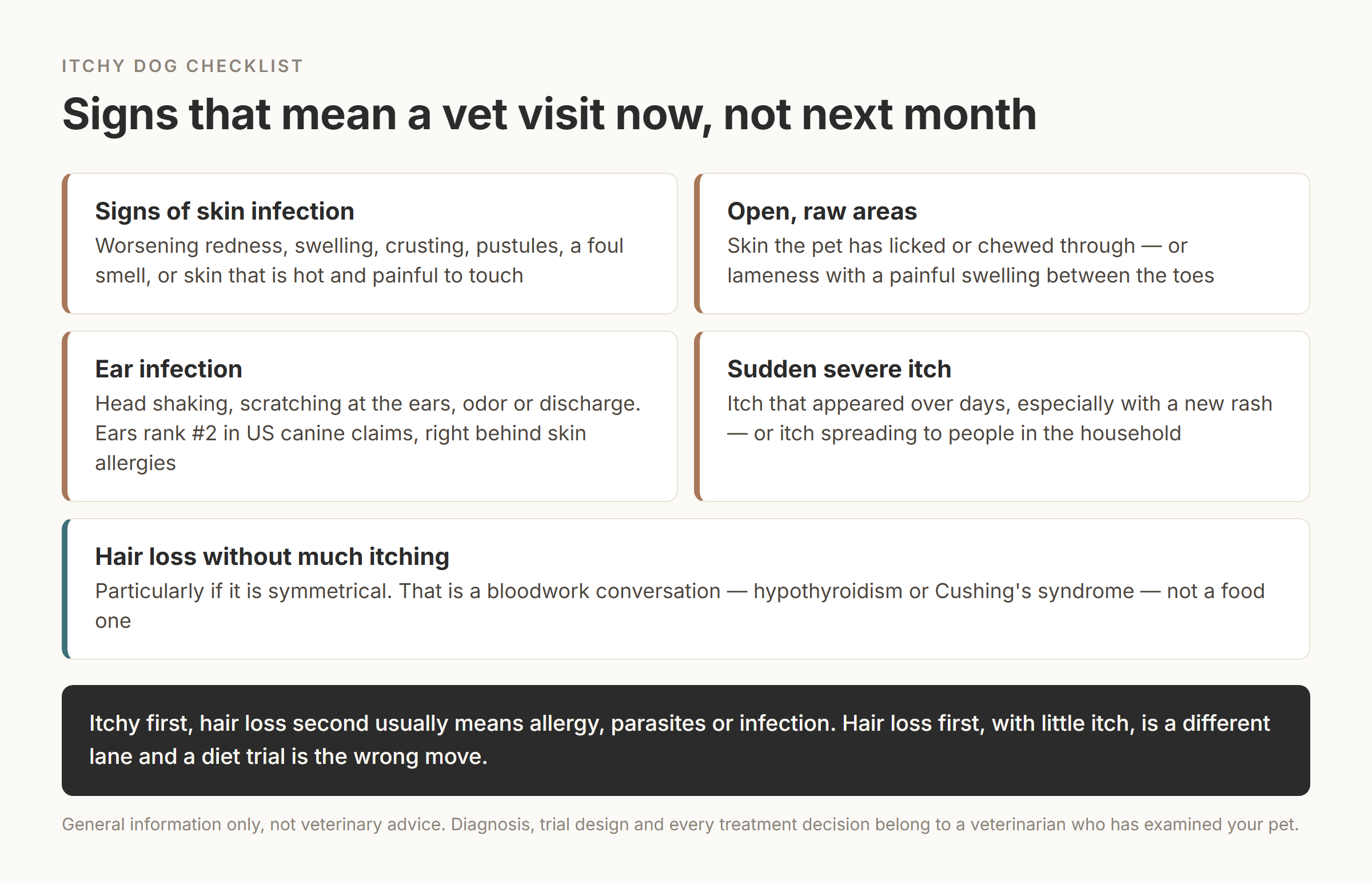
- Signs of skin infection — worsening redness, swelling, crusting, pustules, a foul smell, or skin that’s hot and painful to touch
- Open, raw areas the pet has licked or chewed through, or lameness with a painful swelling between the toes
- Ear infection — head shaking, scratching at the ears, odor or discharge
- Sudden severe itch that appeared over days, especially with a new rash, or itch that’s spreading to people in the household
- Hair loss without much itching, particularly if it’s symmetrical — that’s a bloodwork conversation, not a food one
What changed my mind here wasn’t any single statistic. It was realizing that the appeal of the food theory is that it hands you something to do, and the actual answer hands you a sequence instead — comb for fleas, run the cytology, treat what’s infected, then and only then spend eight weeks on a diet you got from a veterinarian, and finish with a rechallenge you’d rather skip.
It’s slower. It’s less satisfying. But it’s the difference between knowing what’s wrong with your dog and buying an expensive bag of food for the next ten years and hoping.
Veterinary disclaimer. This article is general information about animal health, not veterinary advice, and it does not establish a veterinarian–client–patient relationship. Skin disease in dogs and cats is a diagnosis-of-exclusion problem that cannot be solved from a blog post. Diagnosis, diet-trial design, trial length, rechallenge, and all treatment decisions belong to a licensed veterinarian who has examined your pet.
Medication note. Generic drug names appear here only so you recognize them in a conversation with your veterinarian. No doses appear in this article and none should be inferred. Do not start, stop, or change any medication — including parasite prevention — based on this article. Do not give human medication to a pet.
Urgent. If your pet has ingested a human medication or any product containing xylitol, contact your veterinarian, an emergency veterinary clinic, or an animal poison control center immediately. Do not wait for symptoms.
One note for people: sarcoptic mange is zoonotic. If members of the household develop an itchy rash alongside an itchy pet, that’s worth raising with a physician as well as a veterinarian.
References
- Olivry T, Mueller RS — Critically appraised topic on adverse food reactions of companion animals (3): prevalence of cutaneous adverse food reactions in dogs and cats, BMC Veterinary Research (2017)
- Olivry T, DeBoer DJ, Favrot C, et al. — Treatment of canine atopic dermatitis: 2015 updated guidelines from the International Committee on Allergic Diseases of Animals (ICADA), BMC Veterinary Research (2015)
- Ricci R, et al. — Undeclared animal species in dry and wet novel and hydrolyzed protein diets for dogs and cats detected by microarray analysis, BMC Veterinary Research (2018)
- Raditic DM, Remillard RL, Tater KC — ELISA testing for common food antigens in four dry dog foods used in dietary elimination trials, Journal of Animal Physiology and Animal Nutrition (2011)
- Tham HL (DVM, DACVD) — Elimination Diet Trials: Steps for Success and Common Mistakes, Today’s Veterinary Practice (June 2024)
- de Souza CP (DVM, MS, PhD, DACVD) — Algorithmic Approach: Diagnosis and Treatment of Pruritus in Dogs, Today’s Veterinary Practice (March/April 2024)
- Merck Veterinary Manual — Cutaneous Food Allergy in Animals; Flea Allergy Dermatitis in Dogs and Cats; Interdigital Furunculosis in Dogs; Feline Atopic Skin Syndrome
- Cornell University College of Veterinary Medicine, Riney Canine Health Center — Atopic dermatitis (atopy)
- North Carolina State University College of Veterinary Medicine, Clinical Nutrition Service — Hydrolyzed Diets
- UC Davis School of Veterinary Medicine — Dermatology Fact Sheets
- Nationwide pet insurance — 2025 claims analysis (3.3M+ claims) and 2022/2024 claims reporting
- Efficacy of subcutaneous allergen immunotherapy in atopic dogs: a retrospective study of 664 cases
- University of Illinois College of Veterinary Medicine — Keep Human Medications Away From Pets