Pet Tartar Care: Prevent Big Vet Bills, Brushing Tips
Pet Tartar Care: How to Prevent the Big Dental Bill
I’ll be honest: for the first couple of years, I never once brushed my dog’s teeth.
He ate fine, he played fine, and dental care felt like something for fussier owners. Then one afternoon he yawned in my face and the smell stopped me cold. That breath wasn’t just an annoyance — it was the first sign that I’d been neglecting pet tartar care, and that neglect has a price.
Here’s the short version: the longer you wait, the more it costs. Skip the home care and the bill eventually arrives as a professional cleaning under anesthesia — sometimes with extractions on top. Today I want to walk through how to keep that bill as small as possible, in plain terms.
What untreated tartar actually does
Tartar doesn’t appear overnight. Food and bacteria form a sticky plaque biofilm, and if it isn’t removed it hardens into tartar (calculus). That rough surface attracts more plaque and creeps below the gumline, where it causes gingivitis and then periodontal disease — one of the most common conditions in dogs over three years old.
The part that surprised me most is that it doesn’t stay in the mouth. As the infection advances, bacteria can enter the bloodstream (bacteremia), and research links that to problems in the kidneys, liver, and heart. Untreated, periodontal disease progresses to tooth loss, jawbone infection, and real oral pain.
Bad breath is usually the first thing owners notice, and the most common cause is periodontal disease. According to Cornell’s veterinary health centers, consistent bad breath is worth a veterinary check — gum disease often starts before you see obvious tartar.

The anesthetic cleaning — cost, necessity, and safety
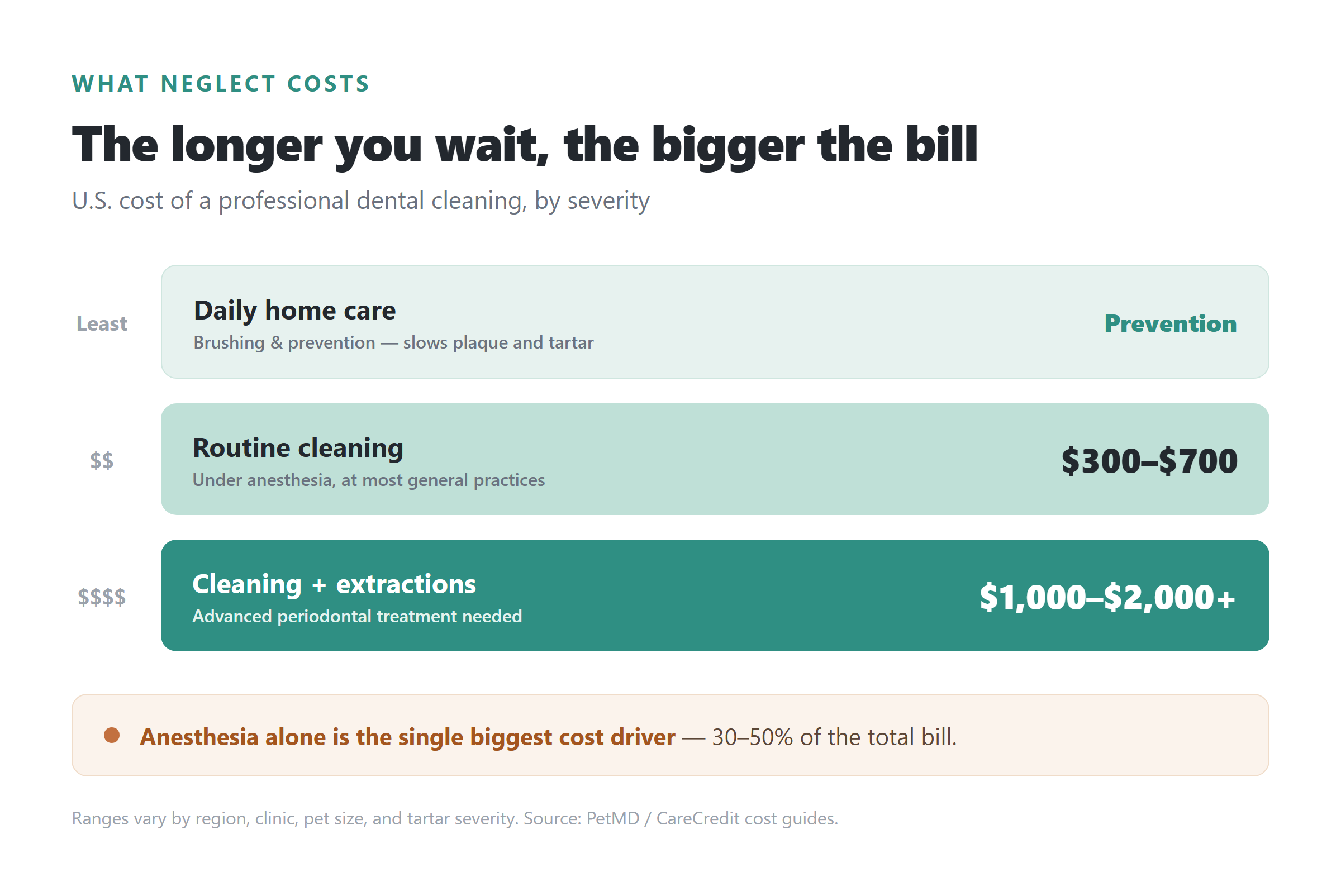
Once tartar has hardened below the gumline, brushing and chews can’t remove it. That’s when you need a professional cleaning under anesthesia, and the cost is where the “big bill” reputation comes from:
- $300–$700 at most general practices for a routine cleaning
- $1,000–$2,000+ if extractions or advanced periodontal treatment are needed
- Anesthesia alone is the single biggest cost driver — 30–50% of the total
The reason anesthesia is standard isn’t upselling. It keeps water out of the airway, spares the pet pain and stress, and — crucially — allows a complete exam with dental probing, full-mouth X-rays, and treatment below the gumline, which is exactly where most of the damage hides.

Photo: Tima Miroshnichenko / Pexels
Why anesthesia-free “cleaning” isn’t a substitute
If the price tag makes anesthesia-free cleaning tempting, I understand the impulse. But it’s worth knowing that the AVMA and AAHA do not recommend it in place of professional dental care. It only addresses the visible surface tartar and can’t treat the sub-gingival disease that matters.
Is anesthesia risky? For most patients, pre-anesthetic bloodwork and monitoring keep the risk low, and veterinary organizations judge the danger of untreated periodontal disease to outweigh the anesthesia risk. That said, senior pets or those with underlying conditions need an individual pre-anesthetic assessment — so this is a decision to make with your veterinarian, not from a blog post.
Many veterinary dentists suggest annual cleanings starting around age 2–3, with daily home care in between to slow things down.
Home care: brushing is the foundation
The most effective baseline is unglamorous but real — brushing.
- Use pet-specific toothpaste only. Never use human toothpaste: some are high in sodium, and many contain xylitol, which is toxic to dogs.
- Enzymatic pet toothpastes keep breaking down plaque between sessions.
- Daily brushing is the ideal target for slowing plaque and tartar.
Dental chews, treats, water additives, and chew toys are adjuncts, not substitutes. A well-designed chew physically scrubs the tooth as the dog gnaws, helping break up plaque before it hardens — but it cannot remove hardened sub-gingival tartar or treat existing periodontal disease.
When you shop, look for the VOHC seal. The Veterinary Oral Health Council is a volunteer group of board-certified veterinary dentists; acceptance requires two clinical trials showing the product reduces plaque and/or tartar by at least 20% on average versus control. VOHC-accepted examples include Greenies Dental Chews, Whimzees Brushzees, ProDen PlaqueOff, and Purina DentaLife Advanced Care. One caveat worth remembering: VOHC certifies effectiveness on plaque/tartar, not ingredient safety.
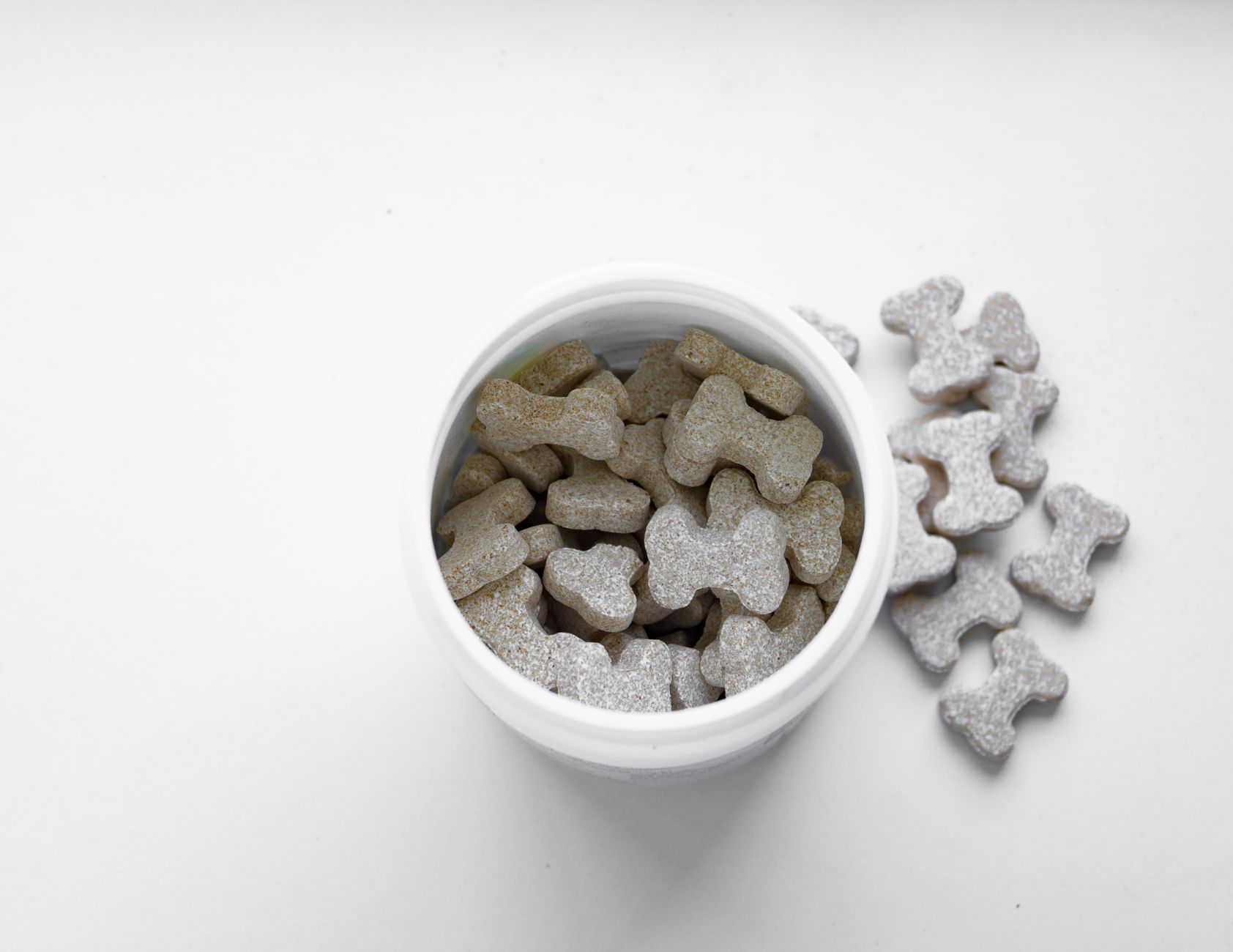
Photo: Lana Kravchenko / Pexels
Training a pet that refuses the brush
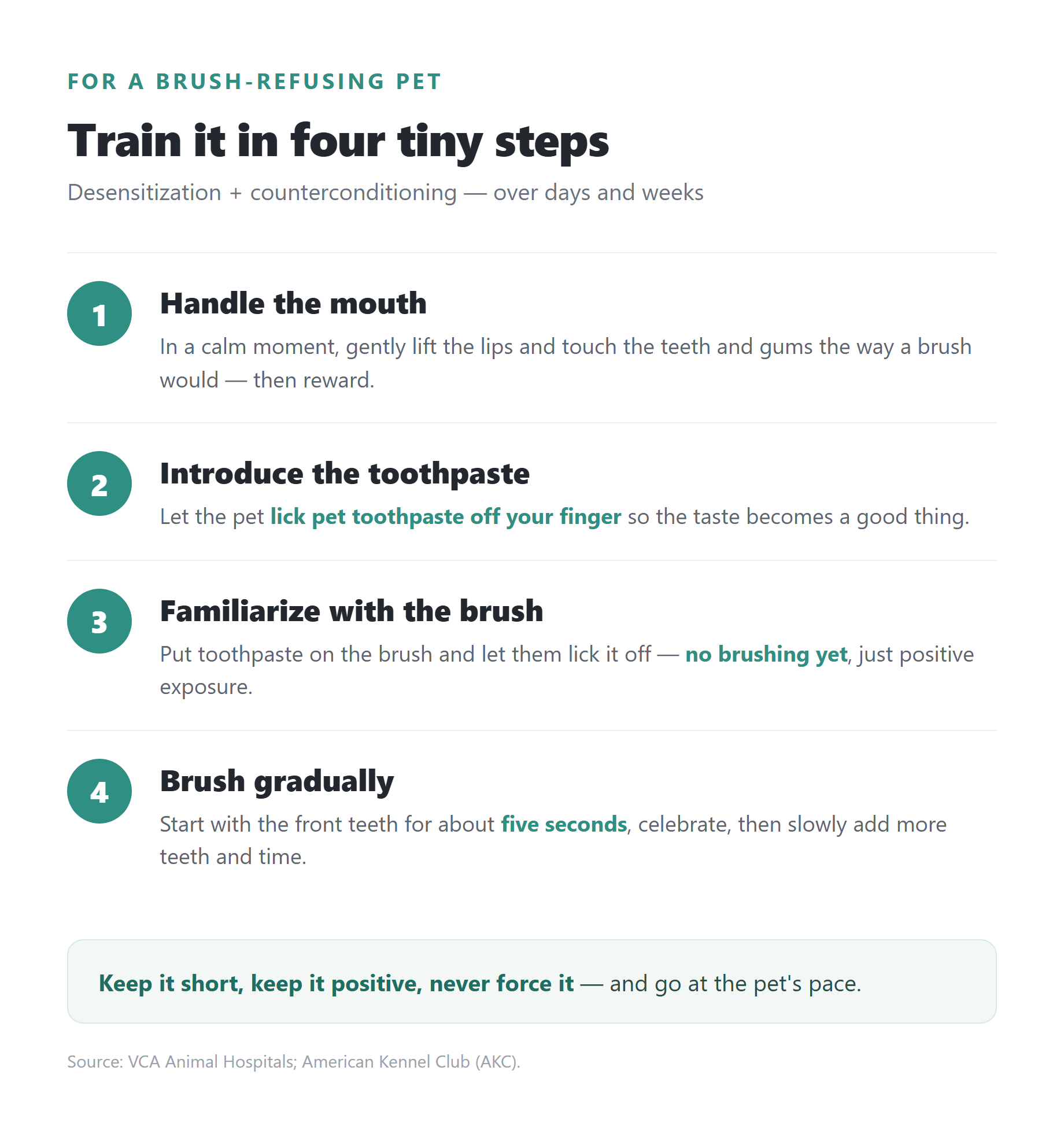
My dog hated the toothbrush, and honestly, that reaction was normal — the unfamiliar texture, the strange paste, the sudden handling of his mouth. So instead of forcing it, I broke the whole thing into tiny steps over a couple of weeks, using desensitization and counterconditioning.
- Mouth-handling first. In a calm moment (after a walk or play), gently lift the lips and touch the teeth and gums the way a brush would, then reward. Extend the time gradually.
- Introduce the toothpaste. Let the pet lick it off your finger so the taste becomes a good thing.
- Familiarize with the brush. Put toothpaste on the brush and let them lick it off — no brushing yet, just positive exposure.
- Brush gradually. Start with the front teeth for about five seconds, celebrate, then slowly add more teeth and time over days and weeks.
The whole principle fits in one line: keep it short, keep it positive, never force it, and go at the pet’s pace. (Both VCA and the AKC describe the same approach.)
When to see the veterinarian
Book an oral exam — don’t wait — if you notice any of these:
- Persistent bad breath (the most common early sign)
- Red, swollen, bleeding, or receding gums; loose or missing teeth
- Excessive drooling, pawing at the face, or facial swelling
- Difficulty eating, dropping food, or chewing on one side
- Visible tartar buildup or discoloration

One last thing.
Brushing my dog’s teeth turned out to be less about his teeth and more about the years ahead of us — fewer extractions, less pain, a smaller bill, and simply more time. If a few minutes tonight can push that big dental bill further down the road, that’s a trade I’ll take every time.
This is general information only. Anesthesia, extractions, and any diagnosis should be decided with your veterinarian.
Sources
- Cornell University CVM — Riney Canine Health Center; Feline Health Center
- Veterinary Oral Health Council (VOHC.org); PetMD, “What Is VOHC”
- PetMD / CareCredit — dog teeth cleaning cost guides
- VCA Animal Hospitals; AKC — toothbrushing training