PCOS Self-Check and Diet: Signs and Insulin Resistance
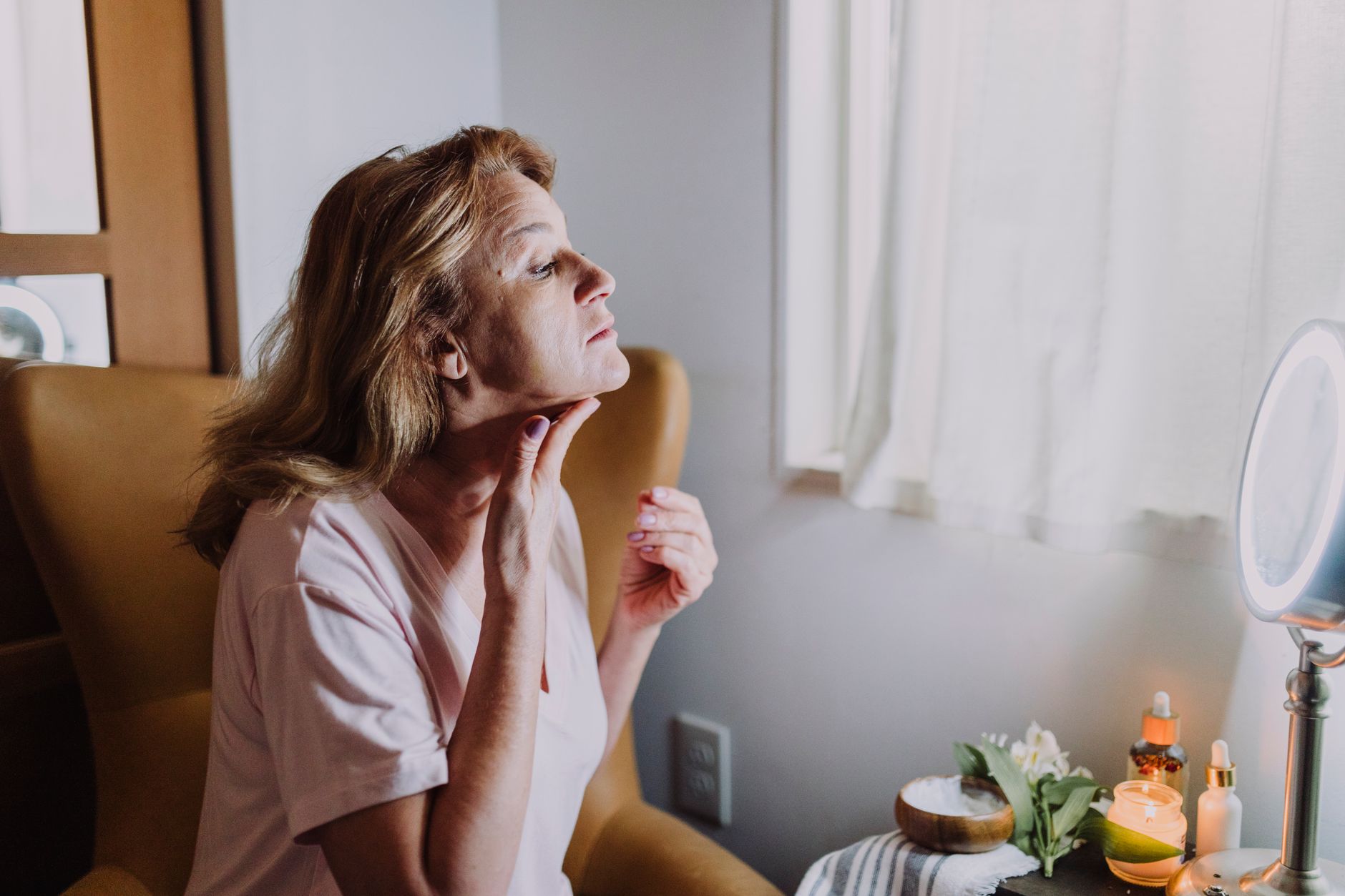
Let me start with the moment that sends a lot of women down this particular rabbit hole. You notice a crop of deep, cystic acne along your jaw and chin — the kind that hurts before you can even see it. Maybe a few coarse dark hairs on your chin that weren’t there before. And when you think about it, your period has been showing up whenever it feels like it.
Your first thought is probably your skin, or your stress.
But sometimes the answer is a little further upstream — in your ovaries and your hormones. This is the cluster that makes doctors think of PCOS, and I want to walk through it honestly: what’s worth paying attention to, why you should treat this as “reasons to get checked” rather than a diagnosis, and the one lifestyle lever with the most evidence behind it.
Photo: RDNE Stock project / Pexels
One thing up front. This is general information, not medical advice, and definitely not a diagnosis. Irregular periods and adult acne have many possible causes. What follows is meant to help you have a better conversation with a clinician, not to replace one.
What PCOS actually is
PCOS stands for polycystic ovary syndrome, and it’s one of the most common hormonal disorders in women of reproductive age. The U.S. Office on Women’s Health estimates it affects about 1 in 10 women of childbearing age.
So if this is you, you are in very large company.
At its core, PCOS is an imbalance of reproductive hormones — usually higher-than-normal androgens, the so-called “male” hormones that women also make in smaller amounts. Those extra androgens interfere with the ovary releasing an egg each month, which is why periods become irregular or go missing.
The name is honestly a bit misleading. “Polycystic” refers to the many small follicles that can show up on an ovary during an ultrasound. They aren’t harmful cysts, you can have PCOS without them, and you can have them without having PCOS. So please don’t diagnose yourself from the word alone.
The self-check: signs worth noticing
Here’s the part you came for. Think of this as a “should I get this checked?” list, not a scorecard.
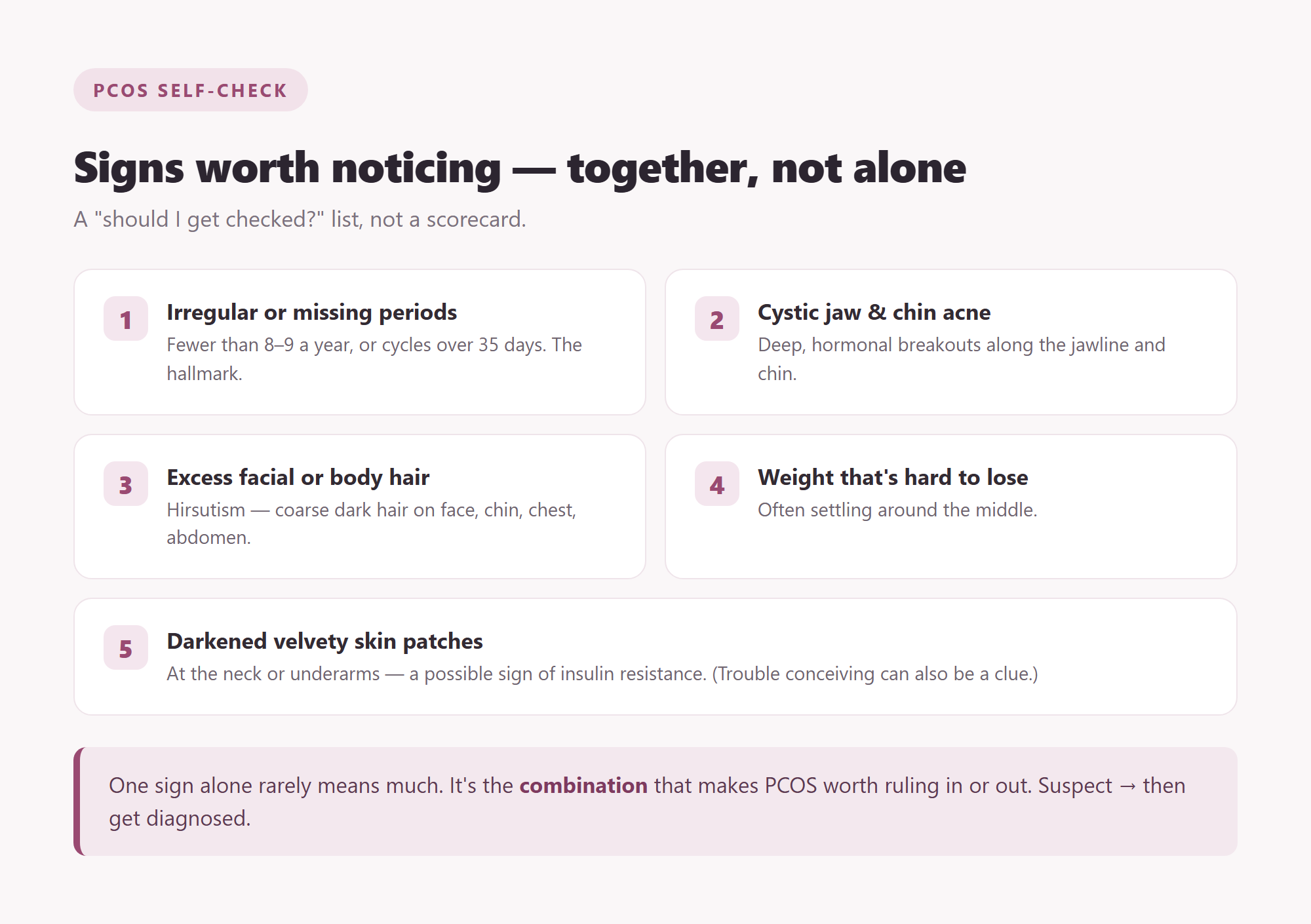
The signs that most often cluster together in PCOS:
- Irregular, infrequent, or missing periods. This is the hallmark — think fewer than eight or nine periods a year, or cycles routinely longer than 35 days.
- Signs of high androgens: hormonal, cystic acne, classically along the jawline and chin; hirsutism, meaning coarse dark hair on the face, chin, chest, or abdomen; sometimes thinning hair at the scalp in a male pattern.
- Weight that’s hard to lose, often settling around the middle.
- Darkened, velvety skin patches (often at the neck or underarms) or skin tags — these can be a sign of insulin resistance.
- Trouble getting pregnant — PCOS is a common, and treatable, cause.
Now the honest caveat. Any one of these on its own has a long list of possible explanations. A single breakout doesn’t mean anything. It’s the combination — say, cystic jaw acne plus chin hair plus periods that won’t keep a schedule — that makes PCOS worth ruling in or out with a professional.

Photo: Polina Tankilevitch / Pexels
Why “suspect, then get diagnosed” matters
I keep repeating this, and here’s why. PCOS has an actual diagnostic process, and it belongs to a clinician.
The most widely used framework is the Rotterdam criteria. A diagnosis generally requires two of these three features: irregular or absent ovulation; signs of high androgens (either physical, like hirsutism, or on a blood test); and polycystic-appearing ovaries on ultrasound.
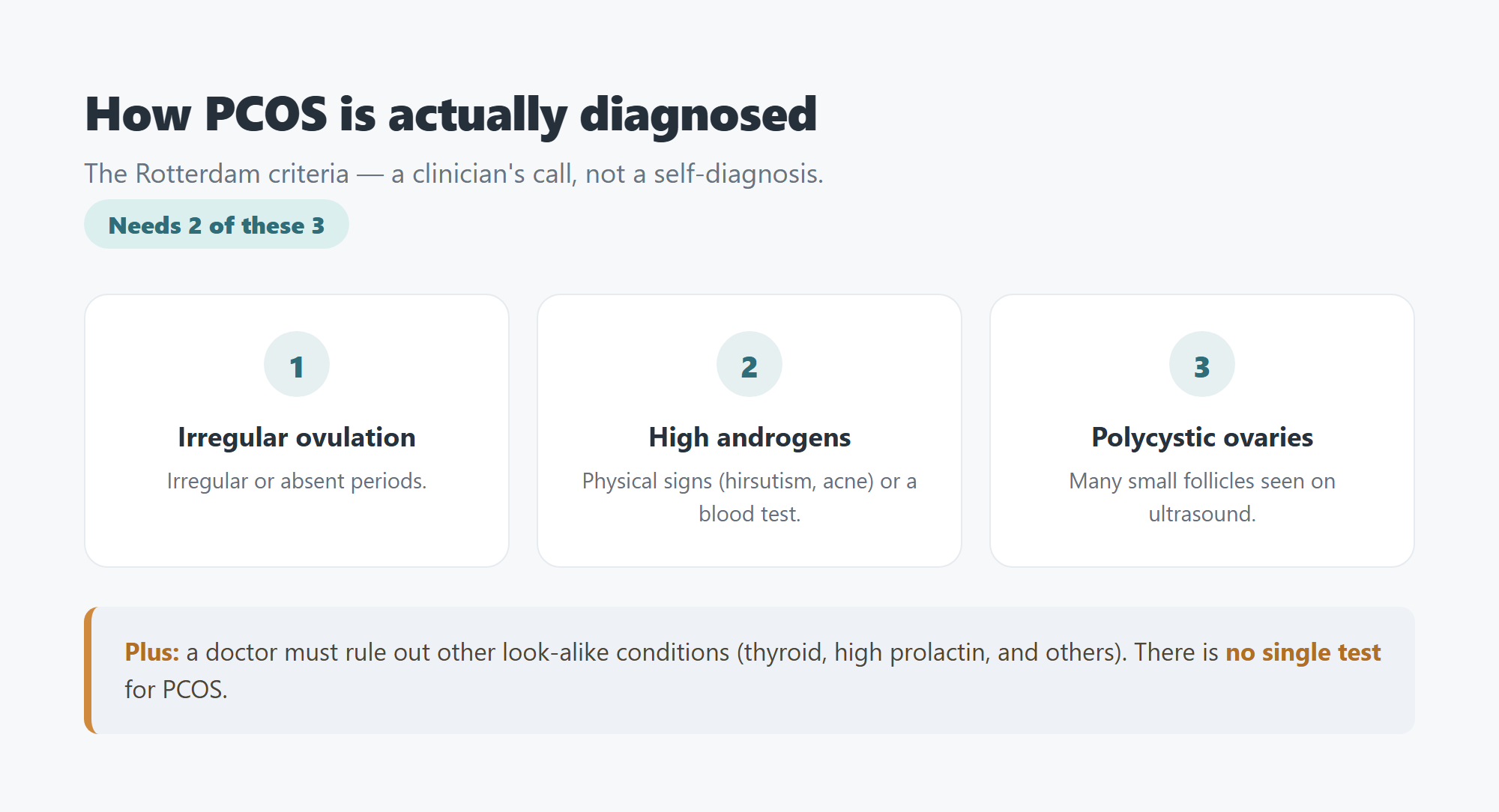
But there’s a crucial second step: a doctor also has to rule out other conditions that can look just like PCOS — thyroid problems, high prolactin, and others. There is no single test that says “yes, PCOS.” It comes from your history, a physical exam, some blood work, and sometimes an ultrasound.
This is exactly why self-diagnosis goes wrong. The symptoms overlap with several other treatable conditions, and the ultrasound part isn’t even applied in the first years after your first period, because young ovaries can normally look multifollicular. So: notice the pattern, then let a professional sort it out.
The insulin-resistance link
Here’s the thread that ties the symptoms to the diet advice.
PCOS is strongly associated with insulin resistance — a state where your cells respond poorly to insulin, so your body pumps out more of it to compensate. The problem is that high insulin can push the ovaries to make even more androgens, which worsens the acne, the hair, and the irregular cycles.
It becomes a bit of a loop.
That loop is also why PCOS raises the long-term risk of prediabetes and type 2 diabetes, and it’s the reason improving your body’s insulin sensitivity tends to help both your metabolism and your symptoms at the same time. Worth knowing: insulin resistance can be present even if you’re lean, so this isn’t only about weight.
The diet that actually helps
If insulin is the lever, then eating in a way that keeps your blood sugar steady is the most evidence-backed thing you can do at home. This is first-line self-care, not a cure — but it’s a real one.
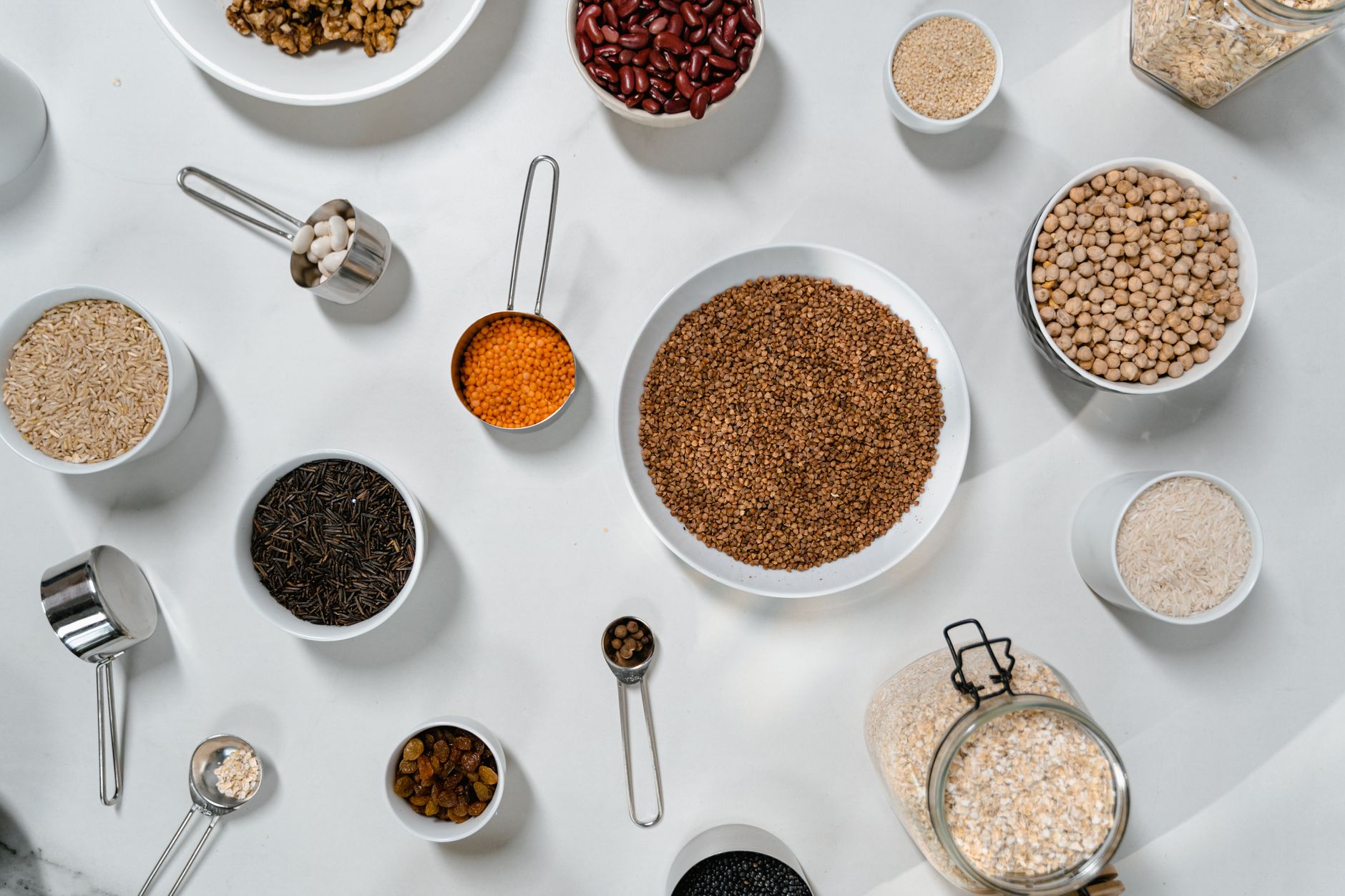
Photo: MART PRODUCTION / Pexels
The pattern that research supports for PCOS and insulin resistance:
- Lower the glycemic load. Cut back on refined carbs and added sugar — white bread, pastries, sugary drinks, sweets, heavily processed snacks. These spike blood sugar and insulin the hardest.
- Favor complex, high-fiber carbs. Whole grains, beans and legumes, vegetables, and whole fruit release glucose more slowly. A low-glycemic-index way of eating is described as an efficient first-line approach for the insulin resistance in PCOS.
- Build balanced plates. Pair those slower carbs with protein, healthy fats, and fiber — lean proteins, fatty fish, leafy greens, nuts, olive oil, avocado. It blunts the blood-sugar spike and keeps you fuller.
- Consider the pattern, not just the food. Both low-GI and DASH-style eating are noted for supporting insulin sensitivity in PCOS.
- Move regularly. Physical activity improves insulin sensitivity on its own, alongside the food.
I want to be straight with you about one thing. Diet is a management tool, not a switch that turns PCOS off. Depending on what you and your doctor decide, medical care might add other pieces — hormonal treatment to regulate cycles and androgens, or medication for insulin resistance, or fertility support. No plate of food replaces that conversation.

Photo: www.kaboompics.com / Pexels
When to see a doctor
Please book an appointment — with a gynecologist, an OB-GYN, or an endocrinologist — if you’re noticing:
- Periods that are irregular, infrequent, or missing.
- New or worsening hirsutism or persistent cystic acne.
- Unexplained weight gain, or those darkened skin patches.
- Trouble conceiving.
Left unmanaged over the years, PCOS carries real risks — type 2 diabetes, higher blood pressure and cholesterol, changes to the uterine lining from infrequent periods, sleep apnea, and effects on mood. That’s not meant to frighten you. It’s meant to make the case that this is worth a proper evaluation rather than a lifetime of guessing. And please don’t start supplements or medications like metformin on your own — those belong in a plan with your clinician.
The reason I find PCOS strangely reassuring, even with all those caveats, is this: the acne and the chin hair and the wandering periods aren’t random bad luck happening to separate parts of you. They’re often one story, told by your hormones, with a thread of insulin running through it.
You can’t diagnose yourself from a blog, and you shouldn’t try. But you can notice the pattern, steady your blood sugar while you wait for your appointment, and walk into that office already asking the right question.
Because the sooner you name what’s going on, the sooner you get to do something about it — and that’s a much better place to stand than wondering.
References
– Office on Women’s Health — Polycystic ovary syndrome
– World Health Organization — Polycystic ovary syndrome (fact sheet)
– Endocrine Society — Polycystic Ovary Syndrome
– AAFP — Polycystic Ovary Syndrome: Common Questions and Answers
– CMAJ — Diagnosis and management of polycystic ovarian syndrome
– Current Nutrition Reports (PMC) — Diet, Glycaemic Index and Glucose Control in PCOS