Nocturia in Men: Why You Wake Up to Pee (and How to Fix It)
Let me be honest about the 3 a.m. part first.
You are asleep. Then you are not. You shuffle to the bathroom, come back, and lie there waiting for sleep to return — and by the time it does, it is almost time to do it again. If you are waking up two or three times a night just to pee, you already know the real cost is not the walk to the bathroom.
It is the next day.
That dragging, foggy tiredness that coffee only half fixes. The word for the nighttime part is nocturia, and if you are here trying to figure out why it happens and how to get your deep sleep back, you are asking exactly the right question.
One thing first, though.
I am not your doctor, and this is not medical advice. Nocturia is often harmless and fixable — but it can also be an early signal of something that needs attention, from an enlarged prostate to diabetes or sleep apnea. Anything that is new, worsening, or paired with the red flags near the end of this article belongs in a conversation with a doctor.

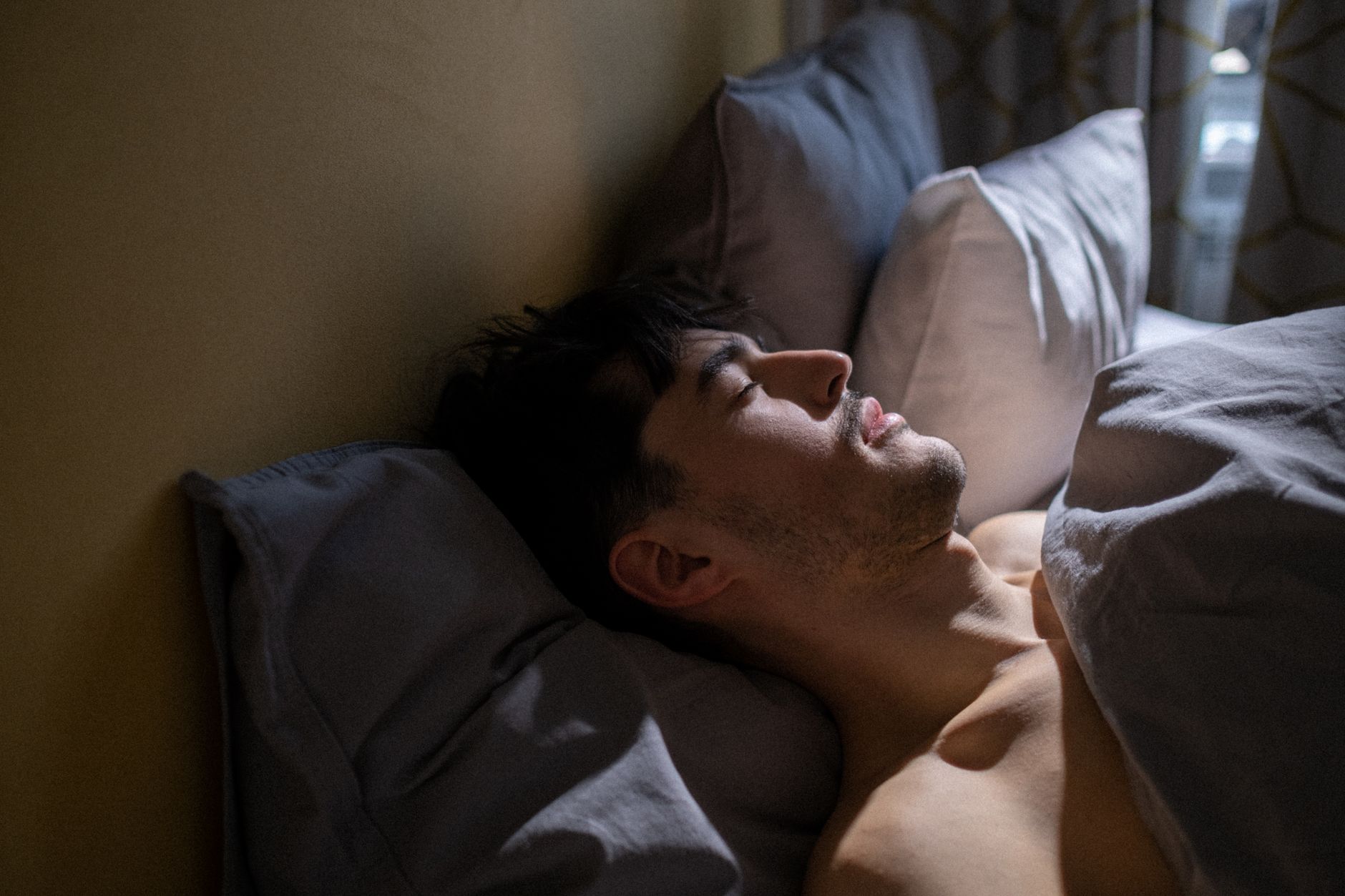
Photo: Ron Lach / Pexels
What actually counts as nocturia?
Here is the part that surprises most men.
Waking up once a night is common, and on its own it is usually nothing to treat. The technical definition is broad — the International Continence Society counts waking even once to urinate as nocturia. But the number clinicians actually care about is different.
The practical threshold is two or more trips a night.
The Urology Care Foundation frames bothersome nocturia as waking more than twice a night to urinate, and Cleveland Clinic suggests calling a provider when you are up more than once or twice. So if you wake up once and drift right back to sleep, relax. If it is two, three, or more — and it is fraying your days — that is the version worth chasing down.
It is more common than you think (especially with age)
If this is happening to you, you are in a very large club.
Roughly 69% of men over 40 report getting up at least once a night to pee, according to the Sleep Foundation. It climbs steeply from there: more than half of all men over 60 have nocturia, and about half of men in their 70s are up twice or more every night.
So this is not some rare malfunction. It is one of the most ordinary parts of getting older as a man — which is exactly why it gets ignored for years longer than it should.
Why losing sleep this way hits so hard
Here is the thing most people get wrong about nocturia.
They count the minutes. “It is only five minutes in the bathroom.” But sleep does not work like a bank balance you can top back up. It works in cycles, and the damage is not the lost minutes — it is the fragmentation.
That first trip often interrupts the deepest, most restorative stage of sleep, early in the night. You do not just lose the time you were up. You lose the momentum of the sleep you were building, and deep sleep is hard to climb back into. Repeat that two or three times and you get the result the research describes plainly: daytime fatigue, low energy, irritability, and worse concentration.

For older men there is a safety angle too. Getting up repeatedly in the dark raises the risk of falls. And nocturia keeps close company with obstructive sleep apnea — up to about half of people with sleep apnea report waking to urinate. So if you also snore heavily and feel wrecked despite “enough” hours, the bladder may be a symptom, not the cause.
So why do men wake up to pee?
Nocturia is not one problem. It generally comes down to one of three mechanisms.
1. Your body makes too much urine at night
This one is called nocturnal polyuria, and it is the single most common driver — cited in a large share of nocturia cases. Sometimes it is simple: too much fluid in the evening, or caffeine and alcohol, which are both diuretics and bladder irritants. Sometimes it is fluid that pooled in your legs all day quietly returning to circulation once you lie down, and your kidneys finally process it — at 2 a.m.
2. The prostate connection
This is the one men worry about, and it is worth understanding clearly.
In men, the classic cause of nighttime urination is benign prostatic hyperplasia, or BPH — an enlarged (but non-cancerous) prostate. The prostate wraps around the urethra, so as it grows it can squeeze the flow and leave residual urine behind. A bladder that never fully empties simply fills up and signals again sooner.
And BPH is extremely age-linked. Roughly half of men have some evidence of an enlarged prostate by age 50, and the figure keeps climbing into the 70s and 80s. The typical package of symptoms goes beyond the night trips: a weak stream, trouble starting, dribbling, urgency, and a sense of not being done. If that sounds familiar, that is your cue to get a prostate check — not to panic, but to actually know.

Photo: Pavel Danilyuk / Pexels
3. Sleep and other medical causes
Obstructive sleep apnea, diabetes, high blood pressure, heart failure, and certain medications (especially water pills taken late in the day) can all cause or worsen nocturia. This is precisely why a stubborn case deserves a real evaluation rather than a guess — the fix depends entirely on the mechanism.
How to beat it — start with the boring stuff that works
The good news: the first-line fixes are behavioral, free, and genuinely effective. Start here.
- Move your fluids earlier. Cut back on drinking about two hours before bed. You are not dehydrating yourself — you are front-loading the day.
- Cut evening caffeine and alcohol. Both make you produce more urine and irritate the bladder directly. That nightcap is a double offender.
- Drain your legs before bed. If fluid pools in your legs during the day, put them up for an hour in the evening (or use compression stockings) so that fluid clears before you lie down, not after.
- Time your medications. If you take a diuretic, ask your doctor about taking it in the morning. Never change a prescription on your own.
- Try pelvic-floor (Kegel) exercises. Training the pelvic-floor muscles can help calm an overactive bladder, and behavioral therapy including these exercises has shown favorable effects on nocturia and sleep. Technique matters more than reps — done right, they are harmless and worth the effort.

A word on saw palmetto
I want to be straight with you here, because this supplement is everywhere.
Saw palmetto is the most popular over-the-counter remedy marketed for prostate and urinary symptoms, and it is generally well tolerated. But when you look at the rigorous evidence, the story is disappointing. A 2023 Cochrane review pooling 27 trials and over 4,600 men found saw palmetto alone did not meaningfully improve urinary symptoms compared with placebo. An NIH-funded trial that pushed the dose up to three times the standard amount found no benefit either.
That does not mean it is dangerous. It means you should not expect it to fix nocturia, and you should not use it as a reason to put off seeing a doctor about your prostate.
When to actually see a doctor
Most of this article is about patience and simple habits. This part is not.
See a doctor or urologist if:
- You are waking more than once or twice a night, or the pattern is new or getting worse.
- You have a weak stream, trouble starting, or a feeling of not fully emptying (possible BPH worth evaluating).
- Nocturia comes with excessive thirst, leg swelling, or heavy snoring and daytime sleepiness — possible signs of diabetes, heart problems, or sleep apnea.
And treat these as prompt red flags: blood in the urine, pain or burning when you go, an inability to urinate, or fever. Those are not wait-and-see.
A doctor can pin down which mechanism is driving your nights — often with something as simple as a bladder diary, a urine test, and a prostate check — and most cases turn out to be very treatable. That is the whole point of going: not to hear bad news, but to stop guessing.
The short version
If I had to compress all of this into a few lines, it would be this.
Waking once a night is usually fine. Two or more, night after night, is worth fixing — not because of the minutes lost, but because fragmented deep sleep is what steals your energy. Start with the simple levers: fluids earlier, less evening caffeine and alcohol, legs up before bed, and pelvic-floor exercises. Be skeptical of saw palmetto. And if the stream is weak or the pattern is changing, get your prostate checked without dread.
Because good sleep is not a luxury you earn. It is the thing that quietly runs everything else — and it is worth walking into a doctor’s office to get it back.
References
- Cleveland Clinic — “Nocturia (Waking Up To Pee Too Much)”
- Sleep Foundation — “Nocturia: Frequent Urination at Night”
- Urology Care Foundation (AUA) — “Benign Prostatic Hyperplasia (BPH)”
- NIDDK / NIH — “Enlarged Prostate (Benign Prostatic Hyperplasia)”
- Mayo Clinic — “Frequent urination” and “Kegel exercises for men”
- AAFP — “Saw Palmetto for LUTS Due to BPH” (2023 Cochrane review); NCCIH — “Spotlight on Saw Palmetto”
- StatPearls / NCBI (NIH) — “Nocturia”