Varicose Veins in Men: Night Cramps, Compression, Red Flags
I started this article believing something that turned out not to be true.
The premise I had in my head was simple. Calf cramps at 3 a.m., ropy veins showing up on the shin, legs that feel like sandbags by evening — one story, one cause. Fix the veins, fix the cramps.
The evidence does not say that. It says something more honest and, frankly, more useful.
Night cramps are extremely common and usually have no identifiable cause at all. Varicose veins are on the list of associated conditions, but they sit well down that list — and treating venous insufficiency has not been shown to relieve cramps (American Family Physician, 2012). Meanwhile the thing this article is really about — chronic venous disease in men — has a genuine problem that has nothing to do with cramping.
Men show up late. By the time they present, the disease is further along.
That is the article. None of what follows is medical advice, and there are no drug names or doses in it on purpose.

Photo: Mizzu Cho / Pexels
Night leg cramps: common, mostly unexplained, and a weak signal
Let me give you the scale first, because it reframes everything.
Nocturnal leg cramps affect roughly 50 to 60% of adults and about 7% of children, with higher rates in women and in older people. A typical episode lasts about nine minutes. In US population data (NHANES, 2005–2008), about 24 to 25% of adults reported mild cramps — fewer than 15 nights a month — and about 6% reported moderate-to-severe cramping.
So if your calf seizes up at night, you are not in a small, suspicious group. You are in the majority.
Most cases are idiopathic. The probable mechanism, per the AFP review, is muscle fatigue and nerve dysfunction — hyperactive discharge from lower motor neurons — “rather than electrolyte abnormalities.” The same review notes that research has not demonstrated that cramps are caused by tissue hypoxia. And a 2014 systematic review found no evidence supporting magnesium, anti-epileptics, verapamil, or vitamin E for idiopathic night cramps.
I mention that last part because “just take magnesium” is the internet’s default answer, and the evidence does not back it.
Where veins actually fit — the modest version
Venous insufficiency is on the associated-conditions list, alongside peripheral vascular disease, lumbar canal stenosis, cirrhosis, dialysis, pregnancy, peripheral neuropathy, coronary artery disease, and osteoarthritis.
But the association is modest, and here is the number that shows it.
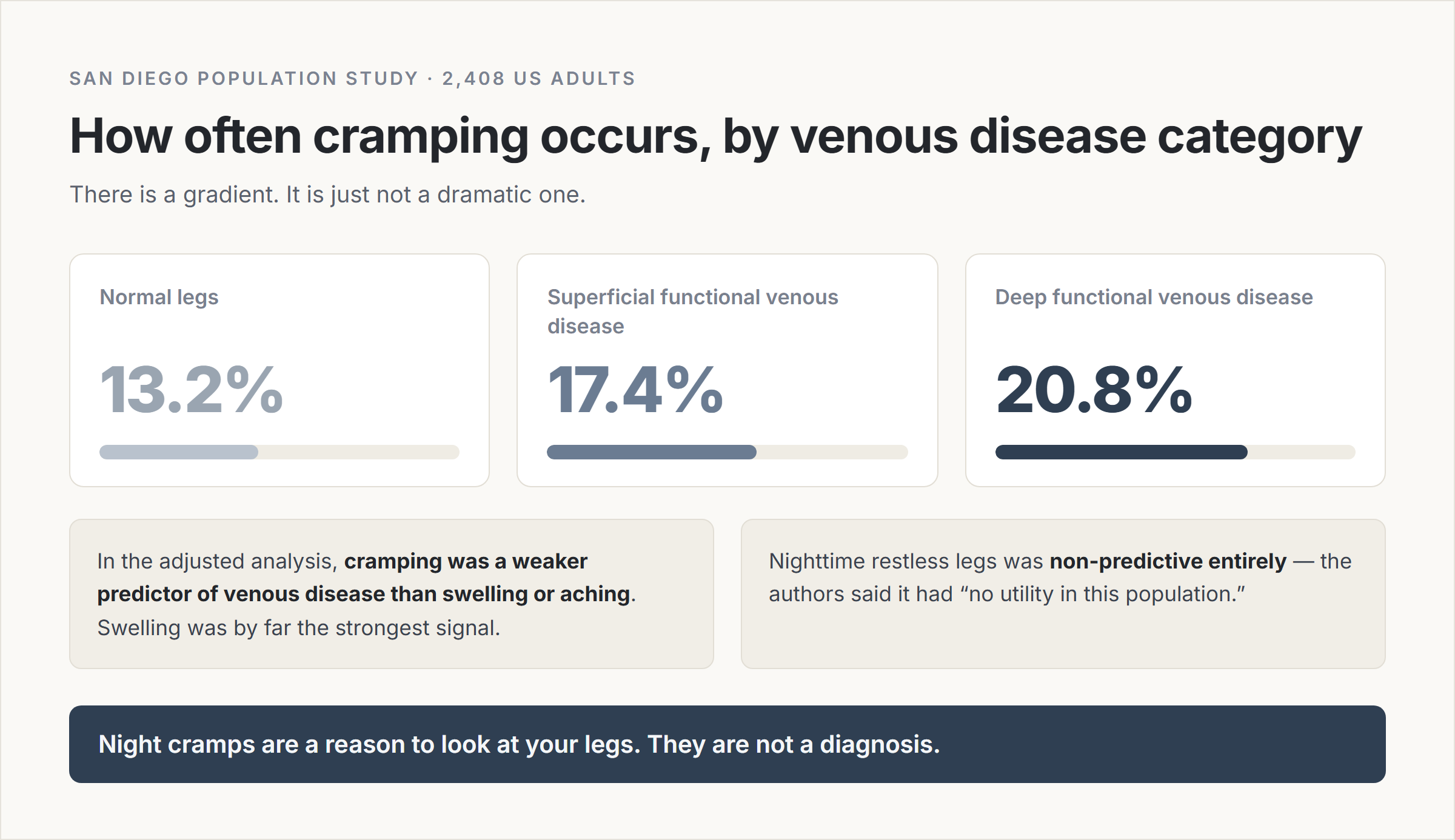
In the San Diego Population Study (2,408 US adults, aged 29–91), cramping occurred in 13.2% of normal legs, 17.4% of legs with superficial functional venous disease, and 20.8% with deep functional disease. There is a gradient. It is just not a dramatic one — and in the adjusted analysis, cramping was a weaker predictor of venous disease than swelling or aching. Swelling was by far the strongest signal. Nighttime restless legs was non-predictive entirely; the authors said it had “no utility in this population.”
Two more honest notes. The largest US dataset on leg cramps (NHANES) did not measure varicose veins at all, so it can’t be used as evidence on either side. And one cross-sectional study of Korean workers (Ergonomics, 2011) found that prolonged standing was significantly associated with night cramps only in male workers — but that links cramps to standing, not to veins, and it is a single non-US study.
Safe conclusion: night cramps are a reason to look at your legs. They are not a diagnosis of anything.
What else a night cramp can be
This part matters more than the vein question, because some of these have completely different treatments.
| What it might be | How it usually behaves |
|---|---|
| Nocturnal leg cramp | Sudden painful involuntary contraction, usually one calf or foot, with palpable muscle hardening; eased by stretching and pulling the toes up |
| Restless legs syndrome | A deep urge to move, not a painful contraction; brought on by rest, relieved by moving; no muscle hardening |
| Peripheral artery disease | Calf pain brought on by walking a predictable distance, relieved by standing still; advanced disease causes pain at rest, often at night |
| Lumbar spinal stenosis | Posture-dependent — worse standing and leaning back, relieved by sitting or bending forward; often symptoms above the knee too |
| DVT | Not a cramp pattern at all — sustained swelling, pain and warmth in one leg building over hours to days, with no injury |
One thing worth flagging, because it comes up constantly: if your leg symptoms get better when you squat or lean forward on a shopping cart, that pattern points toward neurogenic claudication from the spine, not toward your veins. It is the opposite mechanism. Worth saying out loud to a clinician.
Certain prescription medicines are also linked to cramps. Ask the prescriber about yours — and don’t stop anything on your own.
What varicose veins actually are
This part of the common explanation holds up well.
Leg veins carry blood upward against gravity using one-way valves. When those valves become incompetent, pressure is transmitted backward down the leg, venous pressure rises, and that venous hypertension correlates with the severity of the disease. The most common starting point for valve failure is the below-knee great saphenous vein.
And the vein doesn’t just “balloon.” Tissue studies show genuine remodeling of the wall — smooth muscle cell hypertrophy and hyperplasia, and arterialization of the vessel. The vein is being rebuilt by the pressure it’s under.
Symptoms follow the physics. Heaviness, aching, itching, tingling, swelling, tired legs, cramping — worse at the end of the day and after prolonged standing, and usually relieved by sitting and elevating the legs.
One nuance I found genuinely useful. Visible veins and functional reflux do not track each other perfectly. In the San Diego study, 92% of legs were concordant and 8% were discordant — visible disease did not invariably predict functional disease, or the reverse.
Which means “my legs look fine” is not the same as “my veins are fine.”

Photo: Josh Sorenson / Pexels
The sex question — and the real men’s health angle
Here is a correction I have to make to the way this topic is usually framed for men.
Varicose veins are not a men’s disease. In US data, they affect about 16% of men and 29% of women (AFP, 2019). The San Diego Population Study put the odds ratio at 2.2 favoring women. The Framingham Study, following people for 16 years, found 23% of men and 30% of women developed them.
But the picture isn’t unanimous, and I’d rather show you the disagreement than pick the tidier number. The Edinburgh Vein Study (1999), which used systematic examiner grading rather than self-report, found trunk varices in 40% of men versus 32% of women — a difference driven mostly by mild varices in men — and chronic venous insufficiency in 9% of men versus 7% of women.
Depending on how you count, then: clearly more common in women (most US data), or roughly even with men carrying more of the mild cases (Edinburgh).
What is not in dispute is the next part.
Men arrive later, and sicker
This is the finding that earns this article its place in a men’s health category.
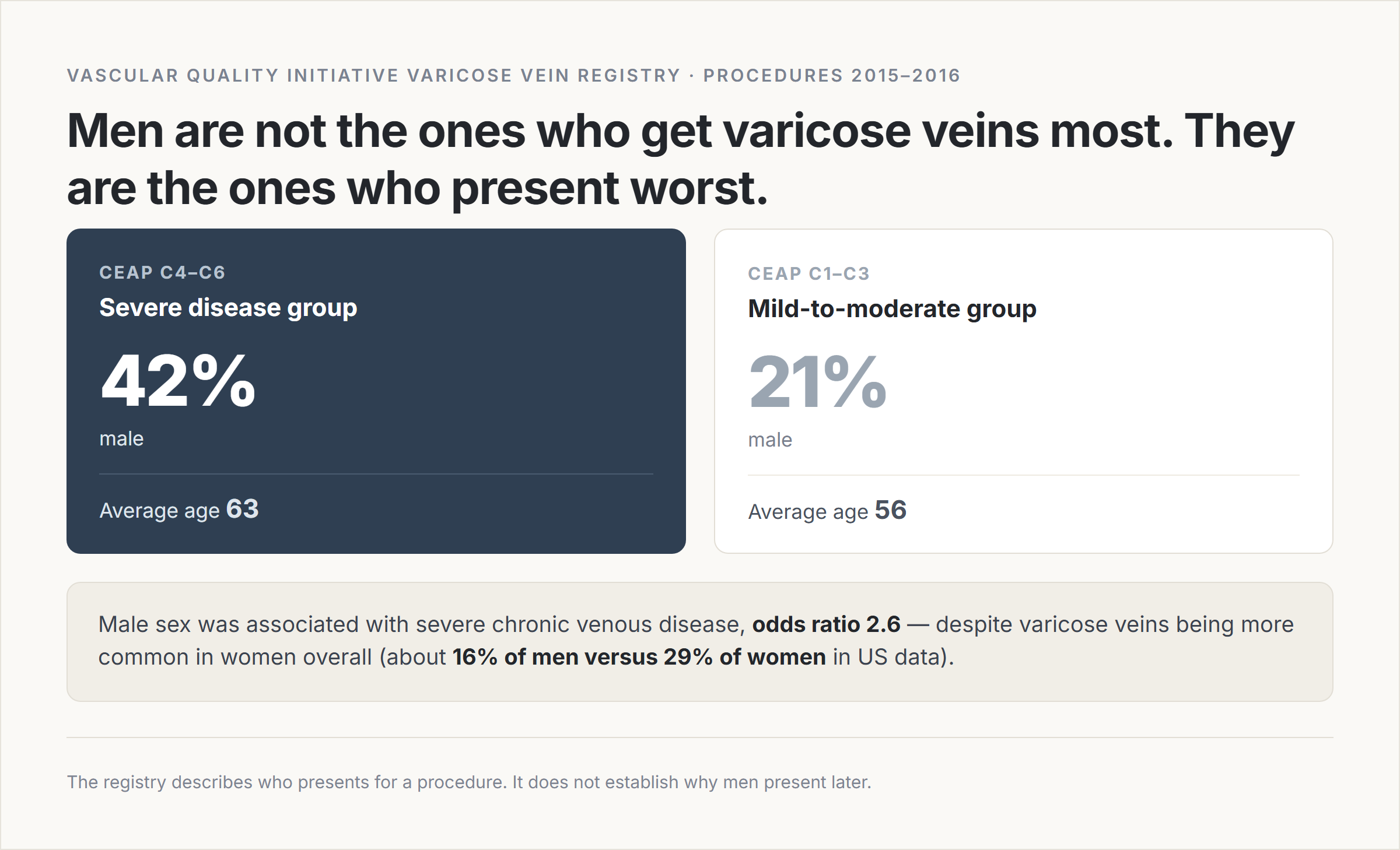
An analysis of the Vascular Quality Initiative Varicose Vein Registry (procedures 2015–2016) looked at who shows up for truncal vein ablation and at what stage. The result:
- The severe disease group (CEAP C4–C6) was 42% male.
- The mild-to-moderate group (C1–C3) was 21% male.
- Male sex was associated with severe chronic venous disease, odds ratio 2.6.
- Advanced-disease patients averaged 63 years old, versus 56 in the mild-to-moderate group.
The authors’ own summary: despite the higher incidence of varicose veins among women, men are more likely to have clinically advanced disease when they present.
The San Diego data points the same direction from a different angle — trophic skin changes and deep functional disease were more common in men, even though visible varicose veins were more common in women, while women reported more symptoms in every disease category.
Fewer symptoms nagging you. More of the skin damage that precedes ulceration. That combination is not a character flaw, and I want to be careful here: the registry describes who presents for a procedure, and the papers do not establish why. Delayed help-seeking, referral patterns, and who considers leg veins worth mentioning are all plausible and none are proven.
But the pattern itself is solid. Men arrive later.
Risk factors, ranked by how well they hold up
Well established: family history of venous disease, older age, female sex and pregnancy, obesity or higher BMI, prolonged standing, prior DVT, and chronically raised intra-abdominal pressure.
Occupational standing is the one most relevant here. A 2025 systematic review and meta-analysis of healthcare workers found a pooled varicose vein prevalence of 25% (95% CI 18–31%), with risk tied to standing more than 8 hours a day, working more than 56 hours a week, and frequent night shifts. The odds ratio for prolonged standing was elevated in both male and female workers. Most of this literature is cross-sectional, so read it as “consistently associated,” not “proven to cause.”
Genetic analyses have positively associated height, BMI, smoking, and circulating iron with varicose vein risk, and inversely associated circulating calcium and zinc. Those are risk-factor associations, not a shopping list — please do not read “zinc is inversely associated” as a reason to buy zinc.
And one thing to drop: squatting at work is not a verified risk factor. Prolonged standing is.
How this is actually diagnosed
Duplex ultrasound is the diagnostic standard when disease is significant or intervention is on the table. It maps the anatomy, finds incompetent junctions, measures how far the reflux extends, and screens for DVT at the same time. The 2022 society guideline puts it plainly: superficial reflux must be traced to its source.
Severity is then staged with CEAP, which is the shorthand you’ll see in a specialist’s note:
- C0 no visible or palpable signs · C1 spider or reticular veins · C2 varicose veins · C3 swelling
- C4a pigmentation or eczema · C4b hardened skin (lipodermatosclerosis) or atrophie blanche · C4c corona phlebectatica
- C5 healed venous ulcer · C6 active venous ulcer
That C4–C6 band is the one from the registry finding above. It is worth knowing what it means before someone says it to you.

Photo: Tima Miroshnichenko / Pexels
Compression stockings: read this before you buy any
This is the most important section in the article, and it is the one most likely to be written badly elsewhere.
The arteries come first
The international consensus statement on compression risks (Rabe et al., Phlebology, 2020) recommends checking arterial circulation status before any kind of compression therapy.
Not “if you have symptoms.” Before any kind.
Absolute contraindications to sustained compression include:
- Severe peripheral arterial occlusive disease — the consensus lists ABPI below 0.6, ankle pressure below 60 mmHg, or toe pressure below 30 mmHg
- Compression over epifascial arterial bypasses
- Severe heart failure (NYHA class IV)
- Confirmed allergy to the compression material
- Severe diabetic neuropathy with sensory loss, or microangiopathy with risk of skin necrosis
Special caution — padding, careful fitting, lower pressure, close monitoring at the start — applies to people with polyneuropathy and to older adults with thin, atrophic skin.
Now, the threshold. You will see 0.5 quoted as the absolute cut-off and 0.5 to 0.8 as the range requiring modified compression, and you will see 0.6 in the consensus statement above. Both conventions are in circulation and I am deliberately not giving you one number to act on, because there isn’t one to give.
That’s the whole point. There is a level below which compression is dangerous, expert bodies disagree about exactly where it sits, and the judgment belongs to a clinician who has measured the arteries in your legs — not to a product label.
What can go wrong
The documented harms are not theoretical: allergic skin reactions, spread of bacterial or fungal infection, soft-tissue damage and necrosis including limb necrosis, nerve damage, arterial impairment, venous thromboembolism, and cardiac decompensation.
The nerve injury has a specific address. The common peroneal nerve at the head of the fibula — just below and outside the knee — was the most frequently affected site, presenting as foot drop with numbness. Pressure concentrates at bony prominences: the ankles, the shin, the fibular head, the Achilles.
And the hazard almost nobody mentions is in the consensus document too. Injury causes include ill-fitting stockings and “slipping and/or rolling resulting in increased persistent local compression.”
In plain English: a stocking that has rolled down into a band around your calf is no longer a stocking. It is a tourniquet.
Take it off. Re-fit it or replace it. Do not push it back up and keep going.
The numbers on the package don’t mean what you think
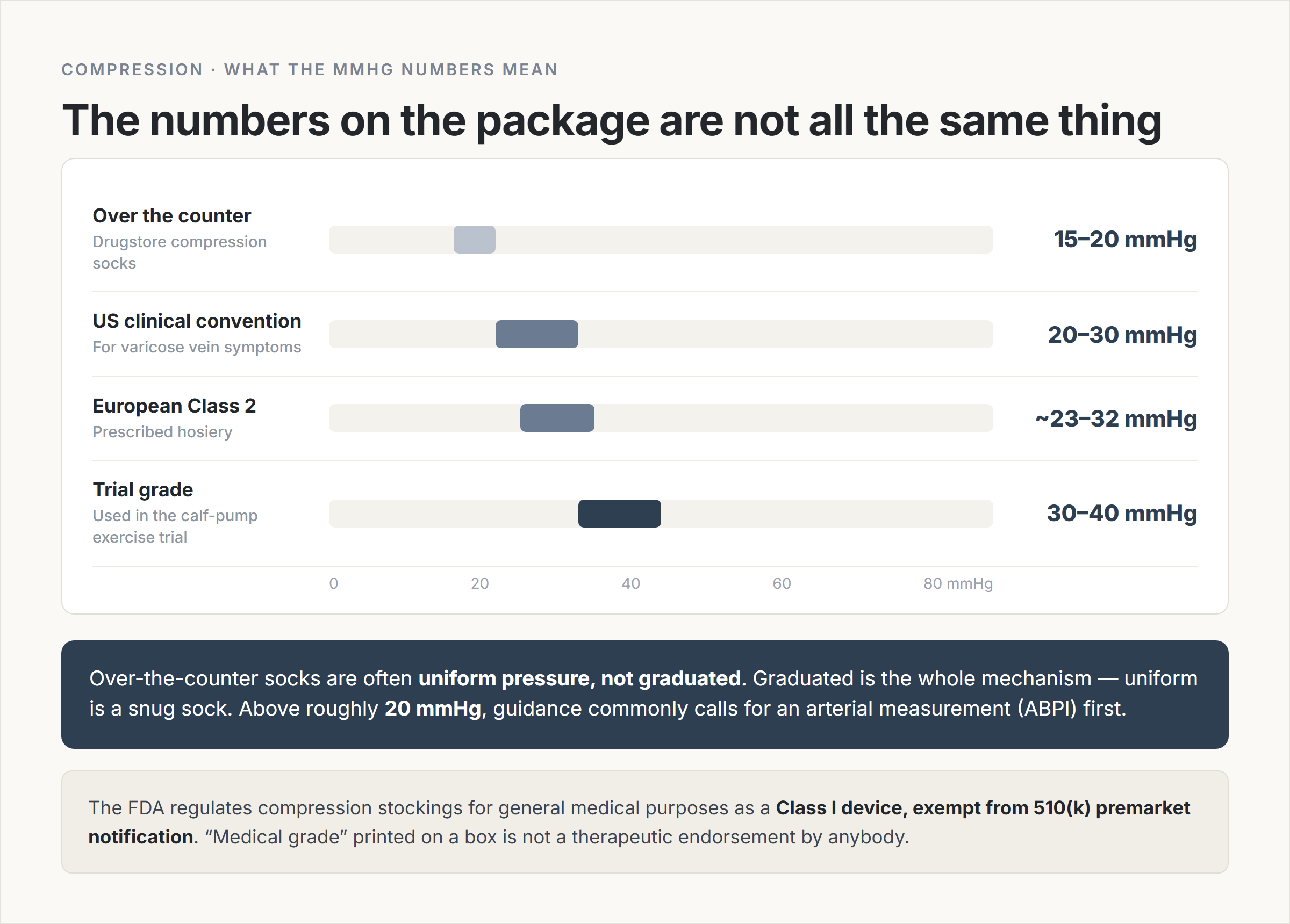
- Over-the-counter compression socks are usually around 15–20 mmHg — and the pressure is often uniform, not graduated. Graduated is the whole mechanism. Uniform is a snug sock.
- US clinical convention for varicose vein symptoms is 20–30 mmHg, with pressure decreasing from ankle upward.
- European Class 2 runs roughly 23–32 mmHg; the classic exercise trial used 30–40 mmHg.
- Prescribing guidance commonly treats mild hosiery up to about 20 mmHg as reasonable to start, and anything above that as warranting an arterial measurement (ABPI) first.
- Medical-grade hosiery is normally measured and fitted, with pressure and length specified by the prescriber.
One more piece of American context. The FDA regulates compression stockings for general medical purposes as a Class I device, exempt from 510(k) premarket notification. So “medical grade” printed on a box is not a therapeutic endorsement by anybody. It is a much lower-regulation product than the phrase implies.
What compression is actually proven to do
Less than you’d hope.
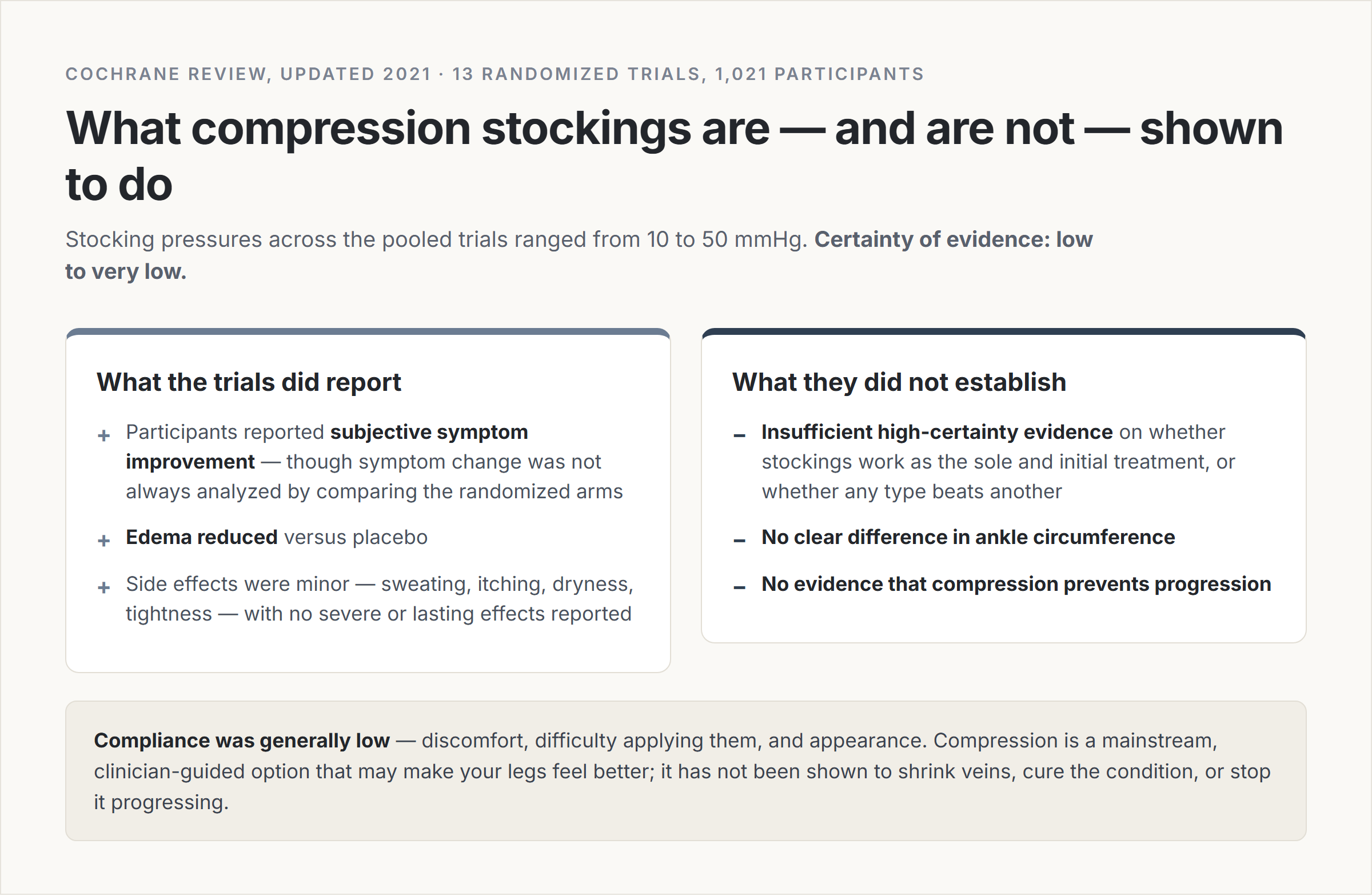
The Cochrane review (updated 2021) pooled 13 randomized trials and 1,021 participants, across stocking pressures from 10 to 50 mmHg. Its conclusions:
- Certainty of evidence: low to very low.
- Insufficient high-certainty evidence to determine whether compression stockings are effective as the sole and initial treatment of varicose veins in people without healed or active ulceration — or whether any type is better than another.
- Participants reported subjective symptom improvement, but symptom change was not always analyzed by comparing the randomized arms.
- No clear difference in ankle circumference; edema reduced versus placebo.
- Side effects were minor — sweating, itching, dryness, tightness — with no severe or lasting effects reported.
- Compliance was generally low, because of discomfort, difficulty applying them, and appearance.
- No evidence establishing that compression prevents progression.
AFP’s 2019 review rates compression for varicose veins without ulceration as SORT B — insufficient evidence of effectiveness, while describing it as first-line specifically for pregnant patients. And the 2023 society guideline goes further: for symptomatic varicose veins with axial reflux in patients who are candidates for it, the recommendation is superficial venous intervention over long-term compression stockings — Strong, evidence level B.
So the fair summary is this. Compression is a mainstream, clinician-guided option that may make your legs feel better. It has not been shown to shrink veins, cure the condition, or stop it progressing.
Who should not start compression on their own
If any of these apply, the next step is an arterial assessment, not a purchase:
- Diabetes, or numb feet from any cause
- Known or suspected arterial disease
- Leg pain at rest, especially at night
- A non-healing sore or ulcer anywhere on the leg or foot
- A foot that is cold, pale, or discolored
- Severe heart failure
- A known allergy to the stocking material
For context on how common the relevant condition is: peripheral artery disease is estimated at around 7% of US adults, roughly 8.5 million people, with other estimates above 12 million — and a contemporary national figure is genuinely lacking, since ABI hasn’t been measured in NHANES since 2004.
Elevation, calf raises, and the habits that are actually reasonable
Leg elevation has a clean physiologic rationale — symptoms usually resolve when people sit and elevate, and raising the leg above heart level lowers venous pressure. A 1994 study measured skin microcirculation in chronic venous insufficiency with the foot elevated 30 cm above heart level and found improved microcirculatory flow velocity in damaged skin.
The commonly recommended dose is above heart level for at least 30 minutes, about three times a day — ideally after long periods of standing.
One correction here. Sleeping with your legs above your heart is not the evidence-based version of this advice. The evidence and the standard recommendation are for discrete daytime sessions. Propping the foot of the bed slightly is a comfort measure, not an established treatment, and its safety hasn’t been addressed in people with heart failure or arterial disease.
Calf raises are directionally sensible and the evidence is thinner than you’d guess. The trial people cite (J Vasc Surg, 2004) randomized 31 people for six months. The exercise group improved on calf-pump ejection fraction (P<.026) and residual volume fraction (P<.029). Real findings — but those are surrogate hemodynamic measures, not symptom cure or vein regression, and every participant, including the controls, was wearing 30–40 mmHg compression. The authors hedged carefully: directed conditioning of the calf muscles “may prove beneficial.”
So: calf raises are a reasonable, low-risk habit. They are not a treatment.
The broader lifestyle package from AFP is unglamorous and worth doing anyway — avoid prolonged standing and straining, exercise regularly, wear nonrestrictive clothing, manage weight, elevate the affected leg, and address cardiovascular risk factors.
And the sentence that should sit underneath all of it: “There is no cure for varicose veins. Even after surgical removal, recurrences are common.”

Photo: Lisa / Pexels
Procedures, briefly — and the insurance gap Americans should know about
I’m not going to rank treatments, because which one suits which vein is a duplex-ultrasound-and-clinician decision, not a blog decision.
The categories, neutrally:
- Endovenous thermal ablation — laser or radiofrequency, catheter-based
- Non-thermal ablation — cyanoacrylate closure, mechanochemical ablation, polidocanol microfoam
- Sclerotherapy — mainly for small non-axial veins under 6 mm
- Surgery — high ligation and stripping, ambulatory phlebectomy
Guideline direction: axial reflux is treated primarily with endoluminal ablation rather than surgical stripping. And a useful anti-marketing detail — laser ablation produced higher rates of anatomic closure at 1 year and 5 years than non-thermal techniques. Newer does not automatically mean better.
Now the part that’s specific to American readers, and genuinely actionable.
The 2023 society guideline says clinicians should not mandate a 3-month compression trial before intervention in eligible patients (Weak, B). AFP 2019 says referral for interventional treatment should not be delayed for a trial of external compression when reflux is documented.
Yet Aetna’s Clinical Policy Bulletin 0050 requires exactly that — symptoms persisting despite a 3-month trial of conservative management including medical-grade (20 mmHg or greater) gradient compression — before ablation or sclerotherapy is considered medically necessary. UnitedHealthcare’s commercial policy likewise requires documented conservative management plus pre-service authorization.
Both things are true at once. The specialty societies say the trial shouldn’t be mandated; your insurer may well mandate it anyway.
The practical takeaway is boring and it will save you months: if you start compression, keep records. Dates, product, compression level, symptoms over time. That documentation is what a prior authorization asks for.
Red flags — when this stops being a cosmetic question
Some of these are “make an appointment.” One of them is “call 911.”
Get seen — skin and vein changes
- Brown or bronze discoloration and eczema at the inner ankle (C4a). That is chronic venous pressure leaving a mark, not a tan.
- Skin that has gone hard and tight in the lower leg, sometimes narrowing into an “inverted champagne bottle” shape (lipodermatosclerosis, C4b).
- An open sore around the ankle — a venous ulcer (C6). These carry the highest morbidity and worst quality of life of any varicose vein complication. Prevalence is around 1% of the population, rising to about 3% over age 65.
- A tender, hard, warm cord along a vein — superficial vein thrombosis. This is a “get seen promptly” finding, not a warm-towel-at-home finding; qualifying cases carry a strong guideline recommendation for medical treatment.
- Bleeding from a ruptured surface varicosity — rare, but it happens.
Urgent — possible DVT
Pain or tenderness, swelling, warmth, and redness or discoloration, characteristically in one leg, building over hours to days without an obvious injury. That needs same-day evaluation.
Worth knowing the association without overreading it: one observational cohort reported DVT incidence of 6.6 versus 1.2 per 1,000 person-years in people with versus without varicose veins (hazard ratio 5.30). It’s a real signal from a non-US population — not a prediction about you. And clots in superficial veins rarely embolize.
Call 911 — possible pulmonary embolism
If part of a clot travels to the lungs, it can be life-threatening. The signs:
- Sudden or unexplained shortness of breath
- Chest pain, especially with breathing
- Coughing, or coughing up blood
- Fainting
Especially alongside leg swelling. Venous thromboembolism affects as many as 900,000 Americans a year, and as many as 100,000 people die of blood clots annually. This is the one place in this article where the correct action is not “book an appointment.”
And one more group of signs that means arteries, not compression: leg pain at rest — particularly at night — non-healing wounds, a cold or pale or discolored foot, or numb feet in someone with diabetes. Those point toward arterial disease, where compression is the wrong move entirely.

Photo: Rahib Yaqubov / Pexels
The short version
If I compress the whole thing down, it’s four lines.
Night cramps are not a vein diagnosis. Half to sixty percent of adults get them, most cases are never explained, the mechanism is thought to be muscle and nerve rather than electrolytes, and treating venous insufficiency has not been shown to relieve them. Swelling and aching are far better clues than cramping.
Men aren’t the ones who get varicose veins most — they’re the ones who get them worst. 16% of men versus 29% of women, but the severe C4–C6 group was 42% male versus 21% male in the mild group, with male sex carrying an odds ratio of 2.6 for severe disease.
Compression is not a self-service purchase. Arterial circulation gets checked first, the dangerous threshold is disputed and belongs to a clinician, a rolled-down stocking is a tourniquet, and “medical grade” on a package is a marketing phrase, not an FDA judgment.
And compression does less than it’s sold as doing. Low-to-very-low certainty evidence, insufficient as a sole or initial treatment, no evidence it prevents progression — while the societies say that for good candidates, intervention beats years of stockings.
What stayed with me, though, wasn’t any single number. It was the shape of that registry finding: two groups of patients, the same condition, and the men clustered in the group whose skin had already changed.
Nobody in that group woke up one morning with advanced disease. It arrived slowly, in legs that ached a bit by evening, in a way that never quite seemed worth an appointment.
If your legs have been telling you something for a while, the useful move isn’t to buy a sock. It’s to let someone actually look at them.
Because the version of this that gets caught early is a much smaller conversation than the one that doesn’t.
References
- American Family Physician — “Varicose Veins: Diagnosis and Treatment” (2019): 16% men / 29% women, SORT ratings, 20–30 mmHg, referral not delayed for compression trial
- American Family Physician — “Nocturnal Leg Cramps” (2012): 50–60% prevalence, idiopathic majority, muscle fatigue and nerve dysfunction, “treatment of venous insufficiency has not been shown to relieve cramps”
- American Family Physician — “Treatments for Nocturnal Leg Cramps” (2017): 2014 systematic review, no evidence for magnesium and others
- Knight (née Shingler) SL, Robertson L, Stewart M — Graduated compression stockings for the initial treatment of varicose veins in people without venous ulceration, Cochrane Database of Systematic Reviews, updated 2021 (CD008819.pub4)
- Rabe E, Partsch H, Morrison N, et al. — “Risks and contraindications of medical compression treatment: A critical reappraisal. An international consensus statement,” Phlebology, 2020;35(7)
- Society for Vascular Surgery / American Venous Forum / American Vein and Lymphatic Society — 2023 clinical practice guidelines for the management of varicose veins, Part II
- Society for Vascular Surgery / American Venous Forum / American Vein and Lymphatic Society — 2022 clinical practice guidelines, Part I: Duplex Scanning and Treatment of Superficial Truncal Reflux
- StatPearls / NCBI Bookshelf — Varicose Veins; Venous Leg Ulcer; Spinal Stenosis and Neurogenic Claudication
- Langer RD, et al. — “Relationships Between Symptoms and Venous Disease: The San Diego Population Study,” Archives of Internal Medicine, 2005;165(12)
- “Chronic Venous Disease in an Ethnically Diverse Population: The San Diego Population Study,” American Journal of Epidemiology, 2003
- Evans CJ, et al. — “Prevalence of varicose veins and chronic venous insufficiency in men and women in the general population: Edinburgh Vein Study,” Journal of Epidemiology and Community Health, 1999
- Brand FN, et al. — “The Epidemiology of Varicose Veins: The Framingham Study,” American Journal of Preventive Medicine, 1988
- “Men present with higher clinical class of chronic venous disease before endovenous catheter ablation,” Journal of Vascular Surgery: Venous and Lymphatic Disorders, 2019 (VQI Varicose Vein Registry)
- “Nocturnal leg cramps: Prevalence and associations…” (NHANES 2005–2008), 2017
- Kim S, et al. — “Relationship between prolonged standing and symptoms of varicose veins and nocturnal leg cramps among women and men,” Ergonomics, 2011
- “Global prevalence and risk factors of varicose veins among health care workers: a systematic review and meta-analysis,” BMC Nursing, 2025
- Padberg FT Jr, et al. — “Structured exercise improves calf muscle pump function in chronic venous insufficiency: a randomized trial,” Journal of Vascular Surgery, 2004
- Abu-Own A, et al. — “Effect of leg elevation on the skin microcirculation in chronic venous insufficiency,” Journal of Vascular Surgery, 1994
- Cleveland Clinic — Chronic Venous Insufficiency: leg elevation above heart level, 30 minutes, three times daily
- Yale Medicine — “Blood Clots, Varicose Veins, and Sore Legs: Can Compression Socks Help?” (OTC ~15–20 mmHg, uniform versus graduated, fitting)
- US Food and Drug Administration — compression stockings for general medical purposes, Class I device exempt from 510(k) premarket notification
- Aetna — Clinical Policy Bulletin 0050: Varicose Veins (3-month conservative trial including ≥20 mmHg gradient compression)
- UnitedHealthcare — Surgical and Ablative Procedures for Venous Insufficiency and Varicose Veins, commercial medical policy
- CDC — Deep Vein Thrombosis and Pulmonary Embolism; Venous Thromboembolism: Know the Risks, Signs & Symptoms of Blood Clots
- American Heart Association / Circulation Research — “Epidemiology of Peripheral Artery Disease and Polyvascular Disease”
- Expert Review of Neurotherapeutics, 2014 — differentiating nocturnal leg cramps and restless legs syndrome
This article is general information and is not medical advice. It does not create a clinician–patient relationship and is not a substitute for individual diagnosis or treatment. It deliberately contains no drug names, no doses, and no product recommendations. Compression therapy should be started only after a clinician has assessed the arterial circulation in your legs — particularly if you have diabetes, numb feet, known or suspected arterial disease, leg pain at rest, a non-healing sore, or severe heart failure. Please talk with a physician about your own legs before acting on anything here. Seek urgent care for sudden swelling, pain, and warmth in one leg. Call 911 for sudden shortness of breath, chest pain, coughing up blood, or fainting — especially alongside leg swelling.