Age-Related Hearing Loss in Parents: Signs Not to Ignore
Let me start with the small thing that made me pay attention.
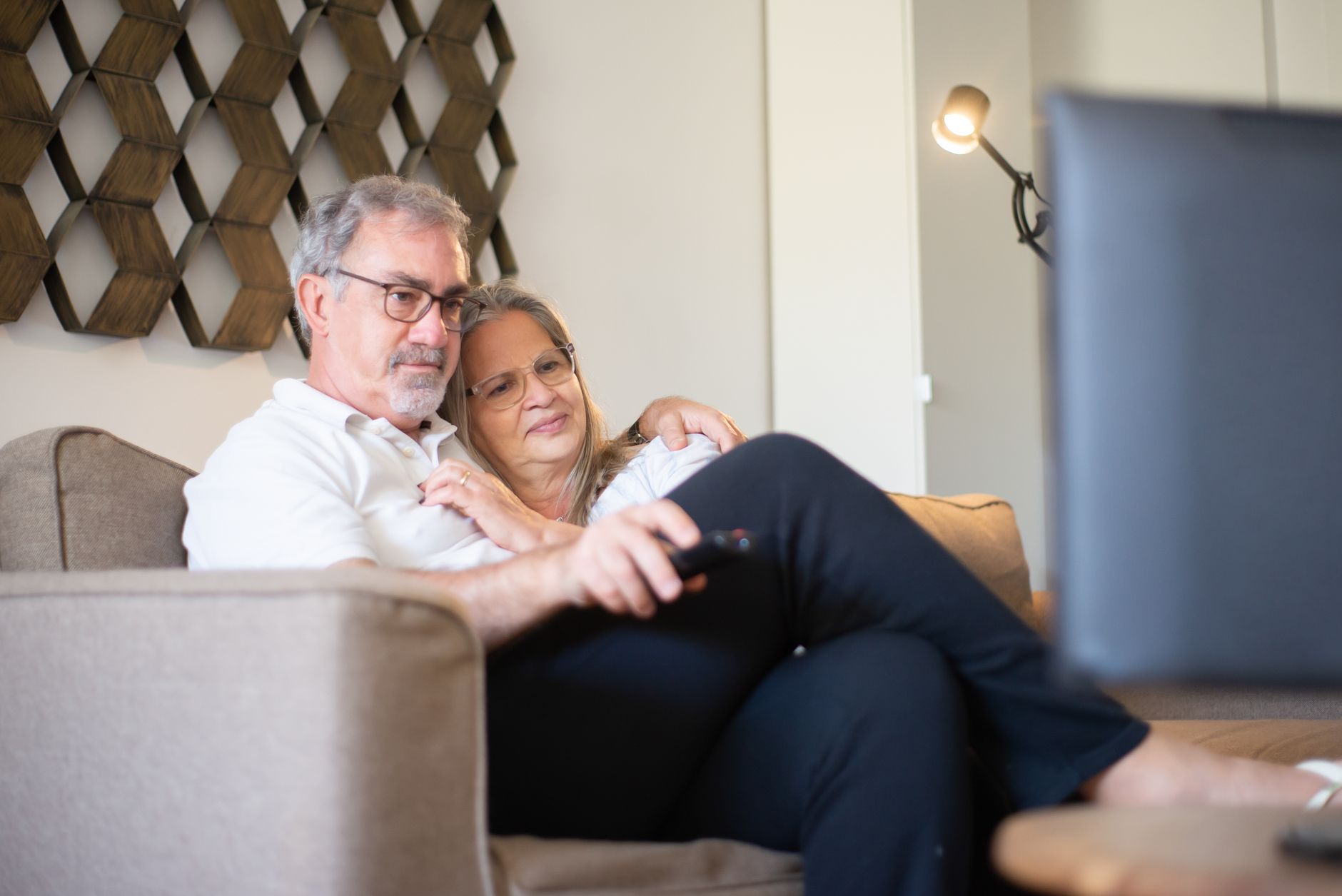
The TV was loud. Not a little loud — loud enough that I heard it from the driveway. And when I asked my father to turn it down, he said, honestly puzzled, “It’s not that loud.” Then, a beat later: “What did you say?”
Do they keep asking you to repeat, or talk loudly now? That’s usually where this begins. Not with a diagnosis, but with a hundred small moments you start to notice.
So this is a careful look at age-related hearing loss — what the early signs really look like in an aging parent, why it’s a mistake to write it off as “just getting older,” and what to actually do about it. I’ll try to be honest about what we know and what we don’t.
Photo: Kampus Production / Pexels
What “age-related hearing loss” actually is
The medical name is presbycusis. It’s a gradual, progressive hearing loss that comes with aging, and it’s one of the most common conditions older adults face (Johns Hopkins Medicine).
The key detail is how it fades. Presbycusis usually takes the high-pitched sounds first — a phone ringing, a microwave beep, birdsong, the consonants in speech like s, f, and th. Lower-pitched sounds hang on longer.
That’s why the classic complaint isn’t “I can’t hear you.”
It’s “I can hear you, but I can’t understand you.”
The volume is there. The clarity isn’t. And it’s worst exactly where families gather — restaurants, kitchens, holiday tables — because background noise buries what’s left of the high frequencies.
It is also far more common than most of us assume. According to the National Institute on Deafness and Other Communication Disorders (NIDCD), about one in three Americans aged 65 to 74 has hearing loss, and nearly half of those over 75 have trouble hearing.
The signs to watch for in an aging parent
Here’s the difficult part. Because the change is so gradual, your parent often won’t notice it. The brain quietly adjusts. Family members are usually the ones who see it first.
These are the everyday tells that audiologists and the NIDCD point to:
- The volume creeps up. The TV, radio, or phone is louder than everyone else finds comfortable.
- “What?” becomes a habit. They ask you to repeat yourself often, or lean in to catch it.
- Everyone “mumbles.” They insist people don’t speak clearly anymore.
- The phone gets harder. They struggle on calls, or hold the phone to one specific ear.
- Noisy rooms defeat them. Following conversation at a restaurant or family gathering becomes exhausting.
- High sounds vanish. The doorbell, the oven timer, a grandchild’s voice.
- They pull back. Getting tired or frustrated in conversation, begging off phone calls, going quiet at the dinner table.
That last one matters more than it looks. Withdrawal is easy to mistake for personality, or for aging generally. Sometimes it’s simply the exhaustion of straining to hear.

Photo: Kampus Production / Pexels

Why you shouldn’t just let it go
It’s tempting to shrug. He’s 74, of course he doesn’t hear as well. What’s the harm in a louder TV?
The harm is quieter than a loud television, and it’s worth understanding.
Isolation and mood
The NIDCD is blunt about it: hearing loss “can make it hard to enjoy talking with family and friends, leading to feelings of isolation.” Untreated hearing loss is linked with social withdrawal, loneliness, and depression — and with missing a doctor’s instructions or a safety alarm.
Think about what a family dinner feels like when you can catch maybe half of it. Most people stop trying. They smile, nod, and drift out of the conversation. That drifting is the real cost.
The link to dementia — stated carefully
This is the part that gets sensationalized, so I want to be precise.
The 2024 Lancet Commission on dementia named hearing loss the single largest modifiable risk factor for dementia in mid-life, estimating it accounts for about 7% of cases. And research from Johns Hopkins (Frank Lin and colleagues, who followed 639 adults for about 12 years) found dementia risk climbed with the severity of hearing loss:
- Mild hearing loss — roughly 2 times the risk
- Moderate hearing loss — roughly 3 times
- Severe hearing loss — roughly 5 times
Read that carefully, because the wording is everything. This is an association, and hearing loss is a modifiable risk factor — a piece of the picture you can potentially do something about. It is not proof that hearing loss causes dementia.
Why might they be linked at all? Johns Hopkins offers three plausible threads: the constant cognitive load of a brain straining to decode muffled speech; changes in brain structure in under-stimulated areas; and the social isolation that hearing loss breeds, which is itself a dementia risk factor.

Does treating it help your brain?
Honestly? The evidence is promising but not a guarantee, and I’d rather you hear the real version than the marketing one.
The ACHIEVE trial (published in The Lancet in 2023) followed 977 adults aged 70 to 84 with untreated hearing loss for three years. Across all participants, hearing aids showed no significant difference in cognitive decline compared to a control group. But in the subgroup already at higher risk of decline, hearing intervention slowed cognitive decline by about 48% over those three years.
So the fair conclusion is this: treating hearing loss is a low-risk, high-reward move for communication and quality of life, and it may help protect thinking — especially in higher-risk older adults. It is not a proven way to prevent dementia for everyone. That’s the honest line.
Photo: cottonbro studio / Pexels
What to actually do: suspect, then test, then get guidance
If any of this sounds like your parent, the path forward is simpler than you’d think — and it starts with a test, not a purchase.
Suspect. You’ve noticed the signs. That’s enough to act on.
Test. Hearing loss is diagnosed with a hearing test (audiometry), done by an audiologist — an ENT (otolaryngologist) or the family doctor can also screen and refer. This is the step people skip, and it’s the one that matters most. A test tells you how much loss there is, in which ear, and whether something treatable (like earwax or a one-sided problem) is behind it. The American Academy of Audiology suggests regular screening for adults over 60.
Get guidance. Depending on the results, options range from hearing aids to assistive listening devices, and — for severe-to-profound loss — cochlear implants.
Here’s the statistic that should light a small fire under all of us. About 28.8 million U.S. adults could benefit from hearing aids, but fewer than 1 in 5 who could benefit actually use them. And on average, people wait roughly nine years from noticing the problem to getting their first hearing aid.
Nine years. That’s nearly a decade of half-caught conversations and missed jokes at the table.
There’s no strict deadline with presbycusis — it’s gradual, not an emergency. But every year of delay is another year of reduced stimulation, more isolation, and, frankly, a harder adjustment when they finally do get help. Earlier is easier.

A word on OTC hearing aids — and where to be careful
Since October 2022, the FDA has allowed over-the-counter (OTC) hearing aids. Adults 18 and older with perceived mild-to-moderate hearing loss can buy them without a prescription, a medical exam, or even a hearing test, right off a shelf or online (FDA; AAO-HNS).
For the right person, that’s genuinely good news — lower cost, fewer barriers.
But two cautions I’d want a family member to know.
First, OTC aids are for loss that’s genuinely mild to moderate. More severe loss, and anyone under 18, still needs a prescription device. Self-diagnosis can miss a treatable or serious cause — wax, an infection, a one-sided loss that deserves a doctor’s eyes.
Second, be wary of cheap “sound amplifiers” (PSAPs) marketed as a bargain fix. They aren’t regulated hearing aids, they can be poorly matched to the specific loss, and some are simply too loud. A proper hearing test still gives the best fit. If the loss seems more than mild, is in one ear, or comes with pain, drainage, or dizziness — skip the self-service aisle and see a professional.

Photo: www.kaboompics.com / Pexels
When it’s not a slow fade — the emergency exception
Everything above is about the slow, both-ears, over-the-years kind of hearing loss. There is one version that is completely different, and I want it on your radar.
Sudden hearing loss is a medical emergency.
If your parent suddenly loses hearing — usually in one ear, over a few hours or overnight, often noticed on waking — that is sudden sensorineural hearing loss (SSNHL), and it needs same-day care. It can feel like an ear has gone “dead” or blocked, as if stuffed with cotton, and it often arrives with sudden ringing (tinnitus), fullness, or dizziness.
The window is real. Doctors treat SSNHL as an emergency ideally within 72 hours, with the best chance of recovery in the first 48. Wait too long and the loss can become permanent. Treatment is usually corticosteroids.
So keep the two straight:
- Slow, gradual, both ears → book a hearing test. Not urgent, but don’t let it drift for years.
- Sudden drop in one ear, or sudden severe tinnitus or vertigo → get care now.
New, sudden, or one-sided tinnitus — especially alongside any hearing change — is worth a prompt call, for the same reason.
I keep thinking about that “It’s not that loud” from my father. He wasn’t being stubborn. In his world, it genuinely wasn’t loud — his ears had been dialing down the volume so slowly that the new normal felt normal.
That’s the quiet trap of age-related hearing loss. It doesn’t announce itself. It just gently narrows the world, one unheard sentence at a time.
If there’s one thing I’d ask you to take from this, it’s small. The next time your parent turns the TV up, or asks you to repeat yourself for the third time, don’t file it under “getting old.” Treat it as a nudge. Book the hearing test.
Because the goal was never really about hearing the television. It was about staying in the conversation — because that conversation is where they stay close to us.
This article is for general information only and is not a substitute for professional diagnosis, treatment, or advice. If you’re concerned about a parent’s hearing — or notice a sudden change in hearing — please talk to a qualified clinician or audiologist.
References
- NIDCD (NIH) — Age-Related Hearing Loss (Presbycusis); Quick Statistics About Hearing
- Johns Hopkins Medicine — The Hidden Risks of Hearing Loss; Presbycusis
- Lin et al. — Hearing Loss and Incident Dementia (Archives of Neurology, 2011)
- 2024 Lancet Commission on dementia prevention, intervention, and care
- ACHIEVE trial — The Lancet (2023); NIH Research Matters summary
- FDA — Over-the-Counter Hearing Aids final rule (2022); AAO-HNS summary
- American Academy of Audiology — Seniors and Hearing Loss
- ASHA — Untreated Hearing Loss in Adults
- AAO-HNS — Clinical Practice Guideline: Sudden Hearing Loss (2019)