Osteoporosis and Fall Prevention: Protecting Aging Parents
Let me be honest about what started this for me.
It was nothing dramatic. My mother mentioned, almost as an aside, that she had “slipped a little” getting out of the shower. She caught herself. No harm done, she said. And we moved on to talking about something else.
But it stayed with me. Because I’ve since learned that a minor fall like that is exactly where the real danger hides. Not the slip itself, but what a slip can do to a body whose bones have quietly grown thinner over the years.
So this is a plain, careful look at osteoporosis and fall prevention for anyone with aging parents. What actually raises the risk, and what actually helps. I’ll try not to oversell any of it.
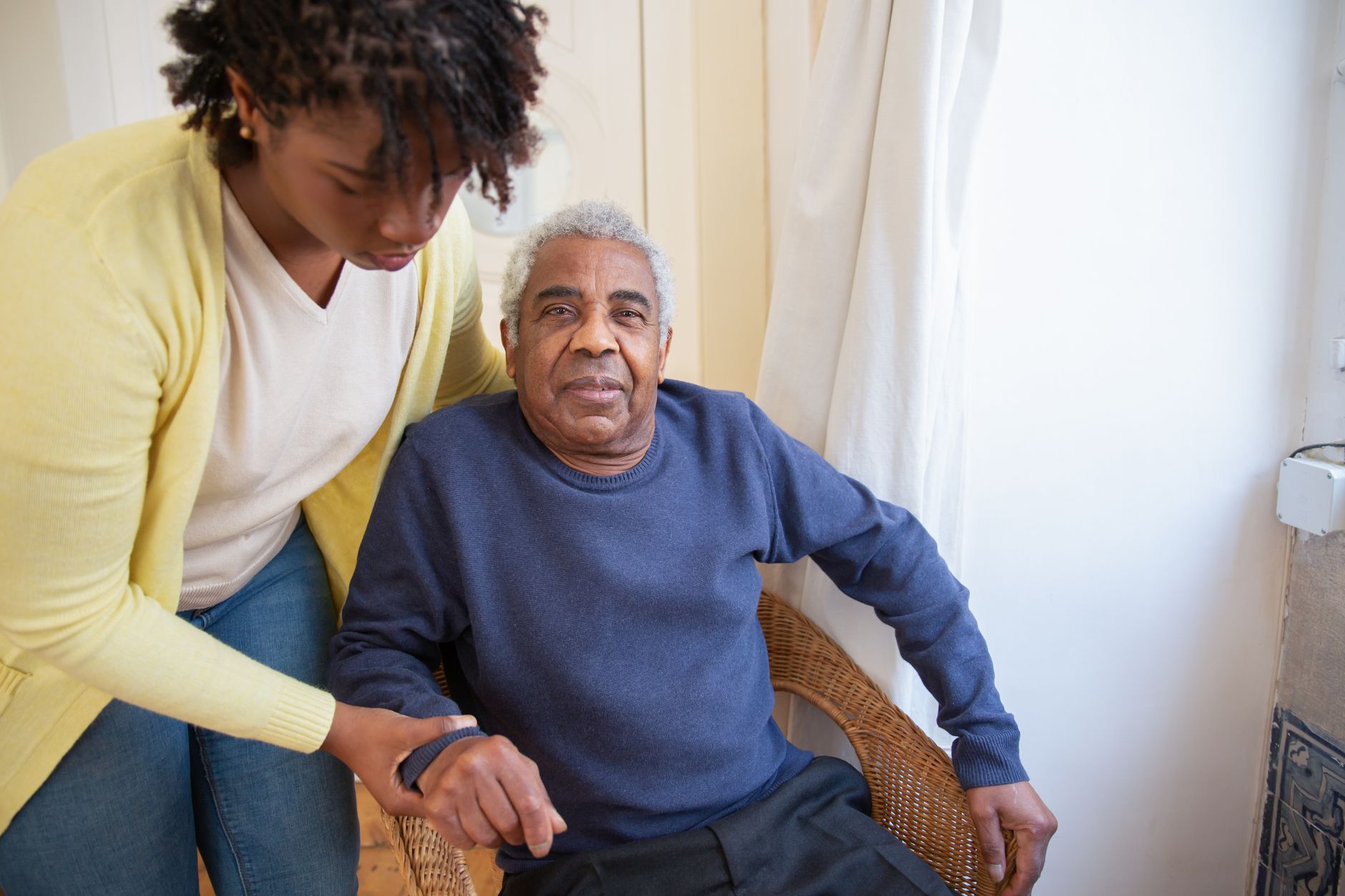
Photo: Kampus Production / Pexels
Why a fall in an older parent is never “just a fall”
Here is the part I wish someone had told me sooner.
One in four Americans age 65 and older falls each year. About 3 million are treated in emergency departments for fall injuries annually, and roughly 41,000 die from falls each year — about 112 people every day. Those are figures from the Centers for Disease Control and Prevention (CDC).
What makes a fall dangerous is rarely the impact itself. It’s the cascade that can follow. A fracture leads to a hospital stay. A long hospital stay leads to complications and lost strength. And that can lead, in the worst cases, to a permanent loss of mobility and independence.
The National Institute on Aging puts it plainly: broken hip and spine bones are especially serious, because they can cause older adults to lose their independence for good.

Photo: Curtis Adams / Pexels
Where osteoporosis quietly comes in
Osteoporosis is bone that has lost density and strength. It’s often called a “silent disease” because there are usually no symptoms — until something breaks.
And here is the uncomfortable link. When bones are fragile, even a light impact can fracture the hip or the spine.
- More than 95% of hip fractures are caused by falls. (CDC)
- Women experience about 70% of the hip fractures treated in emergency rooms and hospitals. (CDC)
- About 24% of people over 50 who break a hip die within one year. (National Institute on Aging)
It’s more common than most families realize. Osteoporosis affects about 1 in 5 women over age 50 and about 1 in 20 men, and roughly 34 million Americans have low bone mass — the stage just before osteoporosis.
Why aging parents especially? As we get older — and particularly in women during and after menopause — the body starts breaking bone down faster than it builds it back. The density slips away, year by year, without a single warning sign.

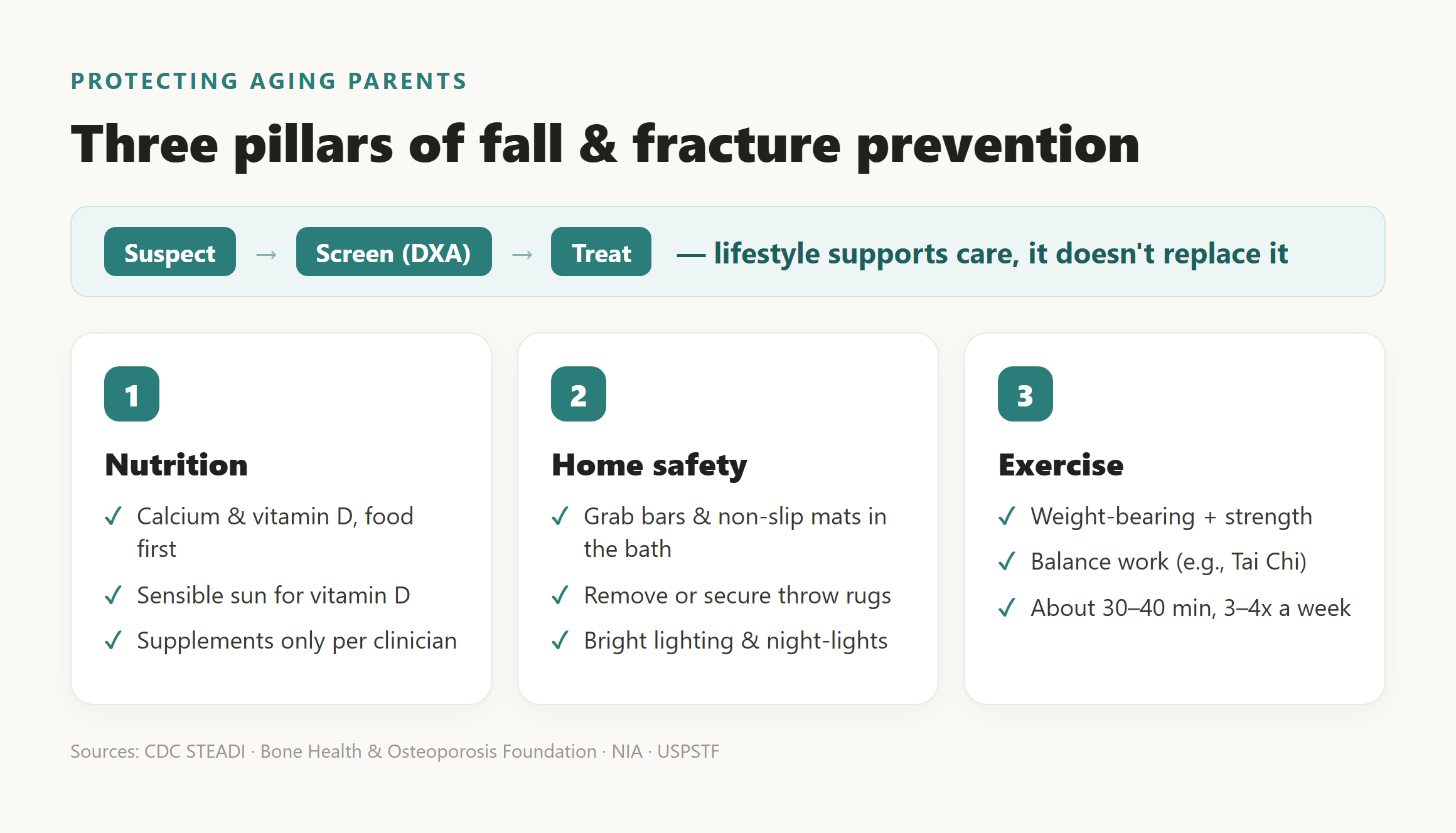
First, the honest disclaimer: suspect, screen, treat
I want to be careful here, because this is where a lot of well-meaning advice goes wrong.
Osteoporosis is not something you fix with lifestyle alone.
It is diagnosed with a bone-density test called a DXA scan (dual-energy X-ray absorptiometry) — a quick, non-invasive scan of the hip or lower spine. And when it’s diagnosed, doctors treat it with medication, such as bisphosphonates, when that’s appropriate.
The U.S. Preventive Services Task Force (USPSTF) gives osteoporosis screening a Grade B recommendation for women 65 and older, and for younger postmenopausal women at increased risk.
So the honest framing is this: suspect, then screen, then treat. If a parent is over 65 (especially your mother), has been losing height, or has already broken a bone from a minor fall, the single most useful thing you can do is help them talk to a clinician about a DXA scan.
Everything else in this article supports treatment. It doesn’t replace it.
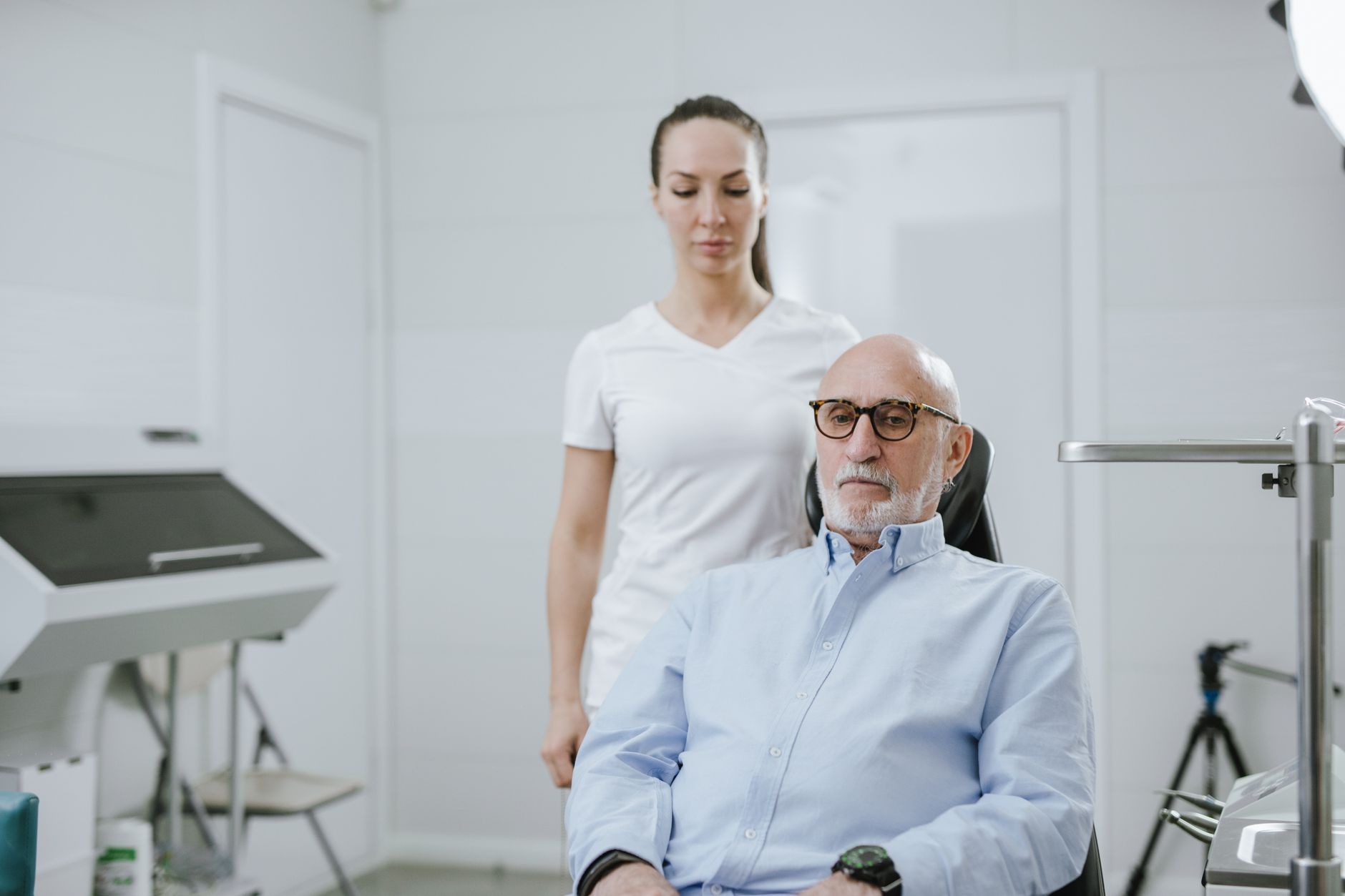
Photo: SHVETS production / Pexels
Pillar 1 — Calcium and vitamin D, with a caveat that matters
Nutrition is the foundation. In fact, osteoporosis medications don’t work well without enough calcium and vitamin D, according to the Bone Health & Osteoporosis Foundation.
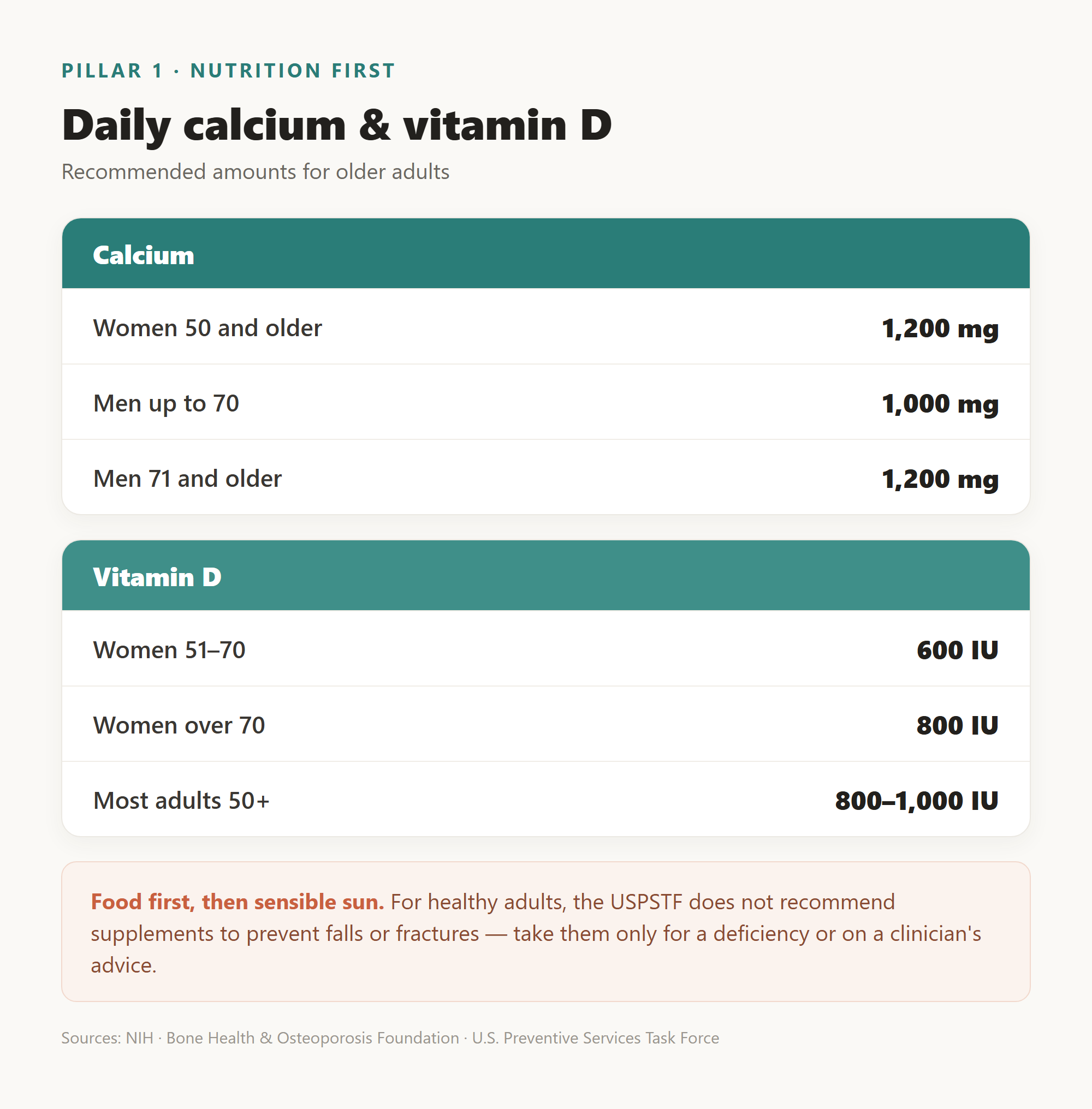
The recommended daily amounts for older adults:
- Calcium: 1,200 mg per day for women 50 and older; 1,000 mg for men up to 70, and 1,200 mg for men 71 and older.
- Vitamin D: 600 IU per day for women 51–70, and 800 IU for women over 70. Most adults over 50 need somewhere around 800–1,000 IU daily.
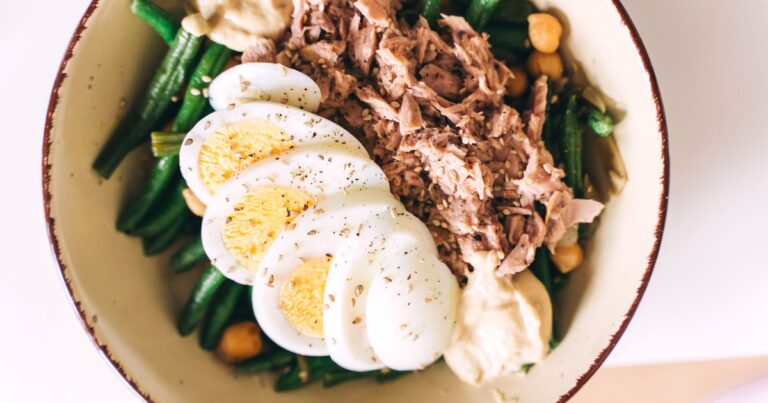
The best source is food — dairy, fortified plant milks, leafy greens, canned fish with the bones, tofu — plus sensible sun exposure for vitamin D.
Now the caveat, and it’s an important one.
You might expect the advice to be “so everyone should take supplements.” But it isn’t that simple.
For healthy older adults living at home who do not have osteoporosis or a vitamin D deficiency, the USPSTF actually recommends against taking vitamin D, with or without calcium, to prevent falls or fractures. Their review of 19 clinical trials found supplements didn’t reduce falls, fractures, or deaths in that group — and vitamin D was tied to a small increase in kidney stones.
That recommendation does not apply to people who already have osteoporosis, have a diagnosed deficiency, or take these supplements for another medical reason. For them, calcium and vitamin D remain part of care — under a doctor.
So the sensible line is: food first, sunlight second, and supplements only for a deficiency or on a clinician’s advice — not as an automatic daily pill.
Pillar 2 — Fix the home before the fall happens
This is the cheapest, most underrated pillar. Most falls happen at home, and most of the triggers are fixable in an afternoon.
The CDC’s “Check for Safety” home fall-prevention checklist points to a few high-impact fixes:
- In the bathroom: install grab bars next to and inside the tub or shower, and next to the toilet. Add a non-slip rubber mat or self-stick strips to the tub or shower floor. The bathroom is a top fall zone — wet, hard, and unforgiving.
- On the floors: remove throw rugs, or secure them with double-sided tape or non-slip backing. Keep walking paths clear of clutter and cords.
- Lighting: put a lamp within easy reach of the bed, and add a nightlight along the path from the bed to the bathroom. Aging eyes need more light than they used to.
- On the stairs: handrails on both sides, good lighting, nothing left on the steps.
None of this is glamorous. But these small changes remove the exact everyday moments that turn into fractures.

Photo: Curtis Adams / Pexels
Pillar 3 — Lower-body strength and balance
Exercise does double duty here. It helps maintain bone density, and it builds the strength and balance that keep a fall from happening in the first place.
Two kinds of movement matter for bones, according to the Bone Health & Osteoporosis Foundation: weight-bearing activity (walking, stair climbing, dancing) and muscle-strengthening work. Weight-bearing exercise works directly on the legs, hips, and lower spine to slow bone loss. A reasonable target for most people is about 30–40 minutes, three to four times a week.
For balance specifically, the evidence for Tai Chi is genuinely good. Meta-analyses of randomized trials show it improves balance, reduces falls, and strengthens the lower body — its slow, semi-squat, weight-shifting movements are quietly demanding. The benefit tends to show up with practice at least three times a week.
Simple bodyweight moves that help aging parents, introduced gradually and with a stable surface to hold onto:
- Sit-to-stand from a sturdy chair
- Heel raises
- Standing marches
- Side leg raises
- Supported single-leg stands
One caution, and I’d underline it. If a parent already has diagnosed osteoporosis, some movements — heavy forward bending or twisting of the spine — can actually risk a spine fracture. Mayo Clinic’s guidance is to stay active “the safe way,” which for a diagnosed patient means getting a clinician or physical therapist to tailor the routine.

Photo: Yan Krukau / Pexels
One more thing: falls rarely have a single cause
Before I close, one point that reframes everything above.
A fall is almost never about just one thing. Geriatric guidance points to several risk factors that are worth reviewing together:
- Medications. Sedatives and some blood-pressure drugs can cause dizziness. The CDC suggests a yearly fall screening for adults 65 and older who take four or more chronic medications. A medication review with a pharmacist or doctor is worth asking for.
- Blood pressure that drops on standing (orthostatic hypotension), which brings a wave of light-headedness.
- Vision. Update the glasses. Treat the cataracts.
- Leg strength and gait, which Pillar 3 addresses.
- Home hazards, which Pillar 2 addresses.
And if a fracture does happen, recovery and rehabilitation are led by clinicians — not something to improvise at home.
I keep coming back to that small moment with my mother. The slip that “didn’t amount to anything.”
The truth is, we got lucky that day. And luck is not a plan.
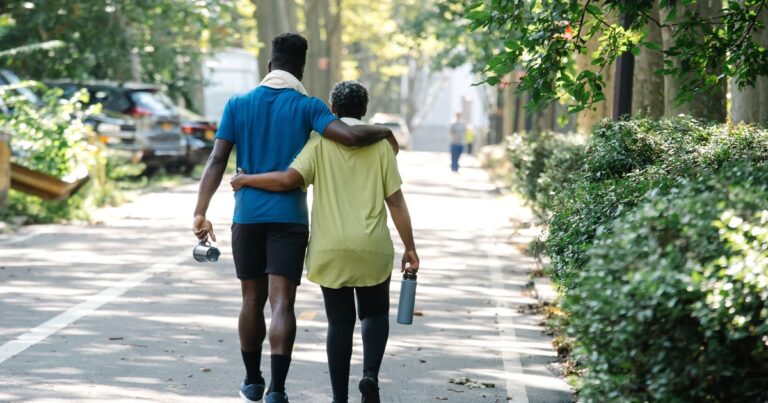
If there’s one thing I’d ask you to take from this, it isn’t to buy a cabinet full of supplements or to turn your parents’ home into a hospital. It’s smaller and more human than that. Book the bone-density scan. Put up the grab bar this weekend. Take the walk together, three times a week.
Because the goal was never just to prevent a fracture. It was to protect the independence that lets them stay themselves for as long as possible.
This article is for general information only and is not a substitute for professional diagnosis, treatment, or advice. If you have concerns about a parent’s bone health or fall risk, please talk to a qualified clinician.
References
- CDC — Older Adult Fall Prevention / Preventing Falls and Hip Fractures
- CDC STEADI — “Check for Safety: A Home Fall Prevention Checklist for Older Adults”
- National Institute on Aging (NIH) — Osteoporosis
- U.S. Preventive Services Task Force — Vitamin D, Calcium, or Combined Supplementation; and Osteoporosis Screening
- Bone Health & Osteoporosis Foundation — Calcium/Vitamin D and Exercise
- Mayo Clinic — Exercising with osteoporosis