

Forgetfulness vs. Dementia: Free Medicare Cognitive Screening
I’ll be honest. The first time my father called to ask the same question he’d asked an hour earlier, my stomach dropped.
Was this just normal aging, or the start of something?
What I learned is that the line between normal forgetfulness and dementia is clearer than most people think. And in the US, Medicare already includes a cognitive assessment at no cost during the yearly wellness visit — a benefit a lot of families don’t realize they have. Let me walk you through both, calmly.
A quick note first: this article is informational only. A diagnosis needs a licensed medical professional, so please talk to your doctor if you’re worried.
Normal Forgetfulness vs. Dementia: The Key Differences
Here’s the single clearest tell.

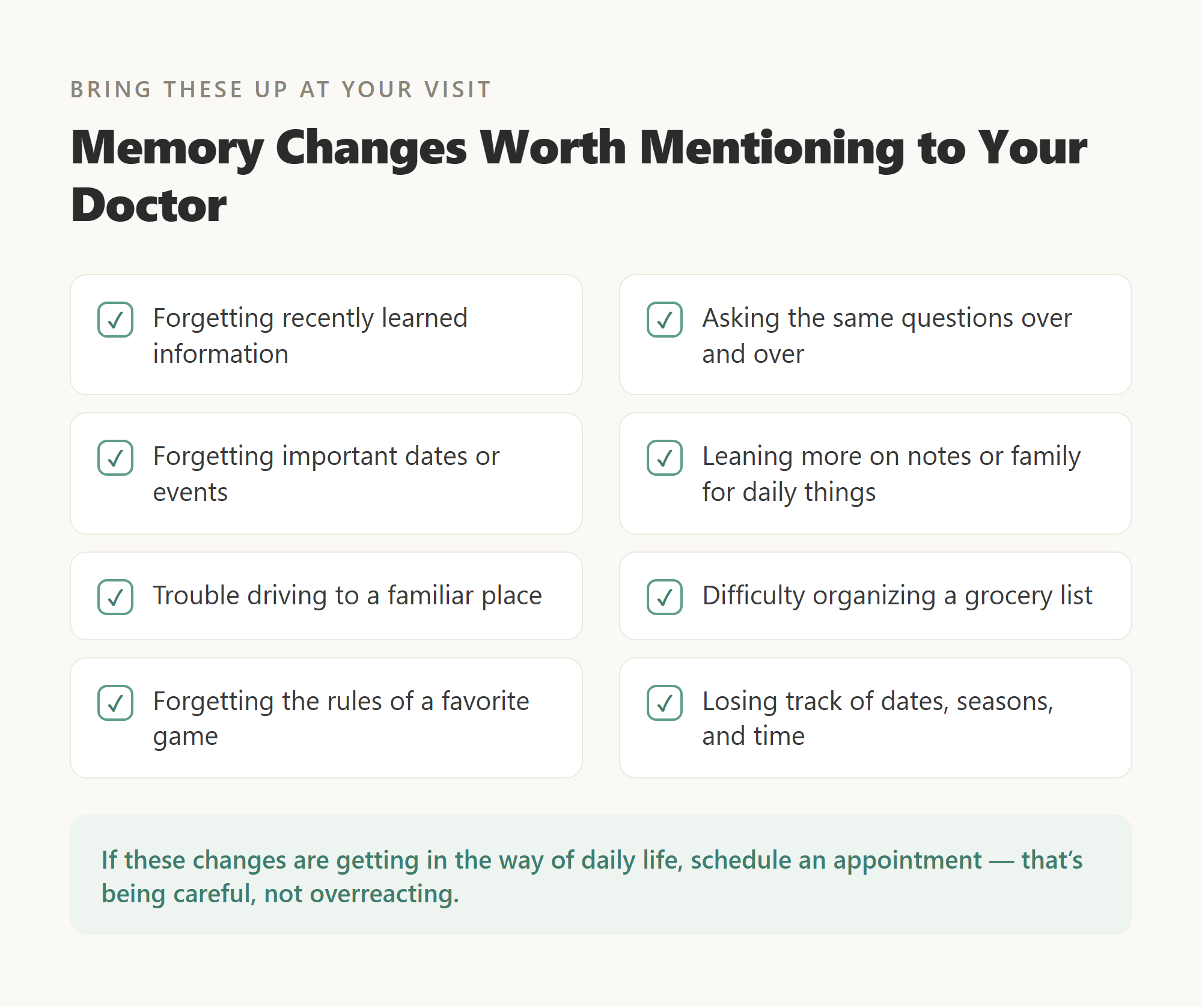
Normal aging means occasionally forgetting a name or an appointment — but remembering it later. A dementia warning sign is forgetting recently learned information, forgetting the event itself, asking the same questions over and over, and leaning more and more on notes or family for things once handled alone. (Alzheimer’s Association, National Institute on Aging)
It isn’t about the occasional slip. It’s about memory loss that disrupts daily life.
Managing daily tasks
Normal aging might mean an occasional error paying a bill. Dementia looks different — trouble completing familiar tasks like driving to a known place, organizing a grocery list, or remembering the rules of a favorite game.
Losing track of time
Normal aging can mean getting confused about the day of the week, then figuring it out. With dementia, people lose track of dates, seasons, and the passage of time itself.

Photo: RDNE Stock project / Pexels
The bottom line
If memory changes are interfering with independent living, that’s the signal to act on. Occasional forgetfulness that doesn’t get in the way is more typical of normal aging. When in doubt, schedule an appointment with a doctor — that’s not an overreaction, it’s just being careful.
Free Cognitive Screening: Medicare’s Annual Wellness Visit
This is the part that’s genuinely useful, and often overlooked.
Medicare requires providers to assess cognitive function during the Annual Wellness Visit (AWV), looking for signs of dementia, including Alzheimer’s disease. The provider may observe behavior, ask simple questions, review concerns you or your family raise, and sometimes use a brief cognitive assessment tool that takes only a few minutes — covering memory, decision-making, medication management, and daily activities. (Medicare.gov)

Photo: SHVETS production / Pexels
Who’s eligible, how often, and what it costs
- Available to Medicare Part B beneficiaries, once every 12 months (after your first 12 months of Part B; the very first visit is the “Welcome to Medicare” preventive visit).
- No cost to you for the AWV itself — no coinsurance, and the Part B deductible doesn’t apply — as long as your provider accepts assignment and it’s billed as the wellness visit.
- One caution: if extra tests or services happen at the same visit that aren’t part of the preventive benefit, those may bring normal cost-sharing.
If something turns up: the separate care-plan visit
Here’s a distinction worth understanding clearly.
If your provider detects possible cognitive impairment, Medicare covers a separate, more thorough visit to review cognitive function and check for dementia, depression, anxiety, or delirium, and to build a care plan. But this separate Part B service can involve cost-sharing — after the Part B deductible, you generally pay 20% of the Medicare-approved amount.
So the AWV cognitive assessment is free; the follow-up diagnostic visit usually isn’t fully free. It’s worth knowing the difference before you go.
| Service | What it does | Typical cost |
|---|---|---|
| Annual Wellness Visit (cognitive assessment) | Screens for signs of impairment | No cost (billed correctly) |
| Cognitive Assessment & Care Plan visit | Detailed review + care plan | ~20% after Part B deductible |
How to actually use it
Schedule your Annual Wellness Visit with your primary care provider, and specifically raise any memory concerns so the cognitive assessment gets documented. If impairment is suspected, ask about the separate cognitive assessment and care-plan visit. Coverage details can vary by plan — Medicare Advantage plans must cover the AWV, but network and cost rules differ.
Brain-Healthy Habits That Lower Dementia Risk
Screening tells you where you stand today. Everyday habits are what you build on.

Photo: Mathias Reding / Pexels
- Journaling and adult-literacy activities: More frequent education classes, computer use, and writing letters or journals were associated with reduced dementia risk over 10 years.
- Active mental play: Games, cards, chess, crosswords, puzzles. High cognitive activity was linked to developing Alzheimer’s about five years later on average than low activity.
- Hands-on hobbies: Gardening and flower arranging combine planning, dexterity, sequencing, and problem-solving.
- Learning something new: A language, a musical instrument, a craft.
- The “just right” difficulty: Too easy is boring; too hard leads to giving up. Aim for pleasantly challenging.
Pair all of this with physical activity and social engagement for the broadest benefit. (Harvard Health)
One last thing.
Knowing the difference between forgetfulness and dementia isn’t about scaring yourself — it’s about replacing a vague worry with a clear next step. Watch for whether the memory lapse gets remembered later, and whether it’s getting in the way of daily life. And if you’re still unsure, use the free cognitive assessment that Medicare already gives you.
Because the most reassuring thing you can do is simply check, sooner rather than later.
Sources: Medicare.gov (Yearly Wellness Visits; Cognitive Assessment & Care Plan Services), CMS, National Institute on Aging, Alzheimer’s Association, Harvard Health.


