Baby Heat Rash vs. Viral Rash: How to Tell Them Apart
I’ll be honest — the first time tiny pink bumps showed up on my baby’s neck on a hot afternoon, I stared at them far longer than I’d like to admit.
Was it heat rash? A viral rash? Something else entirely?
No amount of scrolling through photos made me certain. But here’s the one thing that finally cut through the confusion. The single most reliable clue that separates baby heat rash from a viral rash isn’t what the spots look like — it’s whether there was a fever, and when.
In this guide I’ll walk through how to tell baby heat rash and a viral rash (like roseola) apart, the common look-alikes, simple home care, and the signs that mean it’s time to call a doctor.
Photo: Abbey Chapman / Pexels
First, a note: this is information, not a diagnosis. Any rash that worries you should be evaluated by a pediatrician.
What Heat Rash Looks Like
Heat rash (prickly heat, or miliaria) happens when sweat glands get blocked and overworked in hot, humid weather. Thick ointments can block those glands too. (Seattle Children’s, Cleveland Clinic)
- Appearance: tiny pink bumps; babies may develop tiny water blisters. Older kids describe a “prickly,” pins-and-needles feeling. It can be itchy — but there’s no fever.
- Location: mainly the neck, chest, and upper back, plus skin folds like the armpits and neck creases.
- Course: with cooling, it clears in about 2-3 days.

What a Viral Rash (Including Roseola) Looks Like
A viral rash shows up as small pink spots on both sides of the chest, stomach, and back. As the American Academy of Pediatrics puts it, most rashes with small pink spots all over are part of a viral illness. It comes with or shortly after fever, a runny nose, cough, or diarrhea, and usually lasts 2-3 days. (AAP / HealthyChildren.org, Healthline)
Roseola is the classic example — “the most common viral rash in the first 3 years of life.” The pattern is distinctive:
- High fever for about 3-4 days, then
- 12-24 hours after the fever breaks, flat pink spots appear on the chest and stomach and spread to the face.
- It’s caused by human herpesvirus 6.
The key contrast: a viral rash travels with systemic illness — fever and cold symptoms — while heat rash appears on its own during hot weather and responds to cooling.
Heat Rash vs. Viral Rash, at a Glance
Put side by side, the differences get much clearer.

| Feature | Heat Rash | Viral Rash (e.g., roseola) |
|---|---|---|
| Cause | Blocked sweat glands (heat) | Viral infection |
| Fever | None | Present, often precedes rash |
| Timing | During/after a hot day | With or after illness; roseola = after fever breaks |
| Location | Neck, chest, upper back, folds | Chest/stomach/back, both sides, spreading |
| Other symptoms | None | Runny nose, cough, diarrhea, fussiness |
| Response to cooling | Improves | No change |
So the one question worth asking is simple:
“Was there a fever in the last few days, or other signs of being sick?”
If yes, lean viral. If no and it’s hot out, lean heat rash.
Other Common Look-Alikes
Not every baby rash is heat or viral, so it helps to know the usual suspects.
- Diaper rash: red or pink blotches confined to the diaper area, from prolonged contact with urine and stool. Location alone usually gives it away. (Mayo Clinic, HealthyChildren.org)
- Eczema (atopic dermatitis): dry, red, itchy patches that are chronic and recurring, and worse when skin is dry. Common in babies, especially with a family history of asthma or allergies. (Mayo Clinic, UnityPoint)
A good habit is to sort by three axes: where it is, what else is going on (fever, itch, dryness), and how it behaves over time (how long, and whether it keeps coming back).
Related: Baby eczema vs. dry skin — a parent’s guide.
Home Care
Diagnosis is the doctor’s job, but the comfort measures happen at home.
- Cooling (heat rash): cool baths without soap for about 10 minutes, or cool wet cloths for 5-10 minutes several times a day; lower the room temperature; use a fan; use cotton towels to absorb sweat. A 1% hydrocortisone cream may be applied to itchy spots up to 3 times a day — but avoid thick ointments, which block glands. (Seattle Children’s)
- Clothing: dress in cool, lightweight, breathable cotton in hot weather; in cold weather, use removable layers so baby doesn’t overheat.
- Diaper rash: gently clean and air-dry the area, skip harsh soaps and wipes, and use a barrier cream. (Mayo Clinic)
- Eczema: keep skin clean and well moisturized; mild patches can use plain petroleum jelly, while severe cases may need a doctor-prescribed steroid cream. (UnityPoint / HealthyChildren.org)
One caution worth repeating: talk to a pediatrician before starting any medicated cream on an infant.

Photo: Tuba / Pexels
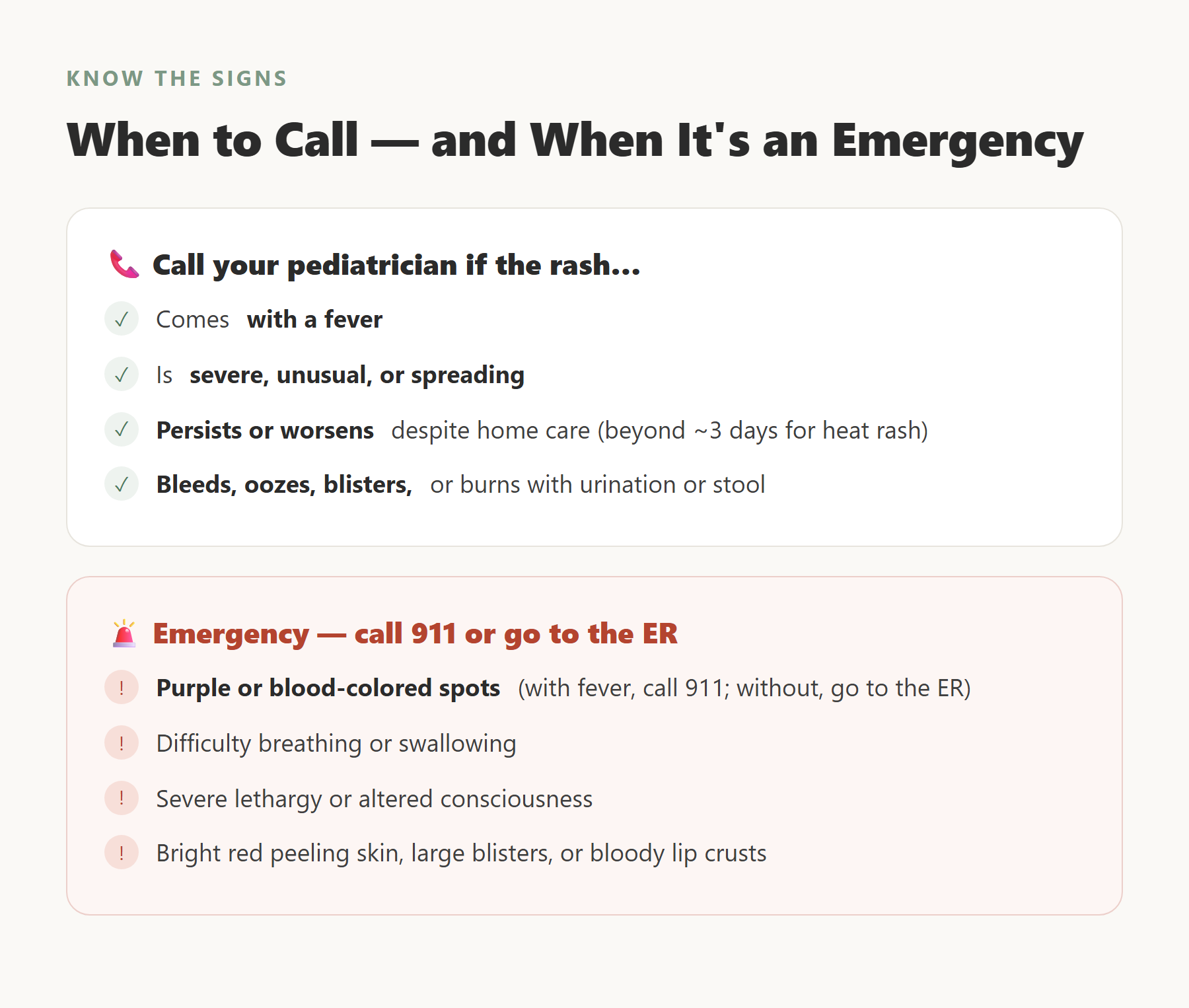
When to Call a Doctor — and When It’s an Emergency
Call your pediatrician for a rash that:
- Comes with a fever
- Is severe, unusual, or spreading
- Persists or worsens despite home care (beyond about 3 days for heat rash)
- Bleeds, oozes, blisters, or causes burning with urination or stool
Treat these as an emergency — call 911 or go to the ER:
- Purple or blood-colored spots (with fever, call 911; without fever, go to the ER)
- Difficulty breathing or swallowing
- Severe lethargy or altered consciousness
- Bright red peeling skin, large blisters, or bloody lip crusts
(Source: AAP / HealthyChildren.org)
One last thing.
“Viral rash” is really an umbrella term — roseola is the classic post-fever example, but many viral illnesses cause widespread pink spots. And timelines are typical, not absolute. Individual babies vary.
So the most useful thing a parent can do isn’t nailing the exact name. It’s quietly noting when the fever was, where the rash is, and what day it started — because that little timeline is often the clearest clue a clinician has to work with.
When the picture is ambiguous, an in-person pediatric exam is always the safe default. Photos and symptom checkers have their limits, after all.
References
- Seattle Children’s Hospital — Heat Rash
- American Academy of Pediatrics / HealthyChildren.org — Rash or Redness (Widespread); viral rash and roseola guidance
- Mayo Clinic — Common baby rashes; Diaper rash
- Cleveland Clinic — Heat Rash (Prickly Heat)
- Healthline — Identifying and Diagnosing a Viral Rash in Babies
(Sources compiled July 2026. This article is general information, not a substitute for your pediatrician’s advice.)