Highly Sensitive Person (HSP): A Survival Guide, Not a Diagnosis
Let me be honest about why this topic is personal.
For a long time I thought there was something a little off about me. Loud, crowded rooms drained me faster than they seemed to drain anyone else. A blunt message could sit in my chest all afternoon. I noticed tiny shifts in a friend’s tone that others walked right past. I used to file all of that under “too sensitive,” and I did not mean it kindly.
Then I came across the term highly sensitive person, and something clicked. Not because it gave me a label to hide behind — but because the research reframed the whole thing. Being a highly sensitive person is a normal temperament trait, shared by a large slice of the population. It is not a disorder. It is not a diagnosis. And once you understand how it actually works, it stops feeling like a flaw and starts feeling like something you can manage.
So let me walk through what I learned, carefully — because this is a place where popular content gets sloppy.
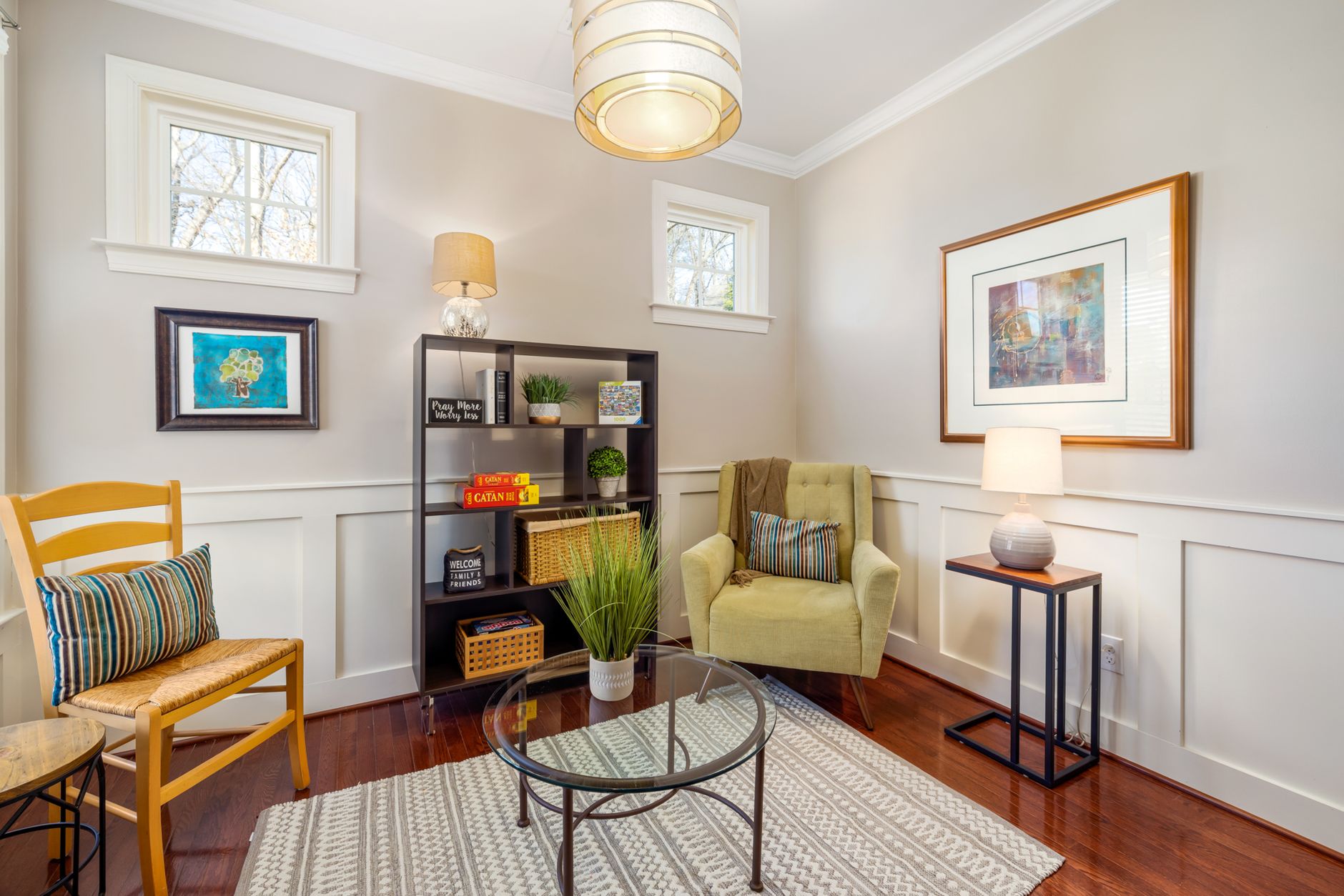
Photo: Curtis Adams / Pexels
What “highly sensitive” actually means
The highly sensitive person describes someone high in Sensory Processing Sensitivity, or SPS — a temperament trait first formally defined by psychologists Elaine Aron and Arthur Aron in 1997, along with the original 27-item HSP Scale.
Here is the part I find most important. SPS is not about having sharper eyes or ears. As the researchers describe it, the difference is “not in the sense organs per se” but in how sensory information gets transmitted and processed in the brain. It involves deeper cognitive processing of physical, social, and emotional input, stronger emotional reactivity and empathy, heightened awareness of subtle cues, and a lower threshold for getting overstimulated.
Elaine Aron sums the whole trait up with a tidy acronym — DOES.
- D — Depth of processing. You reflect deeply, think before acting, and notice patterns and connections others miss.
- O — Overstimulation. Loud noise, crowds, and intense environments overwhelm you sooner. Your threshold for overarousal is simply lower.
- E — Emotional reactivity and empathy. You feel emotions strongly and pick up on other people’s feelings intensely.
- S — Sensing the subtle. You are finely tuned to nonverbal cues, tone of voice, and small changes in your surroundings.
If you read that list and quietly nodded at all four, you may well be one. But please hold that loosely — self-tests are informational, not diagnostic.
Why it is a trait, not a disorder
This is the line I want to draw clearly, because a lot of online content blurs it.
Aron’s research estimates SPS shows up in roughly 20% of people, with the broader literature putting the range at about 20 to 30%. And that prevalence is itself a key argument. Something present in a fifth or more of the population is, in Aron’s words, “too many to be a disorder.” It is a normal variation in temperament.
There is more support for that view. A similar responsive-versus-bold strategy appears across more than a hundred species, which suggests SPS is an evolved, adaptive temperament — not a defect.
So let me say it plainly. HSP is not in the DSM-5. It is not a diagnosis. Being a highly sensitive person is not the same as having an anxiety disorder, autism, or a sensory processing disorder. Those are distinct things, and the fact that popular articles smear them together is exactly the over-pathologizing I would ask you to watch out for.

Why highly sensitive people get depleted
Now for the hard side, honestly stated.
Because highly sensitive people process stimuli more deeply and react more strongly, they hit overstimulation sooner than others in the same room. Over a day of noise, bright light, crowds, emotional demands — even a single curt message — that can lead to real depletion and a genuine need to recover. This is not fragility. It is arithmetic.
A 2025 experience-sampling study in Nature Scientific Reports added a useful nuance. More sensitive people reported higher overstimulation specifically when sounds or sights were unpleasant, when they were fatigued, or when they were in a negative mood. In other words, context and state matter — not just the trait itself. Which is actually good news, because state is something you can influence.
I should mention the mental-health links too, and be precise about them. Higher SPS is associated with more anxiety, depression, stress, burnout, and lower life satisfaction in various studies.
But read that word carefully — associated.
These are correlations, not proof that sensitivity causes disorder. Much depends on your environment, your support, and whether you have stress and emotion-regulation skills. Being sensitive does not doom anyone to mental illness.
Sensitivity cuts both ways
Here is the piece that changed how I see the whole trait, and it is the most research-forward point of all.
Sensitivity is not simply a vulnerability. It works like an amplifier in both directions. The evidence — under the theories of differential susceptibility, environmental sensitivity, and vantage sensitivity — shows that highly sensitive people are more harmed by harsh, adverse environments and more helped by positive, supportive, enriching ones than less-sensitive people are.
Read that again if it lands the way it landed for me. The same wiring that makes a chaotic environment hurt more is the wiring that makes a good environment nourish you more deeply.
And on the upside end, high sensitivity is linked to greater creativity, richer relationships, stronger responsiveness to positive experiences, and a deeper appreciation of beauty and meaning.
So the goal is not to “fix” or suppress your sensitivity. The goal is to manage your environment and your recovery, so the trait’s upside — depth, empathy, creativity — can show, while the downside stays in check.

Photo: Annushka Ahuja / Pexels
A survival guide that fits the research
None of this is medical treatment — being sensitive is not a condition to be treated. Think of these as self-management, drawn from Elaine Aron and clinical sources.
- Protect daily low-stimulation downtime. Build in regular quiet time to decompress and recover from overarousal. A “sensory-shutdown space” — somewhere low-stimulation you can retreat to — is not a luxury for an HSP. It is maintenance.
- Set firm boundaries and practice saying no. Protecting your time and energy is a core recommendation, not selfishness.
- Manage overstimulation before it peaks. Reduce controllable inputs — noise, screens, back-to-back social demands. Take breaks. Remember that fatigue and a negative mood make overstimulation worse, so rest and mood care are genuinely protective.
- Cultivate supportive relationships and meaningful activity. Because of differential susceptibility, you benefit strongly from supportive environments. The aim is not just to avoid stimulation but to engage with things that matter to you.
- Try mindfulness or meditation. These are commonly recommended for recovering from overstimulation and building emotion regulation.
And one boundary on all of this. If your sensitivity coincides with persistent depression, anxiety, burnout, or real functional impairment, that is a reason to consult a mental-health professional — not because being sensitive is a disorder, but because those symptoms deserve care in their own right.
One last thing
Let me close where I started, but with a different feeling.
I no longer think of my sensitivity as something a little off about me. The research reframed it into something plainer and kinder — a common temperament, carried by roughly a fifth of us, that turns the volume up on everything. Harsh rooms and good rooms alike.
That means the work is not to become someone else. It is to build the quiet, the boundaries, and the supportive corners where the volume works in your favor. And if genuine distress is part of the picture, to let a professional help — because you deserve that, sensitive or not.
Your sensitivity was never the problem. The environment around it usually is — and that, thankfully, is something you can shape.
This article is for general education. HSP is a temperament trait, not a mental disorder, diagnosis, or something to be “treated,” and this is not a substitute for professional care. Self-tests are informational only. If you are dealing with persistent depression, anxiety, burnout, or distress, please consult a licensed mental-health professional such as a clinical psychologist or psychiatrist.
Sources: Aron & Aron, Journal of Personality and Social Psychology (1997, foundational SPS and HSP Scale); Aron, Aron & Jagiellowicz, Personality and Social Psychology Review (2012, trait not disorder, prevalence, DOES, cross-species); Elaine Aron / hsperson.com (DOES framework); ScienceDirect (2024, differential susceptibility); Trends in Cognitive Sciences (2025); Nature Scientific Reports (2025, experience-sampling overstimulation study); Psychology Today and LifeStance Health (coping perspective).