Cold Hands and Feet With Period Cramps? How to Warm Up
I’ll be honest with you. For years I assumed my ice-cold hands and feet and my rough first day of cramps were two separate problems. One was just “being a cold person.” The other was “that time of the month.” It never occurred to me they might be talking to each other.
Then I started reading the research, and the picture got more interesting.
If your fingers go numb in a slightly cool room and your period cramps hit hard on day one, you are not imagining a connection. There is a real thread running through both, and it comes down to one thing: circulation. This isn’t a magic fix, and I’ll be upfront about what the evidence actually supports and what is still just tradition. But there are a few low-risk things that genuinely help, and warming your lower belly is one of them.
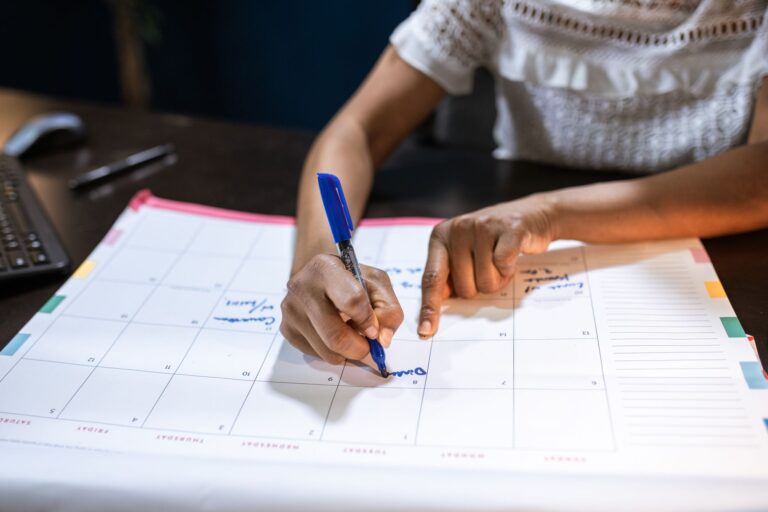
Photo: cottonbro studio / Pexels
A quick, important note before we go further. This is general information, not medical advice. Cold hands and feet and painful periods both have many possible causes, and some of them need a doctor. I’ll flag those along the way.
Why do cold hands and cramps show up together?
The link starts inside the uterus, with a chemical called prostaglandin.
According to the American College of Obstetricians and Gynecologists (ACOG), primary period pain is caused by prostaglandins made in the lining of the uterus. These chemicals make the uterine muscle and its blood vessels contract. The Mayo Clinic puts it plainly: higher levels of prostaglandins are linked to more severe cramps.
Here’s the part that ties in the cold.
One specific prostaglandin, PGF2α, squeezes the small blood vessels feeding the uterine lining shut. Less blood flow means less oxygen to the tissue, and that oxygen-starved state is a big part of what you feel as cramping. So cramps aren’t only “muscle tightness” — they’re partly a circulation story.

Your hands and feet run on the same plumbing. Before a period, hormones shift — rising progesterone can tighten blood vessels, and changing estrogen levels can make you more sensitive to cold. That’s part of why so many of us feel colder in the days before bleeding starts, and why women tend to get cold extremities more than men do.
None of this means you have a “cold uterus,” by the way. That’s a traditional framing, not a Western diagnosis, and I don’t want to oversell it. What the science actually shows is a link between cold sensitivity and cramp severity — which is a more honest way to say it.
What the research found about cold and cramps
A 2024 study looked at 419 women, both Asian and White, and their exposure to cold.
The interesting finding wasn’t just “cold is bad.” It was that the women who already had cold hands and feet were the vulnerable ones. Among them, more cold exposure in winter — think cold drinks and ice cream — was tied to worse menstrual pain. Women who rarely had cold extremities showed no such link.
The study also found that a warmer home (around 70–74°F) was associated with less pain.
I’m not going to tell you a warm room cures cramps. But if you run cold, keeping warm and easing off ice-cold drinks around your period is about as low-risk an experiment as exists.
When is cold hands and feet actually a warning sign?
Before we talk remedies, this part matters more than any tea or stretch.
Sometimes cold extremities are more than “being cold.” One common cause is Raynaud’s phenomenon. With Raynaud’s, cold or stress makes your fingers or toes change color — pale first, then blue or purple, then red as they warm back up, often with tingling or numbness. The Mayo Clinic notes women are about nine times more likely than men to develop it, and it often starts in the teens or twenties.

Photo: Patricio Nahuelhual / Pexels
Most Raynaud’s is harmless. But there’s a version called secondary Raynaud’s that can signal an underlying condition, and that one is more serious.
Please see a clinician if:
- Your fingers or toes turn white, then blue, then red with cold or stress.
- You develop a sore or infection on a fingertip or toe.
- The cold is new, one-sided, severe, or getting worse.
Persistent cold hands and feet can also point to things like thyroid problems or anemia, so it’s worth a conversation with your doctor rather than a guess from a blog. Same goes for your cramps: if your period pain is severe, worsening, or not helped by the usual measures, that deserves a real evaluation, because it can be a sign of conditions like endometriosis or fibroids.
Okay. With that said, here’s what actually helps the everyday version.
What actually eases the cramps, ranked by evidence
I’ve put these roughly in order of how strong the evidence is, because I think you deserve to know the difference between “studies back this” and “tradition suggests this.”
Heat on your lower belly — the strongest simple option
If you do one thing, do this.
A systematic review and meta-analysis of heat therapy for period pain found that heating pads were at least as effective as pain medication across the trials it pooled. Applied to the lower abdomen, heat can relieve cramps comparably to ibuprofen.
Even better, heat and NSAIDs work through different mechanisms, so they’re safe to use together if you need to. It’s cheap, it’s low-risk, and it’s the closest thing to a free win here. Just don’t fall asleep on a scalding pad — protect your skin.

Regular movement, including gentle yoga
This one surprised me, because “exercise when you feel awful” sounds like cruel advice.
But a Cochrane review — one of the more rigorous kinds — found that exercise may have a large effect on reducing period pain, more than twice the amount of relief a woman would even notice as meaningful. Both gentle yoga and higher-intensity aerobics helped. Most studies had women exercising at least three times a week, for about 45 to 60 minutes.
You don’t need to train for anything. Gentle pelvic and lower-body yoga and stretching — cat-cow, child’s pose, a supine twist — counts, and it also nudges circulation in exactly the region we’re talking about. The catch, and it’s a real one, is that this works as a habit, not as a rescue in the moment. It’s prevention, built over weeks.

Photo: Ketut Subiyanto / Pexels
Ginger — a real remedy, honestly stated
Ginger has more evidence behind it than most kitchen remedies.
Meta-analyses found that 750 to 2,000 mg of ginger powder a day, taken during the first three to four days of your cycle, relieved period pain better than a placebo — and in several trials was as effective as ibuprofen or mefenamic acid. Some studies started it a couple of days before the period and continued through the first few days.
A cup of ginger tea is a gentler, everyday version, though it delivers far less than those capsule doses, so don’t expect tea alone to match a study result. Ginger is generally safe in food amounts; large doses can cause mild stomach upset.

Photo: Katja B / Pexels
Warm baths and warming your lower belly
Here we cross from “proven for cramps” into “reasonable and comforting.”
Warm-water immersion widens your blood vessels — that’s vasodilation — which boosts circulation and relaxes muscles. The East-Asian tradition of a warm half-body bath to “warm the lower belly” fits neatly with that physiology. I do it because it feels good and helps me relax, and I think that’s a fair reason. I just won’t claim it’s a proven cramp treatment, because the direct evidence for cramps specifically isn’t there.
One caution: if you’re pregnant, or you have diabetes, heart disease, high blood pressure, or a vascular condition, check with your doctor before hot baths or heat therapy.
Mugwort tea — tradition, with real caveats
You may have seen mugwort (also called ssuk, or Artemisia) recommended for cramps. It has a long history in East-Asian and folk medicine as a remedy for painful, irregular periods.
But I have to be straight with you here. The National Center for Complementary and Integrative Health (NCCIH) says there isn’t enough evidence to know whether mugwort is safe or useful for any health condition. One study did find mugwort capsules reduced period pain versus placebo — promising, but far from settled.
More importantly: mugwort is not safe in pregnancy. It has a history as an agent that stimulates uterine contractions, and it contains thujone, which can be harmful at high doses. If you’re pregnant or trying to conceive, skip it entirely, and talk to a doctor before using it otherwise.
A few warming habits worth keeping
None of these are dramatic. That’s rather the point.
- Keep your core and feet warm, especially in the days before your period and in winter. Socks and layers are not glamorous, but they’re on the side of the evidence.
- If you run cold, try easing off ice-cold drinks around your period. Low risk, possibly helpful.
- Reach for a warm drink like ginger tea, and a heating pad on your lower belly in the evening.
- Build a light, regular movement habit — a few gentle yoga or stretching sessions a week — rather than waiting for the bad day to fix itself.
And please, keep the earlier warning signs in mind. Warming habits are for ordinary discomfort. They are not a substitute for a check-up when something feels off.
I used to treat my cold feet and my cramps as two separate nuisances to grit my teeth through. What changed wasn’t a miracle remedy. It was realizing they share the same quiet cause, and that a warm belly, a regular stretch, and a cup of ginger tea were small, honest things I could actually do something with.
Your body isn’t being dramatic when it runs cold and cramps hard. It’s telling you something about circulation. The kindest response is to listen, warm up, and check in with your OB-GYN or doctor when the signals get louder — because some messages are worth more than a heating pad can answer.
참고자료 (References)
– ACOG — Dysmenorrhea: Painful Periods
– Mayo Clinic — Menstrual cramps; Raynaud’s disease
– Cleveland Clinic — Raynaud’s Phenomenon
– Cold Exposures in Relation to Dysmenorrhea among Asian and White Women (2024)
– Heat therapy for primary dysmenorrhea: systematic review & meta-analysis
– Cochrane — Exercise for dysmenorrhoea
– Oral ginger for dysmenorrhea: systematic reviews & meta-analyses
– NCCIH — Mugwort: Usefulness and Safety