How Long Do Mounjaro and Wegovy Side Effects Last?
How Long Do Mounjaro and Wegovy Side Effects Last?
Let me be honest about something. The first week I heard people describe starting Mounjaro or Wegovy, the part that came up again and again was not the weight. It was the nausea.
That queasy, “did I eat something bad” feeling that shows up a day or two after the shot.
So if you are sitting there wondering how long Mounjaro and Wegovy side effects last, whether the nausea is normal, and how to tell when stomach pain is something more serious, you are asking exactly the right questions. This is a plain, honest walk through what the research actually says.
One thing first, though. I am not your doctor, and this is not medical advice. It is general information. Anything that worries you belongs in a conversation with the person who prescribed the medication.

Photo: Mikhail Nilov / Pexels
Why do these drugs make you feel sick in the first place?
It helps to know that the nausea is not random. It is baked into how the drug works.
Mounjaro (tirzepatide) and Wegovy (semaglutide) are GLP-1 medications. They slow down how fast your stomach empties, and they quiet your appetite. That slower emptying is part of why they help with weight. But when food sits in your stomach longer than usual, that heavy, over-full feeling can tip straight into nausea.
So the nausea and the appetite change are, in a way, two sides of the same coin.
And it is common. In the Wegovy clinical trials, nausea showed up in about 44% of people. Other gut symptoms were common too.
- Diarrhea in roughly 31%
- Vomiting in roughly 25%
- Constipation in roughly 23%
Mounjaro’s profile is similar. Nausea affects more than 1 in 10 people, along with vomiting, diarrhea, constipation, indigestion and reduced appetite. Most of the sickness people report is mild to moderate, and it usually lands soon after a dose.
None of that is fun to read. But knowing it is expected, and not a sign something is broken, takes a lot of the fear out of it.
So how long do the side effects actually last?
Here is the honest answer: it depends, and the sources frame it two ways.
The first framing is reassuring. The symptoms are usually transient. They peak early and then fade as your body adjusts to a steady dose.
- With Mounjaro, a lot of people notice a real improvement by around week 2, and most gut symptoms settle within a few days to a few weeks.
- With Wegovy, the gut symptoms generally become much more tolerable after the first few months. In the trials, nausea and vomiting tended to peak around week 20, during the dose-increase phase, then eased. The median stretch of an individual nausea spell was about 13 days.

The second framing is the honest caveat. It is not always a clean, one-time thing.
Symptoms tend to come back for a while at each dose increase. That is the pattern worth remembering: every time you step up the dose, your body has to adjust again, so a quiet stretch can be followed by a rougher week. And people simply vary. For some it is a mild two weeks and done. For others it lingers or returns.
Both things are true at once. Usually temporary, but often bumpy on the way up.
How do you actually manage the nausea day to day?
This is where small, unglamorous changes do most of the work. Nothing here is dramatic. It just adds up.
Eat smaller, and more often
Your stomach is emptying slowly, so large meals fight against the medication. Four to six small meals often sit better than two or three big ones. Eat slowly, and stop when you feel full rather than when the plate is clean.
Be picky about what is on the plate
Fat is the main troublemaker, because dietary fat slows stomach emptying even further, on top of what the drug is already doing.
- Go easy on greasy, fried, heavy, spicy and very rich foods.
- Lean on bland, low-fat options when you feel queasy: crackers, toast, rice, that kind of thing.
- Try not to lie down right after eating.
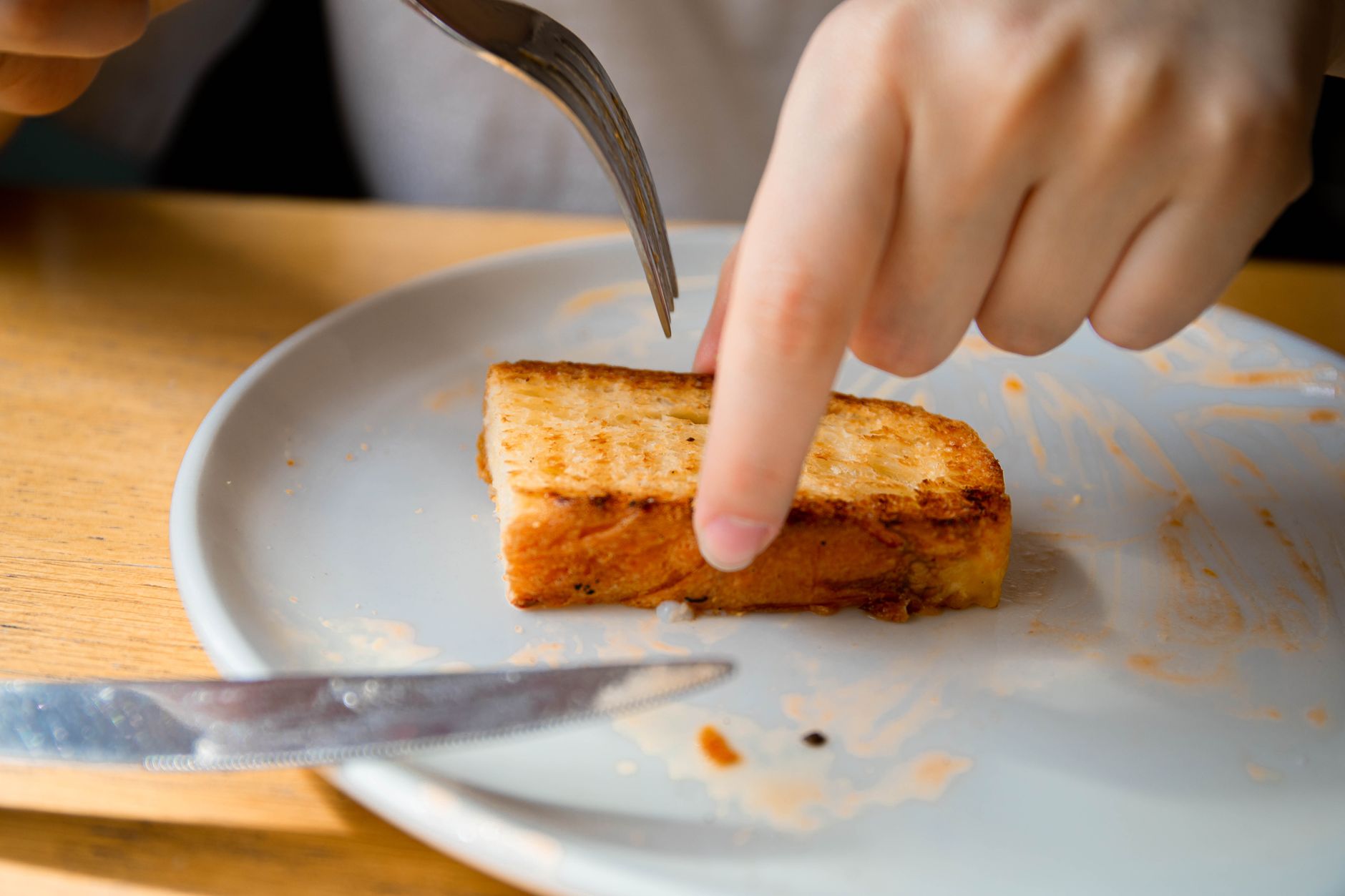
Photo: Sergey Meshkov / Pexels
Keep sipping
Hydration matters more than usual, especially if there is any vomiting or diarrhea in the mix. The trick is small, steady sips through the day rather than a big glass all at once. General guidance points to something like 2 to 3 litres a day, but do not treat that as a hard target for everyone. If plain water feels unappealing, herbal tea or a lightly salted drink can go down easier. Staying hydrated helps with constipation too.

Photo: Elena Golovchenko / Pexels
Fresh air, and patience
A short walk or a few minutes of fresh air genuinely helps queasiness settle. And if the symptoms are hard to tolerate, your clinician can slow down the dose increase or hold it steady for a while.
One thing I would gently underline: do not reach for anti-nausea medicine on your own. Something like an antihistamine, or an antacid for indigestion, can help, but only with the say-so of your doctor or pharmacist. And please do not change your dose yourself.
When is stomach pain a red flag, not just a side effect?
This is the part that matters most, so I want to be clear rather than alarming.
Most of the time, nausea and mild stomach upset are the ordinary, expected side effects we have been talking about. But there are signs that mean stop reading tips and call someone.
Call your clinician if:
- The nausea or vomiting is severe, or drags on well past the first few weeks.
- You cannot keep fluids or food down, or you are showing signs of dehydration.
- The symptoms are getting in the way of eating and drinking properly, even after diet changes.
And then there is the one true emergency sign to memorize: pancreatitis.
Seek urgent medical help if you get severe, persistent pain in your abdomen that may spread through to your back, with or without nausea and vomiting. That is the wording the updated patient leaflet and the FDA prescribing information both use. If that happens, the guidance is to stop the medicine and get urgent care. Other warning signs to know include a persistent fever, a racing heartbeat, or yellowing of the skin or eyes.

How worried should you be about pancreatitis?
Balance is the honest word here. It is serious, and it is rare.
In the clinical trials, acute pancreatitis showed up in roughly 0.23% to 0.39% of people on tirzepatide, which is about the same as placebo. To put a human shape on that: if around 1,000 people take Mounjaro for a year, roughly 997 to 998 will not develop pancreatitis. In one pooled dataset, every case was mild, and about 80% of the people who did develop it had other risk factors like gallstones or alcohol use.
So the numbers are genuinely reassuring. But I would not wave it away either, and here is why.
In October 2025, Eli Lilly updated the Mounjaro patient leaflet to spell out that acute pancreatitis can be a “serious, potentially life-threatening condition.” Regulators have been paying closer attention too. That is not a reason to panic. It is a reason to know the warning signs and take that specific back-radiating pain seriously if it ever comes.
One more thing worth flagging. People with a history of pancreatitis were kept out of the trials, so there is limited data for them. If that is you, your prescriber needs to know before you start.
The short version
If I had to compress all of this into a few lines, it would be this.
The nausea is common, it is usually worst early and at each dose increase, and it mostly settles over days to weeks as your body adjusts. Small meals, less fat, steady sips of water, and patience carry you through most of it.
But keep one line bright in your mind: severe, persistent stomach pain that spreads to your back is not a side effect to wait out. That is the moment to stop and get help.
Everything else on this page is general information, not a substitute for real medical advice. The person who prescribed your medication knows your history, and a two-minute message to them is worth more than any article, including this one.
Because your body is the one thing here you do not get a second version of.
References
- FDA — Mounjaro (tirzepatide) Prescribing Information (2025)
- The Pharmaceutical Journal — “‘Life-threatening condition’ added to Mounjaro patient information leaflet”
- NIH/PMC — Pancreatitis in Patients Receiving Tirzepatide: One-Year UK Hospital Audit
- Drugs.com, GoodRx, MedicalNewsToday, WebMD — Mounjaro / Wegovy side effects and duration
- diaTribe, US News Health — managing nausea on GLP-1 medications